
Here’s a question that trips up almost everyone who’s ever picked up a set of strip lashes: do you put mascara on before or after fake lashes? It sounds simple. It isn’t.
Get the order wrong and you end up with clumpy natural lashes fighting your falsies, glue that won’t stick, or a strip that lifts at the corner by lunchtime. Get it right and the two blend so well nobody can tell where your real lashes end and the fake ones begin.
The short answer? Mascara goes on your natural lashes before you apply the false ones. Almost never after.
But like most makeup rules, there’s nuance, and a few exceptions worth knowing. Let’s break the whole thing down.
The Quick Answer on Mascara and False Lashes
Apply mascara to your natural lashes first, let it dry, then put the fake lashes on top. That’s the method most makeup artists swear by, and there’s real logic behind it.
Mascara on your own lashes does two jobs. It gives them a bit of body so they blend with the strip instead of sitting flat underneath it.
And it darkens the base so no pale, bare lash peeks out between your real ones and the falsies. A thin coat is usually enough.
Slathering mascara on after the false lashes is where people run into trouble. The wet formula loosens the adhesive, weighs the strip down, and clumps the fibres of the fake eyelashes together. That delicate, feathery look you paid for?
Gone. Worse, the lashes can start to peel off before the day’s even started.
So the order goes: eye makeup, then mascara on natural lashes, then glue, then apply the strip. Simple sequence, big difference.
Why Mascara Before Fake Lashes Works Better
Think of your natural lashes as the foundation for the whole look. If they’re limp and unprepped, the false lashes have nothing to grip onto visually, and the seam between real and fake becomes obvious.
A light coat of mascara curls and lifts your own lashes up toward the strip. This helps the two layers meet and blend rather than sitting in two separate rows. The effect is fuller, more cohesive, and honestly a lot more natural even when you’re wearing dramatic falsies.
There’s also the color factor. Most of us have lashes that are lighter at the tips or sparse in spots. Mascara evens all that out so you don’t get a gappy, patchy base under a jet-black strip.
Celebrity makeup artist Sir John, who works with Beyoncé, has long recommended prepping the natural lash line before any false eyelash application so the finished eyes read as one seamless fringe rather than a stacked-on strip.
One more practical reason: applying mascara last, over the falsies, makes removal a nightmare. Wet mascara dries into the fibres and the glue, and when you go to peel the strip off, you risk yanking your real lashes out with it. Prepping first keeps that whole process cleaner.
The Right Order: Step by Step
Timing and sequence matter more than any single product. Here’s how to build the look so everything holds and blends the way it should.
- Finish your eye makeup first. Eyeshadow, liner, everything. Fallout from shadow is much easier to clean up before the lashes go on.
- Curl your natural lashes with an eyelash curler. This lifts them toward where the strip will sit.
- Apply one thin coat of mascara to your natural lashes. Let it dry completely, don’t rush this bit.
- Trim the false lashes to fit your eye. Most strips are too long straight out of the box, so measure against your lash line and snip from the outer edge.
- Add a thin line of lash glue along the band. Wait about 30 seconds until the adhesive turns tacky.
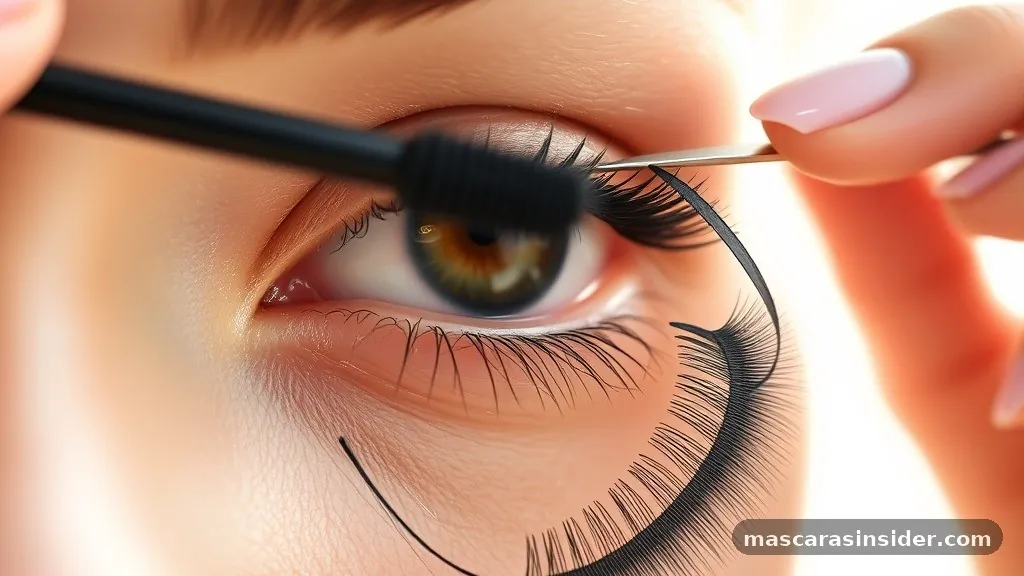
- Place the strip as close to your natural lash line as you can, using tweezers or your fingers. Press the outer corner, then the inner, then the middle.
- Let the glue set fully. Only then, if you want, add a tiny touch of mascara at the very tips to marry the two layers.
That last step is the one exception where mascara after fake lashes is allowed, and only barely. We’ll get to that.
The One Exception: A Light Touch After
So when is putting mascara on after fake lashes ever okay? Only when you need to blend the tips of your natural lashes into the strip and nothing else has worked.
If, after the glue has fully dried, you still see a visible gap between your real lashes and the falsies, you can dab a whisper of mascara at the very ends. Focus on the tips, not the roots.
Keep the wand away from the adhesive band. The goal is to nudge the two rows together, not to coat the entire strip.
Even then, be careful. Use the tip of the wand, wiggle gently, and stop the moment they look connected. Piling product on wet will still soften the glue and clump those pretty fibres.
If you’re wearing lash extensions rather than strips, the rules shift entirely. With individual extensions applied by a technician, you generally skip mascara altogether, or use only a special oil-free formula made for extensions. Regular mascara can dissolve the bonding agent and clog the lashes, cutting their lifespan short.
Comparing Your Options: Mascara, Strips and Extensions
Not every fake lash situation calls for the same approach. Here’s how the main choices stack up against each other.
| Lash Type | Mascara Timing | Typical Wear Time | Reusable? |
|---|---|---|---|
| Strip lashes | Before, thin coat on natural lashes | One day per application | Yes, often 10 to 20 wears |
| Individual/cluster lashes | Before only, avoid mascara after | 2 to 5 days | No |
| Professional extensions | Skip, or oil-free formula only | 4 to 6 weeks with fills | No, grown out and refilled |
| Magnetic lashes | Before, on natural lashes | One day per application | Yes, many wears |
Strip lashes are the most forgiving and the most common. They’re what most people mean when they ask about false lashes, and they’re cheap enough to experiment with. Magnetic lashes skip the glue entirely, which some folks find easier, though the hold isn’t always as secure.
Whatever you choose, the mascara-before rule holds for the DIY options. Extensions are the outlier because a pro applied them and the wrong products will wreck the bond.
Common Mistakes That Ruin the Look
Even with the right order, small errors add up. A few of the biggest culprits I see again and again:
- Using too much mascara before. One thin coat blends. Three coats create a spiky base that fights the strip and makes the falsies sit unevenly.
- Not letting mascara dry. Applying glue over wet mascara means neither sticks properly. Patience pays here.
- Applying too much glue. A thick white line dries visible and gummy. A thin, tacky line disappears and holds better.
- Skipping the tacky wait. Glue needs those 20 to 30 seconds to get sticky. Slap the strip on while it’s wet and it’ll slide around.
- Coating the whole strip after. The single fastest way to clump good lashes and loosen the band. Resist it.
- Wrong placement. A strip set too far from the lash line leaves a gap no amount of mascara can fix.
For a deeper look at safe lash and eye product use, the American Academy of Dermatology offers guidance on avoiding irritation and infection around the delicate eye area, which is worth reading before you go heavy on adhesives.
Quality of product matters too. Cheap glue that never fully dries and stiff, plasticky strips will fight you no matter how good your technique is. Softer bands sit flatter and blend more naturally with your own lashes.
Frequently Asked Questions
Can you put mascara on false eyelashes at all?
You can, but only sparingly and only after the glue has set. Dab a tiny amount at the tips to blend your natural lashes into the strip.
Coating the whole false lash will clump the fibres and shorten how many times you can reuse it. Most of the time you won’t need mascara on the falsies at all.
Should I curl my lashes before or after applying mascara?
Curl first, then apply mascara, then put on the fake lashes. Curling after mascara can crack the coating and even pull lashes out. Curling before helps your natural lashes lift toward the strip so the two blend together cleanly.
Why do my fake lashes keep lifting at the corners?
Usually it’s one of three things: the strip is too long and pushing against your eye shape, the glue wasn’t tacky enough before application, or you didn’t press the outer corner firmly. Trim the strip to fit, wait for the adhesive to get sticky, and press the corners down last.
Do you need mascara if you’re wearing dramatic false lashes?
A thin coat on your natural lashes still helps, even with bold falsies. It darkens the base and lifts your own lashes so no bare gap shows through. You just want a lighter hand than usual, since the strip does most of the visual work.
How do I remove mascara and false lashes without damage?
Peel the strip off gently from the outer corner while it’s still on, then dissolve any leftover glue on the band with a bit of makeup remover. For your natural lashes, use an oil-based or micellar remover and let it sit before wiping, so you’re not tugging at the delicate lash line.
The Bottom Line
If you remember one thing, make it this: mascara goes on your natural lashes before the fake ones, not after. A single thin coat on prepped, curled lashes gives you a blended base that makes even dramatic strips look like they grew out of your own lash line. The only time mascara comes after is a feather-light touch at the tips to close a stubborn gap, and even then, keep it well away from the glue.
Nail the order, use a quality adhesive, wait for it to turn tacky, and press those corners down. Do that and your falsies will sit flush, blend beautifully, and stay put all day. The eyes really do the talking with a good set of lashes, and the difference between a look that reads polished and one that reads obvious usually comes down to this one small decision about when the mascara goes on.