
Reach for one tube in your makeup bag and it’s probably mascara. It’s the product people say they’d keep if they could only keep one. A couple of coats and suddenly your eyes look awake, defined, wider.
But what actually happens on your lashes when you swipe that little wand? The stuff inside the tube is doing more chemistry than you’d guess.
Understanding how does mascara work isn’t just trivia. It helps you pick the right formula, apply it better, and avoid the clumpy, flaky mess that ruins a good look. So let’s get into the mechanics of it.
What Mascara Actually Is
At its core, mascara is a mix of pigments, waxes, oils, and film-forming polymers suspended in a liquid base. The word itself comes from the Italian “maschera” and Spanish “máscara,” both meaning mask. Fitting, really, since the product masks and coats each hair.
The idea of darkening lashes is ancient. Egyptians used kohl thousands of years ago, mixing soot with fats. Modern mascara was popularised in the 1910s when a chemist named Eugène Rimmel and later Thomas Williams (whose sister Maybel inspired the name Maybelline) turned it into a commercial cosmetic.
Early versions came as a cake you wet with a brush. Messy business.
Today’s formulas are far more sophisticated. Each ingredient plays a specific role:
- Pigments such as iron oxides and carbon black give that deep colour that makes lashes stand out.
- Waxes like beeswax, carnauba, and paraffin coat the lash and help build volume and length.
- Oils and emollients keep the formula smooth and easy to apply.
- Film-forming polymers create a flexible layer that clings to the hair and sets as it dries.
- Preservatives stop bacteria growing in a warm, moist tube that lives near your eyes.
Take one of those ingredients out and the whole thing behaves differently. That’s why waterproof, lengthening, and volumising mascaras don’t feel the same going on.
How Does Mascara Work on Each Lash
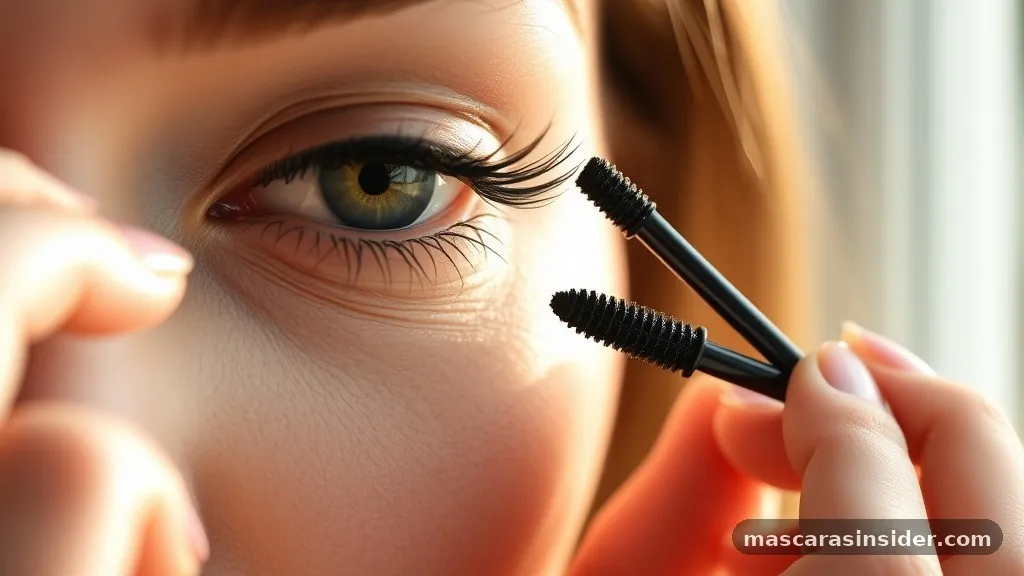
Here’s the actual process. When you pull the wand through your lashes, the brush loads product onto the hairs and combs it along their length. The waxes and polymers wrap around each lash like a thin sleeve.
That sleeve does two things at once. It adds diameter, so a thin lash looks thicker.
And it deposits pigment, so a pale or fine lash looks darker and more visible against your skin. Your natural lashes are often lighter at the tips than you realise, which is why mascara makes such a dramatic difference even on people who already have decent lashes.
As the water and solvents evaporate, the film sets. The polymers harden just enough to hold the shape you’ve combed the lash into.
That’s the whole trick behind lift and curl. You’re setting the hair in a new position while the coating dries.
“Mascara doesn’t change your lashes permanently. It coats and shapes them temporarily, and once you remove it, they return to their natural state,” is a point cosmetic chemists make often when people worry the product changes their hair.
So no, mascara doesn’t genuinely make lashes grow. It makes them appear longer and fuller by extending the coated tip and darkening the whole hair. Growth serums are a separate category with active ingredients like prostaglandin analogs, and those actually work on the follicle over weeks.
The Brush Matters More Than You Think
People obsess over the formula and ignore the wand. That’s a mistake. The brush is half of what makes a mascara good or bad, and different bristle designs create genuinely different results.
Bushy, densely packed brushes grab lots of product and pile on volume. Skinny, tapered brushes with short bristles let you reach tiny corner lashes and separate each hair for a natural finish. Curved wands follow the shape of your lash line to lift.
Here’s a rough guide to how brush types line up with the look they create:
| Brush Type | Best For | Typical Result |
|---|---|---|
| Dense, full bristle | Volumising | Thick, dramatic lashes |
| Thin, tapered | Definition and precision | Separated, natural lashes |
| Curved wand | Lifting and curling | Wide-eyed, lifted effect |
| Silicone comb | Clean separation | Fanned out, no clumps |
| Ball-tip or spherical | Lower lashes and inner corners | Detailed, controlled coverage |
Silicone brushes deserve a mention. They swap traditional fibre bristles for moulded plastic teeth, which grip lashes cleanly and deposit less excess product. If you fight with clumps, a silicone wand is often the fix.
Why Different Mascaras Do Different Jobs
Not all tubes are made the same, and the label usually tells you what the chemistry is tuned for. Understanding the categories helps you choose the right one instead of grabbing whatever’s on sale.
Lengthening mascara
These lean on film-forming polymers and sometimes tiny fibres (nylon or rayon) that cling to the tip of each lash and extend it. The formula tends to be a little drier so it doesn’t weigh the lash down. If your goal is length, look for “lengthening” or “extension” on the packaging.
Volumising mascara
Heavier on waxes, these coat the lash thickly to build diameter. The trade-off is that they can clump if you overdo it, because there’s simply more product on the hair. A little goes a long way here.
Waterproof mascara
Waterproof formulas swap some water-based ingredients for water-resistant ones and add extra film-formers so they don’t budge. Great for weddings, workouts, and criers.
The downside is they’re tougher to remove and can dry lashes out if you wear them daily. Dermatologists suggest saving waterproof for occasions rather than everyday use.
Curling and lifting mascara
These use fast-setting polymers that hold your lashes in an upward curl as they dry, sometimes paired with a curved brush. The effect fades as the film relaxes, but it’s a nice no-tool way to open the eye.
How to Apply Mascara Without the Clumps
Application technique changes the outcome as much as the product does. Beginners often wonder why their mascara looks nothing like the ad, and the answer is usually in the how, not the what.
A few habits make a real difference:
- Wipe the wand. Gently drag the brush against the tube opening to remove excess. Too much product is the number one cause of clumping.
- Start at the base. Place the wand at the root of your lashes and wiggle slightly as you sweep up. This deposits colour where lashes are thinnest and lifts from the root.
- Build in thin coats. Two light coats beat one thick one every time. Let the first dry a few seconds before adding the second.
- Curl first, always. Use a lash curler before mascara, never after, or you’ll snap coated lashes.
- Don’t pump the tube. Pumping pushes air in, dries out the formula, and breeds bacteria.
For a natural daytime look, one thin coat on the upper lashes and a whisper on the lowers is plenty. For a bolder evening finish, wiggle the base and build up. If you get a clump anyway, run a clean spoolie or a dry mascara wand through your lashes while they’re still slightly wet to comb it out.
What Mascara Does to Your Eyes and How to Stay Safe
Since you’re applying a product millimetres from your cornea, safety is worth a paragraph or two. Mascara is generally very safe when used properly, but a few things are worth knowing.
The biggest risk is bacterial contamination. That warm, dark tube is a comfortable home for microbes, which is why you should replace mascara every three months. Old mascara has caused eye infections, and in rare cases scratches from the wand have introduced bacteria that led to serious problems.
The U.S. Food and Drug Administration recommends never sharing eye makeup and tossing anything that changes smell or texture.
A few sensible rules:
- Never apply mascara in a moving car. One bump and the wand meets your eyeball.
- Remove it fully before bed. Sleeping in mascara can lead to flakes getting into the eye and, over time, brittle lashes.
- Stop using anything that stings, burns, or makes your eyes red.
- If you wear contacts, choose ophthalmologist-tested, flake-resistant formulas.
People with sensitive eyes or contact lenses often do better with tubing mascaras. These form little tubes around each lash that slide off with warm water, so there’s no rubbing and less loose pigment floating around.
Frequently Asked Questions
Does mascara actually make your lashes longer?
Not permanently. Mascara coats each lash and extends the tip with pigment and polymers, which makes lashes look longer while you’re wearing it.
The moment you remove it, your lashes go back to their real length. For genuine growth, you’d need a lash serum that works on the follicle over several weeks.
How often should I replace my mascara?
Every three months is the standard advice. Because the tube is warm and moist, bacteria build up fast, and dried-out formula clumps more. If it starts to smell odd or the texture changes, replace it sooner regardless of how long you’ve had it.
Why does my mascara clump so much?
Usually too much product on the wand. Wipe the excess against the tube rim before applying, build in thin coats, and comb through with a clean spoolie. An old, drying formula clumps more too, so check the age of your tube.
What’s the difference between waterproof and regular mascara?
Waterproof formulas contain extra water-resistant film-formers so they survive tears, sweat, and rain. They hold better but are harder to remove and can dry lashes if worn daily. Regular mascara comes off more easily with a standard cleanser and is gentler for everyday wear.
Should I curl my lashes before or after mascara?
Before. Always curl bare lashes first. Curling after applying mascara risks the coated hairs sticking to the curler and snapping off, and it can crack the dried film.
The Takeaway
Mascara looks simple, but there’s real chemistry in that little tube. Pigments darken, waxes thicken, polymers lengthen and hold shape, and the brush combs it all into place. As the film dries, your lashes are set fuller, darker, and lifted, then everything washes back to normal at the end of the day.
Choosing the right formula for your goal, matching the brush to the look you want, applying in thin coats, and swapping the tube every few months will get you the best results. It’s one of the cheapest, fastest ways to change how your whole face reads. Once you understand what’s happening on each lash, you can stop fighting your mascara and start actually using it well.