
You spent good money on a fresh set of lash extensions, and now you’re staring at your old tube of mascara wondering if you’re allowed to touch it. It’s a fair question. Most people assume extensions replace mascara entirely, and honestly, that’s often true.
But not always. So can you put mascara on lash extensions? The short answer is yes, technically you can, but there are big caveats, and the wrong choice can wreck your set faster than you’d think.
Let’s get into the details so you don’t ruin a $150 fill.
Do You Even Need Mascara With Extensions?
Here’s the thing most lash techs will tell you right off the bat. If your set was applied well, you probably don’t need mascara at all.
That’s kind of the whole point. Extensions add length, curl, and volume already, so slapping product on top is often redundant.
Classic sets give you a natural, mascara-like finish out of the box. Volume sets, where multiple ultra-fine extensions are fanned onto a single natural lash, deliver that dramatic fluttery look people usually chase with a good mascara. Adding more on top can look clumpy and heavy.
That said, real life happens. Maybe your set is thinning out toward the end of a fill cycle. Maybe you want a little extra oomph for one big night.
In those cases, some people reach for mascara to bridge the gap. If that’s you, keep reading, because how you do it matters a lot.
One lash artist I trust put it plainly: “The best mascara for extensions is no mascara. But if you must, treat it like handling glass.”
Why Regular Mascara Can Destroy Your Extensions
Not all mascaras are created equal, and the standard drugstore tube in your bag is likely the worst possible option. The problem comes down to a few things: oil, waterproofing, and fibers.
Lash extensions are held on with a cyanoacrylate adhesive. That bond is strong, but it has an enemy, and that enemy is oil.
Most conventional and waterproof mascaras contain oils and heavy waxes that slowly break down the adhesive. Over days, that means extensions sliding off early and money down the drain.
Waterproof formulas are especially rough. They’re built to cling, which means you have to scrub hard to remove them. Scrubbing near extensions is a fast track to yanking out your natural lashes along with the fake ones.
Then there’s fiber mascaras, the kind with tiny lengthening fibers. Those fibers wedge into the extensions and the adhesive bond, and they’re a nightmare to clean out.
They tangle everything up. Just skip them entirely.
Here’s what typically goes wrong when you use the wrong product:
- Extensions fall out weeks before they should because oil dissolves the adhesive
- Lashes get clumpy, crispy, or stuck together
- Aggressive removal pulls out your real lashes and causes gaps
- Fibers and residue build up, trapping bacteria near the lash line
- Your fill appointments come sooner, costing you more over time
The Only Kind of Mascara That’s Actually Safe
If you’re set on wearing mascara, there’s exactly one category to look for: an oil-free, water-based, extension-safe mascara. Read those labels carefully. Marketing can be sneaky.
The gold standard here is a tubing mascara. Tubing formulas work differently than normal ones. Instead of coating your lashes in waxy pigment, they form tiny polymer tubes around each lash.
The magic part? They slide off with just warm water and gentle pressure. No scrubbing, no oil-based remover, no tugging at your bond.
That gentle removal is the whole reason tubing mascara gets recommended for extensions. You’re not fighting the product to get it off, so you’re not fighting your extensions either.
When you’re shopping, look for these signals on the packaging or product page:
- Labeled oil-free and water-based
- Marketed specifically as extension safe or safe for lash extensions
- Tubing technology or “washes off with warm water”
- No waterproof claim
- No lengthening fibers
The American Academy of Ophthalmology has published guidance on the risks tied to eyelash extension products and eye safety, and it’s worth a read if you have sensitive eyes or a history of irritation. Anything you put near your eyes deserves a little research.
Regular vs. Extension-Safe Mascara at a Glance
Sometimes it helps to see it side by side. Here’s how a typical drugstore mascara stacks up against an extension-safe one.
| Feature | Regular Mascara | Extension-Safe Mascara |
|---|---|---|
| Contains oil | Often yes | No, oil-free |
| Formula base | Wax or oil | Water-based |
| Removal method | Scrubbing, oil remover | Warm water (tubing) |
| Effect on adhesive | Breaks down the bond | Bond stays intact |
| Fibers | Sometimes | No |
| Safe for daily use | Not recommended | Yes, with care |
The difference really comes down to what happens at removal time. A water-based tubing product respects the adhesive bond. A waxy waterproof one attacks it.
How to Apply Mascara on Extensions Without Wrecking Them
Okay, you’ve got the right formula in hand. Application still requires a light touch. This isn’t the time for the wiggle-and-pump motion you use on bare lashes.
First rule: only apply mascara to the tips. Keep it away from the base and the lash line.
That base area is where the adhesive lives, and where your extensions meet your natural lashes. Getting product down there gunks up the bond and traps residue.
Second, go light. A single thin coat is plenty. Layering mascara on extensions just creates weight, and weight is the enemy of a set that’s supposed to last weeks.
Here’s a simple approach that works:
- Make sure your lashes are clean and completely dry first
- Wipe excess product off the wand so it’s not loaded up
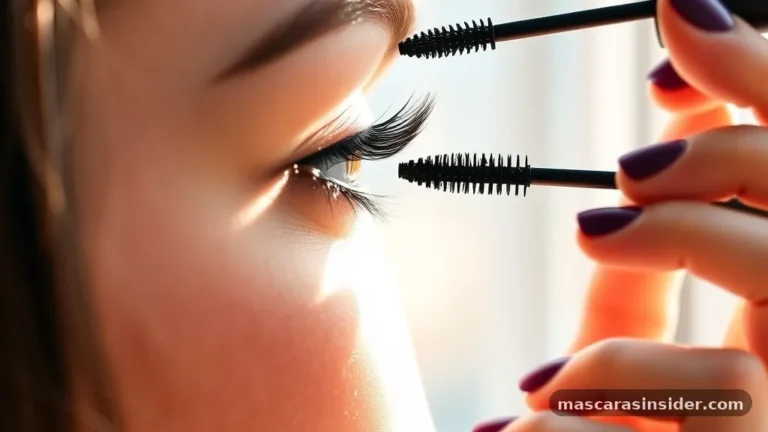
- Brush lightly from the middle of the lash to the tip only
- Use one coat, not three
- Never pump the wand in the tube, it adds air and clumps
- Skip the base and the inner corners where extensions are most delicate
Take your time. A minute of careful application beats a rushed job that leaves you with clumpy, crossed lashes.
Removing Mascara Safely From Your Extensions
Removal is where most damage happens, so this part matters just as much as application. If you used a tubing mascara, you’re in luck.
Warm water and a bit of patience is often all you need. Let the water loosen the tubes, then gently swipe them away with a soft cloth or your fingertip.
Never use an oil-based makeup remover on extensions. I can’t stress this enough.
Oil is exactly what dissolves the adhesive, so a cotton pad soaked in oily remover will thin your set overnight. Same goes for micellar waters that sneak oil into their ingredient list, so check.
Reach for a dedicated lash extension cleanser instead, sometimes called lash shampoo. These are foaming, oil-free cleansers made for exactly this job.
Use a soft brush, work gently, and rinse with cool water. Then let your lashes air dry, or use a fan on low, and brush them out with a clean spoolie.
Whatever you do, don’t rub. Don’t scrub.
Don’t pick at your lashes when they’re wet, because that’s when the bond is weakest and lashes come out easiest. Gentle wins every time.
Mascara on Clusters, Individual Lashes, and Lash Lifts
People often lump all lash treatments together, but the rules shift depending on what you actually have. Cluster lashes, the little pre-made fans you apply yourself at home, tolerate mascara a bit better than professional extensions since they’re temporary anyway. Still, oil-free is smarter if you want them to last a few days.
Individual professional extensions? Follow everything above. Oil-free, tips only, gentle removal.
A lash lift is a totally different animal. That’s your own natural lashes, curled with a chemical solution, no extensions involved. You can absolutely wear mascara over a lash lift, and most any formula works fine.
Just avoid it for the first 24 to 48 hours after the treatment while the lift sets. Getting them wet or coated too soon can relax the curl.
Strip false lashes and fake eyelashes are their own thing too, but since you can remove and clean them separately, mascara isn’t as risky there.
Frequently Asked Questions
Can I put mascara on lash extensions every day?
You can, but it’s not ideal. Daily mascara, even the safe kind, means daily removal, and every removal is a small chance to disturb the bond.
If you love the look, use extension-safe mascara sparingly rather than every single morning. Many people find they don’t need it at all.
What happens if I use regular mascara by accident?
Don’t panic over one slip. Clean it off gently with an oil-free lash cleanser as soon as you can, using a soft brush and no scrubbing. The main risk is that the oils and waxes shorten your set’s lifespan if left on or removed roughly, so just be careful getting it off.
Is waterproof mascara okay with extensions?
No. Waterproof formulas are the worst choice.
They cling hard and require heavy rubbing or oil-based removers to take off, and both of those things pull out extensions and dissolve the adhesive. Always go water-based and oil-free instead.
How do I remove tubing mascara from extensions?
Tubing mascara comes off with warm water. Let the water sit on your lashes for a moment to loosen the polymer tubes, then gently wipe them away with a soft cloth or fingertip. No oil, no scrubbing needed, which is why it’s the friendliest option for extensions.
Will mascara make my extensions fall out faster?
The wrong mascara absolutely can. Oil-based and waterproof formulas break down the adhesive bond and force aggressive removal, both of which lead to early shedding. An oil-free, extension-safe product used lightly on the tips should have minimal impact on how long your set lasts.
The Bottom Line
So, can you put mascara on lash extensions? Yes, but only if you’re smart about it. Reach for an oil-free, water-based, extension-safe mascara, ideally a tubing formula, and apply it to the tips only in a single light coat.
Skip anything waterproof, anything with fibers, and any oil-based remover. Those are the things that quietly destroy your set.
Honestly, though, a well-made set of extensions usually gives you the volume and length you wanted in the first place, so mascara is often unnecessary. Save it for the days your lashes are thinning toward a fill, treat your extensions gently, and keep them clean with a proper lash cleanser. Do that, and you’ll get the full life out of every set without the clumpy, crispy mess that comes from using the wrong product.