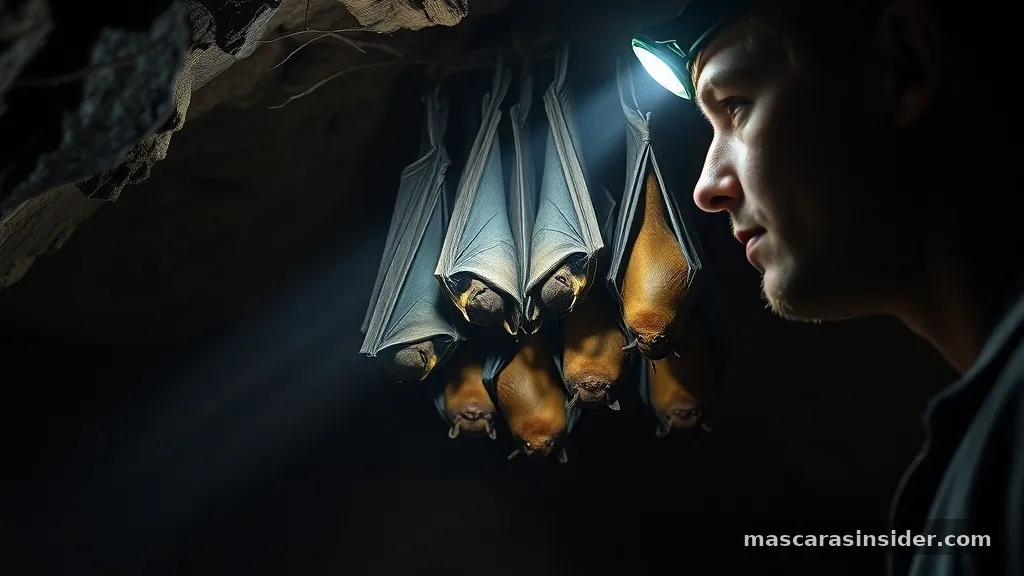
You’ve probably heard the rumor. Someone at a sleepover or a coworker over coffee swears mascara is made from bat droppings. It’s one of those beauty myths that just won’t die.
So let’s clear the air right now: your mascara is not made of bat poop. But that doesn’t mean animal products stay out of the tube entirely.
The real story is more interesting than the myth. Some mascaras do contain animal-derived ingredients, others don’t, and a growing number are fully vegan. If you’ve ever squinted at the back of a mascara tube trying to decode the list, this article breaks down exactly what’s inside and which animals, if any, contribute to that glossy black finish on your lashes.
Where the Bat Poop Myth Actually Came From
Let’s tackle the elephant in the room. Or the bat, I suppose.
The confusion comes from a single ingredient: guanine. Guanine is a crystalline substance that gives some cosmetics a shimmery, light-reflecting quality.
It’s used in nail polish, eyeshadow, highlighters, and occasionally mascara to add a subtle sparkle. The name sounds suspicious because “guano” refers to bat and bird droppings, and the two words look related.
Here’s the thing though. The guanine used in cosmetics doesn’t come from bat poop at all. It’s typically harvested from fish scales, a byproduct of the commercial fishing industry.
Manufacturers process the scales to extract a pearly, iridescent material sometimes called “pearl essence.” So the fish-scale rumor you may have also heard? That one has more truth to it than the bat version.
According to the U.S. Food and Drug Administration, cosmetic-grade guanine is derived from fish, not from any kind of guano. You can read more about how the agency regulates these substances on the FDA cosmetics resource page.
So no, nobody is scraping cave floors to make your lash serum. The bat droppings story is a classic case of a scary-sounding word getting mixed up with a real ingredient. It spread fast on forums and social media, and now it’s basically internet folklore.
What Mascara Is Actually Made Of
Mascara is a surprisingly simple formula at its core. Most products blend a handful of ingredient categories to achieve that dark, buildable coat. Understanding these makes the animal question much clearer.
The typical mascara relies on four main components working together:
- Pigments for color, usually carbon black or black iron oxide pigment, which give mascara its deep, dramatic shade
- Waxes to hold shape and coat each lash evenly, such as beeswax, carnauba wax, or candelilla wax
- Oils and conditioners like castor oil or lanolin, which keep the formula smooth and help it spread
- Polymers and film-formers that dry down and form a film around the lash, locking the pigment in place until you wash it off
The polymer is what makes modern mascaras so long-lasting. Once applied, the polymer forms a thin film that resists smudging. Water is often the base of the whole mixture, and preservatives keep bacteria from growing in that warm, wet tube near your eye.
None of these need to come from an animal, technically. But a few of them traditionally do. That’s where the vegan versus non-vegan divide starts to matter.
Which Mascara Ingredients Come From Animals
Now for the honest answer to the question. A number of common mascara ingredients are animal-derived, even if bat droppings aren’t one of them.
Here are the usual suspects you’ll spot on non-vegan formulas:
- Beeswax – produced by honeybees, it’s one of the most common structuring waxes in mascara
- Lanolin – a waxy oil extracted from sheep’s wool, used to condition and moisturize lashes
- Guanine – the fish-scale-derived shimmer agent, when a mascara has a pearly finish
- Carmine – a red pigment made from crushed cochineal insects, more common in colored cosmetics but occasionally present
- Silk or keratin proteins – sometimes added for lash conditioning, and these can be animal-sourced
Beeswax is probably the biggest one. It shows up in a huge share of mascaras because it’s excellent at giving the product structure and a rich, creamy texture. Lanolin comes second, prized for how it smooths and softens.
So when someone asks what animal is in mascara, the honest reply is: it depends on the brand, but bees and sheep are the two most likely contributors. Fish come into play only with shimmery formulas that use guanine.
Animal Ingredients at a Glance
Because it helps to see it laid out, here’s a quick comparison of the animal-derived ingredients you might find and what they do.
| Ingredient | Animal Source | What It Does | Vegan Alternative |
|---|---|---|---|
| Beeswax | Honeybees | Structure, thickening, holds lash shape | Candelilla or carnauba wax |
| Lanolin | Sheep’s wool | Conditions and moisturizes lashes | Plant oils, shea butter |
| Guanine | Fish scales | Adds pearly shimmer | Synthetic mica, bismuth oxychloride |
| Carmine | Cochineal insects | Red or tinted pigment | Iron oxides, synthetic dyes |
| Keratin | Wool, feathers, horns | Strengthens and conditions | Plant proteins, soy or wheat |
The pattern is clear. Almost every animal ingredient has a plant-based or synthetic swap, which is exactly why vegan mascaras have become so easy to find.
How to Tell If Your Mascara Is Vegan or Cruelty-Free
If avoiding animal products matters to you, reading labels is the way to go. But labels can be sneaky.
Start by knowing the difference between “cruelty-free” and “vegan.” These get confused constantly. Cruelty-free means the product wasn’t tested on animals.
Vegan means it contains no animal-derived ingredients. A mascara can be one without being the other. A cruelty-free formula might still contain beeswax, and a vegan formula might, in rare cases, have been tested on animals somewhere in the supply chain.
Look for these things when shopping:
- Certification logos from groups like Leaping Bunny or PETA’s cruelty-free program
- A clearly stated “vegan” claim on the packaging or brand website
- An ingredient list free of beeswax, lanolin, carmine, guanine, and keratin
Words like “carnauba” and “candelilla” are good signs, since those waxes come from plants. If you see “cera alba” on the list, that’s the Latin name for beeswax, so it’s not vegan.
Plenty of major beauty brands now offer entirely vegan mascara lines, and the pigment carbon black works perfectly well without any animal help. The black iron oxide and carbon black pigments that create that intense color are mineral-based, so the color itself was never the issue. It’s the waxes and conditioners that determine whether a product counts as vegan.
One quick tip
One quick tip. Some companies are cruelty-free everywhere except in markets that legally require animal testing for imported cosmetics. If that matters to you, check whether the brand sells in those regions.
Are the Ingredients in Mascara Safe?
Beyond the animal question, people worry about safety. Fair enough, since you’re applying this stuff millimeters from your eyeball.
For the vast majority of people, mascara is perfectly safe when used as directed. The pigments, waxes, and polymers are all regulated and have long safety records. That said, a few things are worth keeping in mind.
Carbon black, the pigment behind most black mascaras, is approved for use around the eyes in many regions but faces tighter restrictions in others. Coal-tar-derived colors are more scrutinized. Preservatives like parabens have drawn concern from some consumers, though regulatory bodies still consider the levels used in cosmetics safe.
The bigger real-world risk isn’t the ingredients at all. It’s old mascara.
Because the tube stays damp and dark, bacteria can build up over time. Ophthalmologists generally recommend replacing mascara every three months to avoid eye infections.
Some practical safety habits:
- Toss mascara after three months, sooner if it smells off or dries out
- Never share mascara, since it can spread eye infections easily
- Avoid pumping the wand, which pushes air and bacteria into the tube
- Skip mascara entirely if you have an active eye infection
Look for fragrance-free and hypoallergenic formulas
If you have sensitive eyes or allergies, look for fragrance-free and hypoallergenic formulas. Carmine, being an insect-derived pigment, is a known allergen for a small number of people, which is another reason some folks prefer vegan options.
Frequently Asked Questions
Is mascara really made out of bat poop?
No. This is a persistent myth. The confusion comes from guanine, an ingredient whose name sounds like “guano.”
Cosmetic guanine is derived from fish scales, not bat droppings. No mascara on the market uses bat feces.
What animal is mascara made of most often?
The most common animal ingredient is beeswax, which comes from honeybees. Lanolin from sheep’s wool is another frequent addition. Shimmery mascaras may also contain guanine from fish scales.
Does mascara contain fish scales?
Some do. Guanine, the pearly shimmer agent found in certain cosmetics including some mascaras, is extracted from fish scales. Not every mascara contains it, and matte black formulas usually don’t.
Can I find mascara without any animal ingredients?
Absolutely. Vegan mascaras use plant waxes like carnauba and candelilla, along with mineral pigments such as carbon black and black iron oxide. Look for a vegan label or check the ingredient list for animal-derived items like cera alba, lanolin, and carmine.
Is the carbon black pigment in mascara safe?
Carbon black is approved for eye cosmetics in many regions and has a solid safety record when used correctly. The most important safety practice is replacing your mascara every three months to prevent bacterial growth.
The Bottom Line on What’s Really in Your Mascara
So, what animal is mascara made of? The answer isn’t bats, no matter how often the internet insists otherwise.
Depending on the brand, your mascara might contain beeswax from honeybees, lanolin from sheep, or shimmer-giving guanine from fish scales. The color itself comes from mineral pigments that have nothing to do with animals at all.
If animal ingredients aren’t your thing, you’ve got more choices than ever. Vegan mascaras deliver the same length, volume, and staying power using plant waxes and synthetic film-formers. Just learn to read the ingredient list, watch for cruelty-free certifications, and you’ll know exactly what’s going on your lashes.
The next time someone tells you mascara is made of bat poop, you can set them straight. It’s a myth built on a misheard word, and the real ingredients, while sometimes animal-derived, are a lot less dramatic than the legend suggests.