

Open almost any makeup bag and you’ll find it. That little tube with the wand tucked inside. Mascara is one of the most reached-for cosmetics on the planet, and for good reason.
It does a lot with very little. A few swipes and suddenly your eyes look bigger, brighter, more awake.
But what is mascara actually used for beyond the obvious? The short answer is that it darkens, lengthens, and thickens your eyelashes to make your eyes stand out. The longer answer is more interesting, because this humble product has a surprisingly wide range of uses, a history that stretches back thousands of years, and a few quirks worth knowing before you swipe it on.
The Main Purpose of Mascara
At its core, mascara is designed to define and emphasise the lashes that frame your eyes. Natural lashes vary a lot from person to person.
Some people have long, dark, curly lashes without touching them. Others have pale, short, or sparse ones that practically disappear.
Mascara evens the playing field. It coats each lash with pigment and a bit of bulk, so they look fuller and more visible. The effect draws attention to the eye itself, which is often the first thing people notice about a face.
Here’s what a good coat of mascara typically does:
- Darkens the lashes so they contrast against the skin and whites of the eyes
- Lengthens the appearance of each lash, sometimes dramatically
- Adds volume and thickness for a fuller, denser lash line
- Curls or lifts lashes upward to open up the eye
- Helps define the eyes even when you’re wearing no other makeup
That last point matters more than people think. Plenty of folks skip foundation, skip lipstick, skip everything except mascara. One coat, and they feel put together.
It’s the minimalist’s secret weapon. According to industry surveys, mascara consistently ranks among the top three most-purchased makeup products worldwide, right alongside lipstick and foundation.
A Quick History: Where Mascara Came From
People have been darkening their lashes for a very, very long time. The mascara origin story goes back to ancient Egypt around 4000 BC, where both men and women used a substance called kohl to line their eyes and coat their lashes. Kohl was made from a mix of soot, minerals, and other ingredients, and it served both cosmetic and, some believed, protective purposes against the harsh desert sun.
The modern version we recognise today owes a lot to the 19th century. A chemist named Eugène Rimmel created a commercial lash cosmetic using coal dust and petroleum jelly. His name stuck so hard that in several languages, the word for mascara is still literally “rimmel.”
Across the Atlantic, Thomas Lyle Williams reportedly watched his sister Mabel apply a mixture of coal dust and petroleum jelly to her lashes. He turned that idea into a product and named the company after her, combining “Mabel” and “Vaseline.”
That’s how Maybelline got its start in 1915. The tube-and-wand design most of us use now didn’t arrive until the 1950s and 60s, replacing the messy cake-and-brush method that came before.
What Is Mascara Made Of?
Mascara formulas look simple but they’re actually a careful balance of a few key ingredients. Each one does a job. Get the ratios wrong and the product clumps, flakes, or smudges all over the place.
Most mascaras contain a blend of pigments, waxes, oils, film-forming polymers, and preservatives. The pigment gives colour, usually black or brown.
The waxes help the formula cling to lashes and hold their shape. Oils keep everything smooth and easy to apply.
| Ingredient | What It Does |
|---|---|
| Pigments (often carbon black or iron oxides) | Provide the dark colour that darkens the lashes |
| Waxes (beeswax, carnauba, paraffin) | Add structure and help the product coat each lash |
| Oils and emollients | Keep the formula smooth and workable |
| Film-forming polymers | Create a flexible layer that resists smudging |
| Preservatives | Prevent bacterial growth in the tube |
| Water or solvents | Control consistency and drying time |
Waterproof mascaras swap out water-based solvents for more oil and wax-resistant compounds, which is why plain water won’t wash them off. You need an oil-based remover instead.
The U.S. Food and Drug Administration regulates the ingredients allowed in eye cosmetics and offers safety guidance on using them properly, since anything applied so close to the eye needs a bit of care.
Types of Mascara and What Each One Does
Not all mascaras do the same thing. Walk down the beauty aisle and you’ll see dozens of formulas, each promising a slightly different result. Knowing the differences helps you actually get the look you want.
Lengthening mascara
These formulas contain fibres and polymers that cling to the tips of your lashes, extending them. If your lashes are short, this is the one to reach for. The brush is usually thin with fine bristles.
Volumising mascara
Thicker formulas with more wax coat each lash for a fuller, bolder look. The brushes tend to be chunky and dense. Great for anyone wanting that dramatic, wide-awake effect.
Curling mascara
These use polymers that contract slightly as they dry, lifting lashes upward. Paired with an eyelash curler, the effect really opens up the eye.
Waterproof mascara
Built to resist water, sweat, and tears, this type is popular for weddings, beach days, and workouts. The trade-off is that it’s harder to remove and can be a little drying on the lashes if worn every day.
Tubing mascara
A newer style that forms tiny tubes around each lash. It’s less likely to smudge and comes off with warm water and gentle pressure, no harsh scrubbing needed. People with sensitive eyes tend to love it.
Everyday Uses and Some Unexpected Ones
For most people, mascara is an everyday product. You apply it in the morning, maybe touch it up before an evening out, and it quietly enhances your natural features all day. But the uses stretch beyond the obvious eye application.
One search people run surprisingly often is about using mascara on hair. Specifically brow hair and greys.
Clear or brown mascara can work as a quick brow gel, taming stray hairs and adding a touch of colour to sparse brows. Some folks even use a matching shade to temporarily cover grey roots or greys along the hairline in a pinch, though dedicated root touch-up products do this better and last longer.
Makeup artist Bobbi Brown once put it plainly: “Mascara is the one thing every woman should have. It instantly opens up the eyes and makes you look more awake.”
Here are some of the ways people put mascara to work:
- Defining lashes for a natural, everyday look
- Creating dramatic, full lashes for evenings and special occasions
- Grooming and lightly tinting eyebrows when you’re out of brow gel
- Adding to a “no-makeup makeup” routine as the single finishing touch
- Layering different formulas, like a lengthening base under a volumising coat
The versatility is a big part of why it stays in almost everyone’s beauty kit. And no, it’s not just for women. Mascara for men has quietly grown, with clear and subtle formulas marketed for a groomed, natural look rather than a dramatic one.
How to Apply Mascara and Take It Off Properly
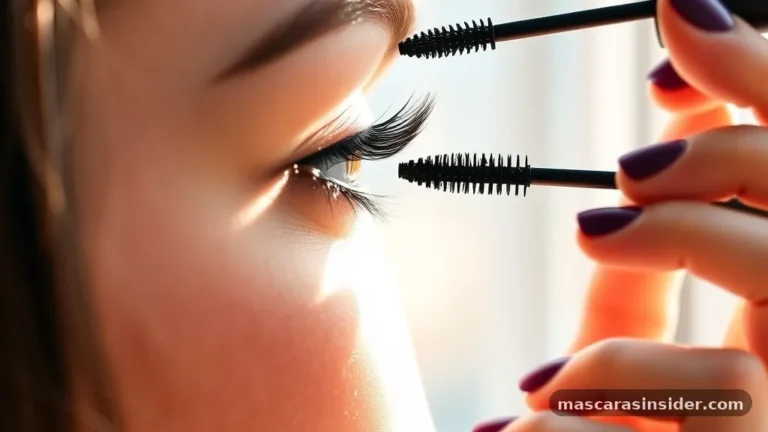
Application looks simple, but a few small habits make a big difference. Start at the base of your lashes and wiggle the brush slightly as you sweep upward.
That wiggle deposits product right at the root where it counts. Pull the wand through to the tips in one smooth motion.
Do the top lashes first. Add a second coat while the first is still slightly wet to build volume without clumping. Bottom lashes need only a light touch, using the very tip of the brush.
A few practical tips worth remembering:
- Curl your lashes before applying, never after, to avoid breakage
- Don’t pump the wand in and out of the tube, it pushes air in and dries the product out faster
- Replace your mascara every three months to keep it hygienic
- Wipe excess off the brush on a tissue if the formula loads too heavily
Removal matters just as much. Sleeping in mascara can leave lashes brittle and clog the tiny follicles along your lash line. For regular formulas, a gentle cleanser and warm water usually does the trick.
For waterproof mascara, use an oil-based makeup remover. Hold a soaked cotton pad over your closed eye for a few seconds to let the oil break down the formula, then wipe gently. Rubbing hard can pull lashes out and irritate the delicate skin around the eyes.
The Downsides Worth Knowing About
Mascara is generally safe, but it isn’t without drawbacks. Being honest about them helps you use it smartly.
The most common issue is irritation. Because it sits so close to the eye, mascara can trigger redness, itching, or watering, especially in people with sensitive eyes or contact lenses.
Old or contaminated products are a bigger culprit than most realise. Bacteria build up over time, which is why that three-month rule exists.
Waterproof formulas, while convenient, can dry out lashes with daily use and sometimes lead to breakage during removal. Some people notice that heavy, repeated use makes their natural lashes feel weaker. Giving your lashes an occasional break, and using a nourishing formula with conditioning oils, can help.
There’s also the smudge factor. Non-waterproof mascara can transfer to the under-eye area in humidity or if you rub your eyes, leaving those dreaded raccoon smudges. Tubing formulas and setting your under-eye with a little powder help prevent that.
Frequently Asked Questions
What does mascara actually do to your eyes?
Mascara itself sits on your lashes, not in your eye, so it doesn’t harm healthy eyes when used correctly. Problems mostly come from old or contaminated product, sleeping in it, or aggressive removal. Keep it clean, replace it every three months, and remove it gently to avoid irritation or infection.
Can you use mascara on your eyebrows?
Yes. A clear or brown mascara works well as a quick brow gel to hold stray hairs in place and add subtle colour.
Just use a light hand and a clean spoolie. Dedicated brow products give better results long term, but mascara is a handy backup.
What’s the difference between waterproof and regular mascara?
Regular mascara washes off with water and mild cleanser, while waterproof mascara resists water, sweat, and tears. Waterproof holds up better through emotional moments and workouts, but it needs an oil-based remover and can be more drying on lashes with daily wear.
How often should I replace my mascara?
Every three months is the standard advice. Mascara tubes are warm, dark, and moist, which makes them ideal for bacteria. If it starts to smell odd, dry out, or clump badly, toss it sooner regardless of how much is left.
Can men wear mascara?
Absolutely. Mascara for men has become more mainstream, often in clear or subtle formulas designed for a groomed, natural look. There’s nothing about the product that makes it gender-specific, it simply enhances lashes.
Final Thoughts
So, what is mascara used for? At its heart, it’s a tool for defining and enhancing your lashes, making your eyes look bigger, brighter, and more awake with just a few swipes. From ancient Egyptian kohl to the sleek tubes on shelves today, its main job has stayed remarkably consistent: draw attention to the eyes.
Beyond that core purpose, mascara pulls double duty as a brow tamer, a grey-hair cover-up in a pinch, and the single finishing touch that ties a bare-faced look together. Pick the formula that matches the result you want, apply it with a little care, and always take it off before bed. Do that, and this small, affordable product will keep earning its permanent spot in your makeup bag.