
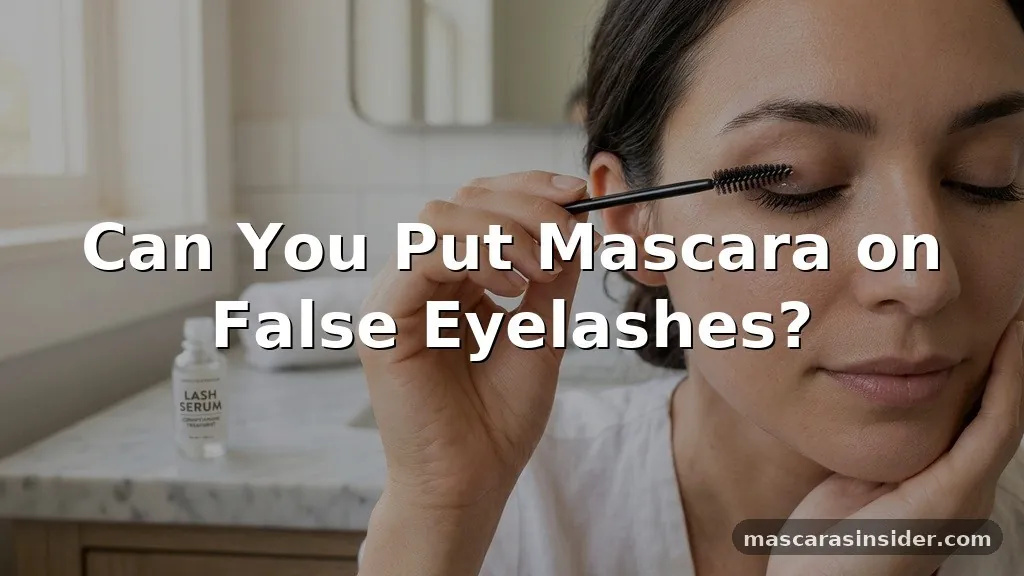
Deciding whether you can put mascara on false eyelashes is a common dilemma for anyone trying to achieve a seamless, dramatic look for a night out or everyday wear. Many beauty enthusiasts wonder if adding product to synthetic fibers will ruin their investment or create a clumpy mess. The short answer is yes, but the method, timing, and type of formula you choose make all the difference between stunning definition and a ruined pair of strips.
Understanding the Impact of Mascara on Synthetic Fibers

To determine if you can put mascara on false eyelashes, you need to understand how synthetic and natural hair react to cosmetic formulations. Unlike your own natural lashes, which secrete oils and continuously regenerate, false eyelashes are made of delicate materials like silk, mink, or synthetic plastic fibers. Traditional waterproof mascara contains heavy waxes and volatile organic compounds that coat these fibers, leaving a permanent residue that is nearly impossible to wash away.
When you continuously apply heavy products to cheap synthetic strip lashes, the weight causes the band to warp and the individual hairs to clump together unnaturally. However, using a water-soluble formula or a specialized lash coating allows you to blend your real hairs with the fake ones without destroying the structure. It is vital to avoid oil-based formulas, as they break down the lash glue and cause the inner and outer corners to lift prematurely throughout the day.
If you prefer dramatic volume, opting for lightweight cruelty-free silk options gives you a better canvas. These higher-end alternatives tolerate gentle cosmetic enhancement much better than stiff plastic variations. Always assess the current condition of your falsies before deciding to layer any product on top of them.
The Best Sequence: Before or After Application?
The timing of your makeup application dictates whether your falsies will look seamless or messy. Most professional makeup artists recommend curling your natural lashes and applying a very thin coat of mascara before putting on your falsies. This creates a tacky, supportive shelf for the strip to rest upon, ensuring your real hair grips the synthetic band securely.
Applying product after the falsies are securely in place can sometimes work, but it requires extreme precision. If you decide to add product after the fact, focus exclusively on the root area where your natural hair meets the fake band. This helps marry the two textures together, hiding any visible gaps or color discrepancies between your bare hair and the dark synthetic fibers.
Here is a quick comparison of the two timing methods:
| Application Timing | Pros | Cons |
|---|---|---|
| Before Falsies | Creates a grip shelf; prevents heavy buildup on the band. | Requires you to work quickly before the product dries. |
| After Falsies | Helps blend everything into a unified look instantly. | Shortens the lifespan of the falsies significantly. |
How to Safely Blend Natural and Fake Lashes
Achieving a cohesive finish requires a delicate touch and the right tools. When you wear falsies, the stark difference in texture and pitch-black color can sometimes reveal where your real hair ends and the strip begins. To bridge this gap successfully, you should use a clean spoolie brush to comb through both sets of hairs simultaneously while the adhesive is completely dry.
Instead of pumping your wand into the tube—which pushes air inside and dries out the formula—gently twist the wand out. Apply a microscopic amount to the very tips rather than the base. This method gives you the illusion of length and fullness without adding unnecessary weight that might cause the band to sag.
Consider the following steps for a flawless integration:
- Curl your natural hairs gently using an eyelash curler.
- Apply a single, light coat of regular, non-waterproof formula to your bare hair.
- Allow the product to dry completely before measuring and trimming your strip.
- Secure the falsies using a high-quality, latex-free clear or dark glue.
- Gently press your natural hair upward into the synthetic band using a heated lash comb.
Extending the Lifespan of Reusable Falsies
Investing in high-end synthetic or mink falsies means you want to get as many wears out of them as possible. Putting heavy layers of pigment on every single wear rapidly degrades the material, turning a reusable luxury item into a single-use accessory. If you must use color on your falsies, limit it strictly to special occasions and adopt a rigorous cleaning routine afterward.
To properly remove dried cosmetic residue, soak a cotton swab in a gentle, oil-free makeup remover and gently swipe it along the band and fibers. Never submerge delicate handmade strips in harsh chemical solvents, as this dissolves the flexible cotton or invisible plastic band holding the hairs together. For more cleaning tips, you can explore the FDA cosmetics safety guidance to ensure your eye area remains protected from bacteria buildup.
Proper storage is just as important as cleaning. Always place your cleaned strips back into their original molded tray to maintain their curved shape. Storing them loosely in a makeup bag crushes the delicate fibers, making future application difficult and misshapen.
Addressing Special Styles: Clusters and Magnetic Variations
Different types of enhanced eye looks require entirely different handling techniques. For instance, individual lash clusters and segmented DIY extensions sit differently on the eyelid compared to traditional full strips. When working with individual clusters, you generally want to apply your color before placing the segments so that your natural hair matches the synthetic clusters perfectly without clumping them together.
Magnetic options present an entirely unique set of rules. Because these products rely on tiny magnetic dots or a magnetic liquid liner to stay anchored along the lash line, applying heavy cosmetic formulations directly onto the magnets ruins their magnetic charge and weakens the hold. If you wear magnetic varieties, keep the synthetic hairs completely bare and only tint your natural under-lashes.
Maintaining a lightweight approach ensures your eyelids feel comfortable throughout a long day or evening event. Heavy, overloaded clusters pull on the delicate skin of the eyelid, leading to irritation and premature shedding of your natural hair follicles.
Common Misconceptions and Topical Gaps
Many online beauty forums debate whether you can salvage a clumped-up pair of falsies by soaking them in rubbing alcohol. While alcohol breaks down waxy buildup, it also strips away the natural sheen of faux-mink fibers and degrades the glue holding the band together. It is far better to prevent heavy buildup in the first place than to attempt harsh chemical restorations.
Another common myth is that waterproof formulas are better because they hold the curl longer. In reality, waterproof formulas contain petroleum-based ingredients that chemically bond with synthetic plastics, making cleaning virtually impossible. Choosing standard, washable formulas protects your investment and keeps your eye area safe from stubborn residue that can trap bacteria.
Finally, many people assume that applying color is mandatory to complete an eye look. Often, a well-fitted strip paired with a precise winged eyeliner creates enough contrast and depth on its own, rendering any additional product completely unnecessary.
Frequently Asked Questions
Can you use regular mascara on false eyelashes?
Yes, but you should always choose a non-waterproof, water-soluble formula. Waterproof variants contain heavy waxes and oils that permanently coat synthetic fibers, weigh down the band, and ruin the reusable lifespan of your favorite falsies.
Should you apply mascara before or after putting on fake lashes?
It is best to apply a very light coat before putting on your falsies. This creates a tacky shelf that helps your natural hair grip the synthetic band, preventing an obvious separation between the two layers.
How do you clean mascara off reusable false eyelashes?
Dip a cotton swab into an oil-free makeup remover and gently roll it along the lash band and fibers to dissolve dried product. Peel away any remaining glue residue with tweezers before storing them in their original tray.
Does putting mascara on false eyelashes ruin them?
Frequent application of heavy or waterproof products will shorten their lifespan by causing clumping and band warping. However, occasional light use with a washable formula on high-quality silk or mink pairs is generally acceptable.
Conclusion
Knowing whether you can put mascara on false eyelashes comes down to balancing your desired dramatic look with the preservation of your cosmetic investments. By choosing lightweight, water-soluble formulas and applying them sparingly, you can achieve a flawless, unified finish without destroying your favorite strips. Treat your eye area with care, clean your accessories regularly, and enjoy your beautifully enhanced look.