Navigating airport security can feel like a high-stakes game of guesswork, especially when you are trying to decide which beauty products belong in your carry-on and which should stay tucked away in your checked luggage. A common point of confusion for frequent travelers is the classification of cosmetics.
Specifically, many passengers find themselves wondering: does mascara have to go in liquids bag protocols when passing through a security checkpoint? The short answer is yes, because the Transportation Security Administration (TSA) classifies mascara as a liquid, gel, or aerosol.
To ensure your journey remains stress-free and your favorite beauty items aren’t confiscated at the scanner, it is vital to understand how the TSA categorizes common toiletry items. When you pack makeup, knowing the difference between a solid and a liquid can save you significant time and frustration. Let’s break down the rules surrounding your beauty routine and how to keep your travel day efficient.
Understanding the TSA Liquid Rule for Cosmetics
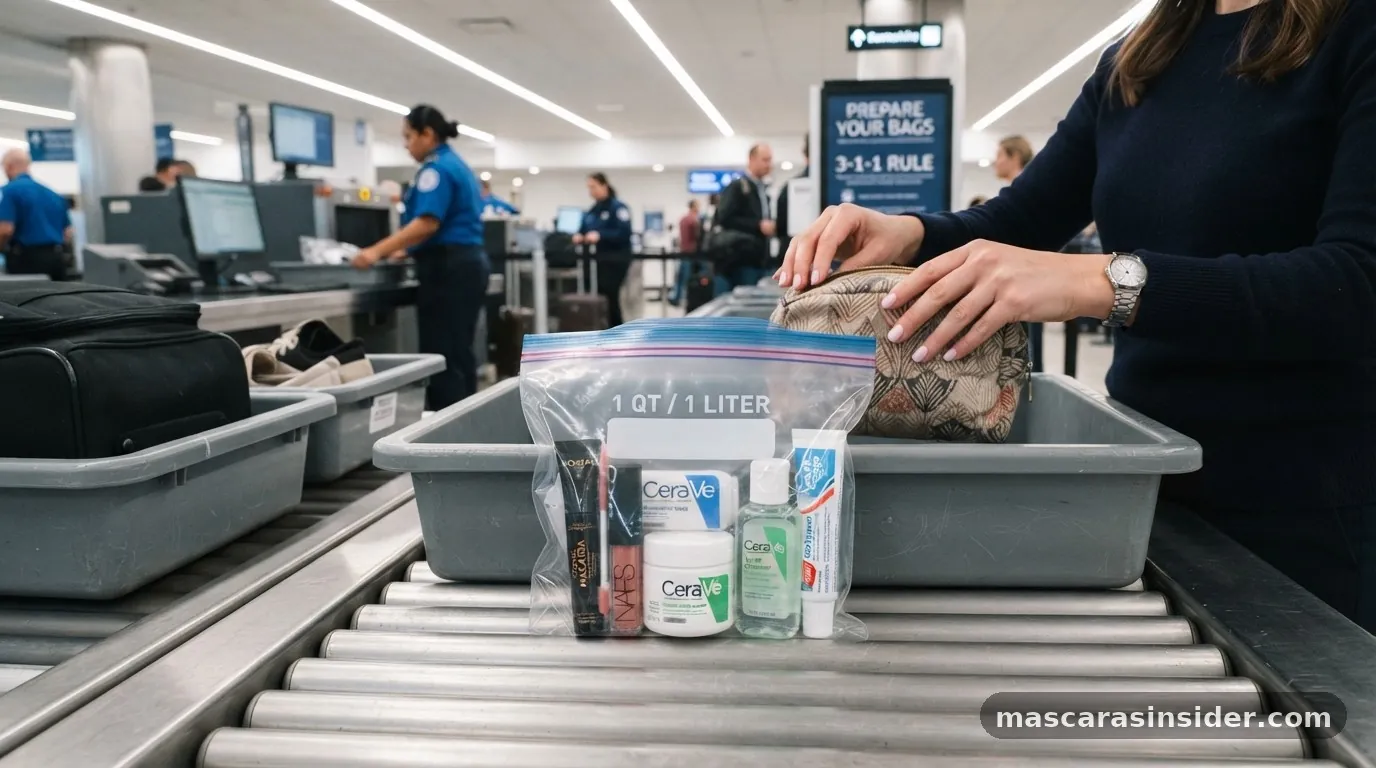
The TSA defines a liquid, gel, or aerosol as any substance that can be poured, pumped, squeezed, spread, or smeared. Because mascara has a viscous, gel-like consistency, it falls squarely under this definition. Therefore, it must comply with the 3-1-1 rule, which dictates that all liquids in your carry-on must be stored in containers of 3.4 ounces (100 milliliters) or less, and all these containers must fit comfortably inside a single, clear, quart-sized bag.
Many travelers assume that because a product is small, it gets an exemption. This is a common misconception. The volume of the container—not the amount of product inside—is the metric that security officers use to determine compliance.
Even if your tube of mascara is nearly empty, the physical size of the tube itself is what matters. By keeping your liquids in a transparent pouch, you make the screening process faster for yourself and the officers behind the monitors. If you fail to separate these items, you may be asked to step aside for an additional bag check, which can delay your progress toward your gate.
Why Mascara is Classified as a Liquid
You might be wondering why something as seemingly dry as makeup is grouped with shampoos and lotions. Security technology is designed to detect potentially hazardous materials that could be masked within common household products. Because mascara is a suspension of pigments in a gel base, it is chemically closer to a liquid or gel than a solid.
If you are ever in doubt, apply the “pour, pump, squeeze, spread, or smear” test. Since you smear mascara onto your lashes using a wand, it meets the criteria for a restricted liquid.
It is helpful to view your beauty bag through the eyes of security personnel. They are looking for consistency and density. A solid lipstick, for instance, is treated differently than a liquid lip gloss.
If the product holds its shape and doesn’t require a container to keep it from flowing, it is generally considered a solid. However, anything that can be squeezed from a tube or applied via a wand will almost always be flagged for the liquids bag. To learn more about specific prohibited items, you can visit the official TSA guidelines on what to bring through security.
Makeup Items That Must Go in Your Liquids Bag
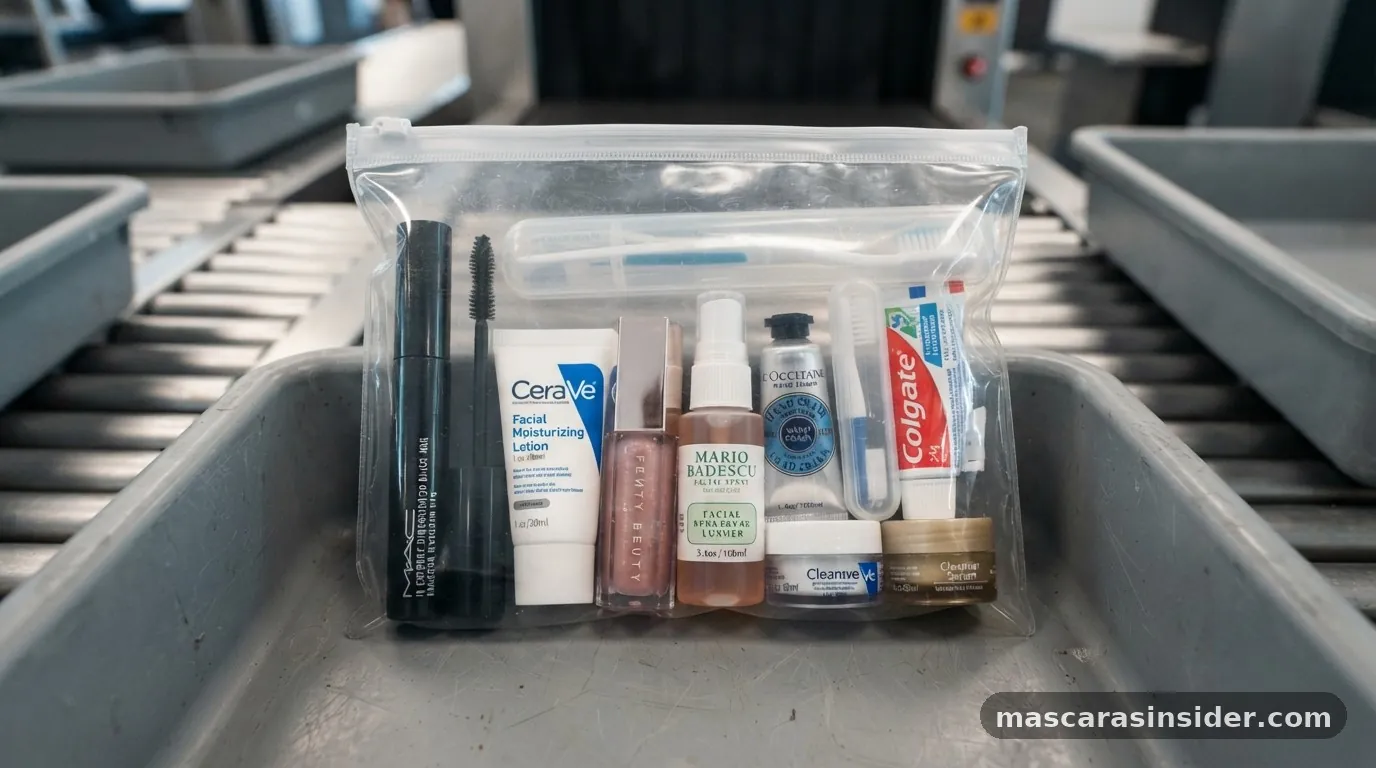
Knowing which products require special handling is the secret to a smooth security experience. Beyond mascara, many other common beauty products are subject to the same rule. If you are packing a full kit for your flight, ensure the following items are placed inside your clear container:
1. Liquid foundation and concealer
2. Lip gloss and liquid lipstick
3.
Eyeliner (liquid or gel formulas)
4. Setting sprays and facial mists
5. Cream-based blush or bronzer
6.
Nail polish and cuticle oil
7. Perfume and cologne sprays
When you organize your bag, prioritize ease of access. You don’t want to be digging through your entire carry-on while standing in line.
By using a dedicated, transparent pouch for these items, you can pull them out and place them in a bin in seconds. This proactive approach shows the security team that you are prepared, which often leads to a more professional and efficient screening interaction.
Makeup That Stays Outside the Liquids Bag
Not every beauty item is restricted by the liquids policy. If you prefer to travel with minimal fuss, you can opt for solid versions of your favorite cosmetics. These items do not need to go in your quart-sized bag and can remain inside your carry-on luggage, which saves precious space for other toiletries.
* Powder-based eyeshadow palettes
* Pressed or loose setting powders
* Solid lipstick bullets and lip balms
* Pencil eyeliners and brow pencils
* Powder-based blush and highlighter
* Dry shampoo (in powder form)
Choosing travel-friendly solid formulas is a tip that many frequent flyers swear by. Not only do these items bypass the 3.4-ounce restriction, but they also eliminate the risk of spills or leaks in your luggage.
A solid blush stick or a powder bronzer is far less likely to ruin your clothes if the pressure changes during a flight. If you are concerned about your makeup routine, shifting toward these solid options allows you to bring more products without worrying about the strict liquids volume limits.
Table: Comparing Liquid vs. Solid Makeup Requirements
To help you visualize how to pack your kit, the following table summarizes the common classification of various makeup items.
| Product Category | Classification | Liquids Bag Required? |
|---|---|---|
| Mascara | Liquid/Gel | Yes |
| Liquid Foundation | Liquid | Yes |
| Pressed Powder | Solid | No |
| Lip Gloss | Liquid | Yes |
| Lipstick (Bullet) | Solid | No |
| Gel Eyeliner | Liquid/Gel | Yes |
| Pencil Eyeliner | Solid | No |
| Cream Blush | Liquid/Gel | Yes |
As shown in the table, the physical state of the product dictates the security requirements. When in doubt, it is always safer to place the item in your liquids bag. Being over-prepared is better than having to discard a high-end product at the checkpoint because it exceeded the allowed limit or was deemed a non-compliant liquid.
Addressing Common Traveler Confusion
One of the biggest sources of confusion is the difference between carry-on and checked luggage. Many people assume the 3.4-ounce rule applies to everything they bring on the plane, but this is incorrect. The liquids rule applies specifically to items you carry through the security checkpoint.
If you put your makeup in your checked luggage, you are not subject to the 3.4-ounce limit. You can bring full-sized bottles of foundation, setting spray, and mascara in your checked bags without any concern.
Another point of contention is multi-use products. Some beauty enthusiasts try to argue that their makeup is a “solid” because it is thick, but the TSA agents have the final say. If an agent determines that a product is a liquid or gel, they will enforce the rule regardless of your personal assessment.
Avoid arguing at the checkpoint. If you are ever uncertain if a product will pass, it is best to pack it in your checked luggage or purchase a travel-sized version that is clearly labeled under 3.4 ounces.
Strategic Packing Tips for Your Makeup
Efficiency is the name of the game when you move through the airport. To keep your travel experience seamless, focus on how you structure your luggage. Start by using a high-quality, durable clear pouch.
Cheap plastic bags can tear after a few trips, and nobody wants their foundation leaking all over their passport. Invest in a travel-specific, leak-proof container that meets the quart-sized requirement but offers better durability.
1. Audit your makeup kit before each trip to remove items you won’t use.
2. Transfer expensive liquid products into smaller, TSA-compliant refillable bottles if you need more than 3.4 ounces.
3.
Keep your liquids bag in an easily accessible pocket of your carry-on.
4. Use solid beauty sticks to replace liquids whenever possible.
5.
Check for any loose caps or lids that might pop off during transit.
6. Consider the climate of your destination; some products melt or separate in extreme heat.
By following these steps, you minimize the time spent at the security checkpoint. Remember that the goal of the TSA is safety, not the inconvenience of your beauty routine. When you arrive at the scanner with your liquids already separated, you are doing your part to ensure the line moves quickly for everyone.
FAQ: Common Security Questions
Does mascara have to go in the liquids bag if it is a sample size?
Yes. Regardless of the size, if the product is classified as a liquid, gel, or aerosol, it must be inside your clear, quart-sized bag. Even a tiny sample tube of mascara is subject to the same screening rules as a full-sized bottle of shampoo.
Can I put my makeup in a checked bag instead?
Absolutely. The 3.4-ounce liquid limit and the requirement to use a clear bag only apply to items you carry through the security checkpoint. If you place your makeup in your checked luggage, there are no volume restrictions, and you do not need to separate your liquids.
What happens if I forget to take my mascara out of my bag?
If you forget to remove it, a security officer might flag your bag for a manual search. This usually means they will pull the bag aside to inspect the contents. It won’t necessarily result in your mascara being thrown away, but it will delay your trip through security.
Does stick concealer count as a liquid?
Usually, no. Stick concealer is generally considered a solid cosmetic. As long as it is in a twist-up tube or a solid bullet form that does not smear or flow like a cream or gel, it can typically remain in your carry-on without being in the liquids bag.