Tracing the origins of who invented mascara requires looking past the glossy tubes found in modern makeup bags and journeying back to ancient civilizations. While many people associate the product with twentieth-century innovation, the practice of darkening eyelashes dates back thousands of years.
From the charcoal mixtures of the pharaohs to the chemist-driven breakthroughs of the industrial age, the story of this beauty staple is one of constant evolution. Understanding how we arrived at today’s high-tech formulas reveals a rich history of human vanity, chemical experimentation, and the relentless pursuit of defining the eyes.
Ancient Roots of Eye Enhancement
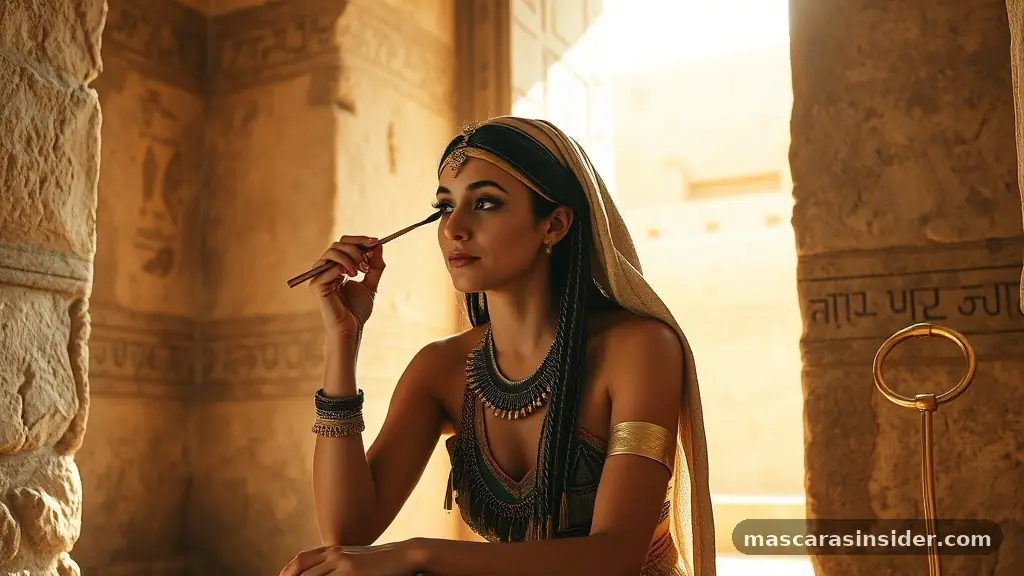
Long before modern brands competed for shelf space, ancient civilizations were already obsessed with the aesthetic appeal of dark, long eyelashes. In Ancient Egypt, both men and women viewed the application of eye makeup as both a protective ritual and a status symbol.
They didn’t have the convenience of a modern wand, so they relied on kohl, a mixture of soot, galena, malachite, and other minerals. This early form of eye enhancement served a dual purpose: it shielded the eyes from the harsh glare of the desert sun and warded off eye infections.
The application process was far from the quick swipe we perform today. Egyptians utilized small sticks, often made of bone or wood, to apply the dark paste to their eyelids and lashes. This practice was deeply embedded in their culture, transcending gender and social class.
Even in these early times, the desire to frame the eyes was universal, proving that the foundation for what we consider modern beauty was laid by those who lived along the Nile. This historical context provides the necessary background for understanding that the desire for defined lashes is not a recent phenomenon.
The Victorian Era and the Quest for Safety
By the time the Victorian era rolled around, beauty standards had shifted toward a more subtle, natural appearance. While the bold, dark eyes of the Egyptians had fallen out of fashion, the interest in lash grooming remained.
During this period, women often experimented with homemade concoctions to darken their eyelashes. These mixtures were frequently dangerous, involving ingredients like coal dust or even mercury, which could cause severe irritation or permanent damage to the eyes.
The danger of these DIY recipes created a vacuum in the market for safer alternatives. Women were desperate to darken their lashes without risking blindness, leading to a surge in interest from early cosmetic entrepreneurs.
It was during this time that the concept of a packaged, commercial eye cosmetic began to take shape. While the “mascara” we know today had not yet been perfected, the Victorian obsession with grooming paved the way for the innovators who would soon change the industry forever.
The Rimmel Connection
When examining who invented mascara in a commercial sense, Eugene Rimmel is a name that cannot be ignored. A French perfumer who moved to London, Rimmel was a visionary in the cosmetics field.
In the mid-19th century, he developed the first non-toxic mascara using petroleum jelly and coal dust. His product was a breakthrough, offering a much safer alternative to the hazardous substances that women had been using in their homes for decades.
Rimmel’s contribution was so significant that in many parts of the world, his name became synonymous with the product itself. Even today, in several languages, the word for mascara is simply “rimmel.”
His success proved that there was a massive, untapped market for high-quality, safe beauty products. By moving the production of eye makeup from the kitchen table to the manufacturing plant, he set the stage for the global cosmetic industry to flourish during the turn of the century.
The Maybelline Origin Story
The most famous narrative regarding the invention of modern mascara involves Thomas Lyle Williams, the founder of Maybelline. In 1913, Williams watched his sister, Mabel, struggle to enhance her eyelashes using a mix of coal dust and petroleum jelly.
Inspired by her efforts, he refined this mixture in his laboratory and created a product that was easier to apply and far more effective. He named the product “Maybelline,” a portmanteau of his sister’s name and “Vaseline.”
This innovation was a turning point. Williams began selling the product via mail-order, targeting women who wanted a professional look at home. His marketing genius, combined with a superior formula, turned Maybelline into a household name.
While he didn’t invent the concept of darkening lashes, he certainly invented the first truly mass-marketed, commercially successful version of the product. His story is a perfect example of how observing a simple daily struggle can lead to a global business empire.
Evolution of the Mascara Brush
The development of the applicator was just as important as the formula itself. For the first half of the 20th century, mascara was sold as a “cake” or block. Users had to wet a small brush, rub it against the cake, and then painstakingly apply the pigment to their lashes.
This process was messy, time-consuming, and required a steady hand. It wasn’t until the 1950s that the industry saw a shift toward the liquid formulas and wands that we recognize today.
Helena Rubinstein is credited with introducing the first automatic mascara wand in 1957. This move to a tube-and-wand system revolutionized the beauty routine for women everywhere. No longer did they need to mess with water and cakes; they could simply pull out a wand and apply the product in seconds.
This innovation drastically increased the popularity of the product, making it a staple in every woman’s makeup bag. The design of the brush, from the material of the bristles to the shape of the head, has since undergone countless iterations to optimize volume, length, and separation.
The Rise of Waterproof Formulas

As the industry matured, the demand for longevity became apparent. Women didn’t just want dark lashes; they wanted lashes that could withstand rain, tears, and humidity.
The invention of waterproof mascara was a direct response to these needs. Early attempts were often sticky and difficult to remove, but advancements in polymer technology allowed chemists to create formulas that were both durable and somewhat manageable.
The history of waterproof mascara is closely tied to the evolution of synthetic ingredients. Manufacturers began incorporating resins and waxes that could repel water while maintaining the flexibility of the lashes.
This technology was a game-changer for the film industry, where actresses needed their makeup to last through long hours of shooting under hot studio lights. Today, waterproof options are a standard part of every major brand’s lineup, showcasing how far we have come from the simple soot-based mixtures of the past.
Modern Innovations and Tubing Mascara
In recent years, the market has seen the rise of “tubing” mascara, a unique technology that differs significantly from traditional oil-based or wax-based formulas. Instead of painting the lashes with pigment, tubing formulas wrap each individual lash in water-resistant polymer “tubes.” When it’s time to remove the makeup, these tubes slide off the lashes with warm water, eliminating the need for harsh makeup removers.
This innovation addresses many of the common complaints associated with traditional products, such as smudging, flaking, and “raccoon eyes.” Because the tubes don’t dissolve the way oil-based formulas do, they stay in place throughout the day regardless of sweat or skin oils.
Many people with sensitive eyes or those who wear contact lenses prefer this technology because it is generally less irritating. It represents the pinnacle of current lash-enhancing technology, proving that the industry is still finding ways to improve upon the basics.
Comparing Popular Mascara Types
Understanding the differences between various product types can help consumers make better choices based on their specific needs. Each formula serves a different purpose, whether it is adding volume, length, or curl to the lashes. The table below highlights the key differences between the most common types found in the market today.
| Type | Primary Benefit | Best For |
|---|---|---|
| Volumizing | Thickens lashes | Sparse or thin lashes |
| Lengthening | Extends lash tips | Short lashes |
| Waterproof | Smudge-proof durability | High humidity or active days |
| Tubing | Easy removal/no smudging | Sensitive eyes/contact wearers |
Addressing Common Misconceptions
There are many myths surrounding the history of lash makeup that often cloud the truth. One common question is whether the product was originally intended for men. While it is true that ancient men used kohl, the modern commercial product was marketed exclusively to women for most of the 20th century.
Another misconception is that mascara is a modern invention. As we have explored, the practice of darkening lashes is thousands of years old; only the delivery method has changed.
People often ask why certain formulas are better than others. The secret usually lies in the ratio of waxes, pigments, and film-forming polymers.
High-end brands often invest more in the development of the brush bristles, which can significantly impact how the product is distributed along the lash line. Understanding these nuances helps debunk the idea that all products are the same, allowing for a more informed approach to beauty.
The Future of Lash Enhancement
Looking ahead, the industry is moving toward more sustainable and ingredient-conscious formulations. Consumers are increasingly asking about the provenance of ingredients and the environmental impact of plastic packaging.
We are seeing a rise in “clean” beauty brands that prioritize natural waxes and botanical extracts while still delivering the high-performance results that users expect. The next phase of innovation will likely focus on biocompatible materials that nourish the lashes while coating them.
Furthermore, the rise of digital technology is changing how we shop for these products. Virtual try-on tools allow users to see how different brushes and formulas might look on their eyes before making a purchase.
This integration of tech into the beauty space is yet another chapter in the long history of human vanity and the tools we use to express ourselves. Whether you prefer a dramatic, voluminous look or something more natural, the evolution of this product continues to offer more choices than ever before.
Frequently Asked Questions
Was mascara originally made for men?
Ancient civilizations, including the Egyptians, used kohl to darken lashes regardless of gender. However, the commercial mascara products developed in the 20th century were specifically marketed to women. Today, while it is primarily associated with feminine beauty, many men also use subtle lash-enhancing products for grooming.
What is the most popular type of mascara?
Volumizing formulas remain the most popular choice for general consumers because they provide a dramatic, wide-eyed effect. However, demand for tubing and waterproof varieties has grown significantly among those who prioritize long-lasting wear and ease of removal without the need for harsh makeup removers.
Why is mascara named mascara?
The term is believed to be derived from the Spanish word “máscara,” which means mask or stain. It likely refers to the way the product acts as a “mask” for the lashes, covering them in a dark pigment to change their appearance and frame the eyes.
Can I make my own mascara at home?
While it is possible to create DIY mixtures using ingredients like activated charcoal and aloe vera, it is generally discouraged. Commercially produced mascaras undergo rigorous testing to ensure they are free of bacteria and safe for the delicate eye area, which is difficult to replicate at home.
Conclusion
The journey of who invented mascara is a fascinating look at how ancient rituals have been transformed into a modern global industry. From the soot-filled kohl of the pharaohs to the advanced polymer-based tubing formulas of today, the desire to frame the eyes remains a constant in human culture. We have moved from dangerous, homemade concoctions to highly regulated, safe, and effective products that cater to every possible need.
Whether you are seeking volume, length, or extreme durability, there is a product on the market that fits your specific needs. As technology continues to advance, we can expect even more innovative solutions that prioritize both aesthetic results and eye health.
Exploring the history of this makeup staple highlights how much we value self-expression through beauty. If you enjoyed learning about the origins of your favorite beauty products, consider looking into the history of other daily essentials to see how far our modern routines have truly come.