
The rumor that your favorite tube of eye makeup contains bat waste is one of the most persistent urban legends in the beauty industry. You have likely heard someone whisper, perhaps while you were applying your daily coat of mascara, that the secret ingredient is actually guano.
This myth suggests that the dark, shiny finish on your lashes is derived from the droppings of cave-dwelling creatures. If you are wondering when did they stop using bat poop in mascara, the reality is far less dramatic: they never actually started.
This persistent story likely stems from a linguistic misunderstanding rather than a historical manufacturing practice. When people hear the word guanine, they often mistakenly associate it with guano, the term for bat poop. Because cosmetics often contain complex chemical names, it is easy to see how a consumer might conflate the two.
However, the ingredients are chemically distinct and serve very different purposes in the world of beauty. Understanding the difference between these substances helps clarify why this myth continues to circulate despite having no basis in scientific fact.
The Linguistic Confusion Between Guanine and Guano

The primary reason people ask about bat poop in their makeup is a simple case of phonetic similarity between two unrelated words. Guanine is a naturally occurring crystalline substance that provides a pearlescent, shimmering effect in many products. Guano, on the other hand, is the excrement of bats or seabirds, which is primarily used as a potent agricultural fertilizer due to its high nitrogen and phosphorus content.
1. Guanine is a nucleobase, one of the fundamental building blocks of DNA and RNA found in all living organisms.
2. The substance used in cosmetics is typically synthesized or extracted from fish scales, not from mammalian waste.
3. Guano is never an ingredient in mascara or any other cosmetic due to its high acidity, odor, and biological instability.
The confusion is exacerbated because both words share a root origin. The word guano comes from the Quechua word “wanu,” meaning dung. Guanine was named after the Spanish word for guano because it was first isolated from seabird droppings in the 19th century.
While the scientific name of the crystalline compound is linked to its historical discovery in bird waste, modern manufacturing processes have moved far beyond such sources. Today, the guanine found in your product is most commonly derived from fish scales or created synthetically in a laboratory setting to ensure purity and safety for your eyes.
What Is Actually Inside Your Mascara?
Modern mascara is a sophisticated emulsion of waxes, oils, pigments, and film-forming agents designed to coat, thicken, and darken your lashes. When you look at the ingredient label, you will not see bat poop.
Instead, you will find a precise formulation developed by chemists to ensure the makeup stays put throughout the day without flaking or causing irritation to the delicate skin around your eyes. These ingredients are heavily regulated by health authorities worldwide to ensure they are safe for contact with the ocular region.
Common Components of Eye Makeup
To understand why the bat poop myth is so absurd, it helps to look at the actual chemistry of a standard tube of mascara. The formula typically includes:
- Waxes: Carnauba wax, beeswax, or paraffin provide the structure and thickness that build volume on the lashes.
- Oils: Castor oil or mineral oil keep the formula smooth and prevent it from drying out inside the tube.
- Pigments: Carbon black or iron oxide are the primary agents that provide that deep, dark intensity.
- Film-forming agents: A polymer is often included to help the film coats the lash, ensuring the color adheres firmly.
- Preservatives: Essential for preventing bacterial growth, as the environment inside an eye makeup tube is a common place for contamination.
These substances are chosen for their stability and safety profiles. Carbon black is a finely divided form of carbon that creates a dense black color. Black iron oxide is another popular choice, valued for its ability to provide high-opacity pigment without the potential irritation sometimes associated with synthetic carbon. These ingredients are tested extensively to ensure they do not react with the eye or the skin surrounding it.
The Role of Guanine in Beauty Products
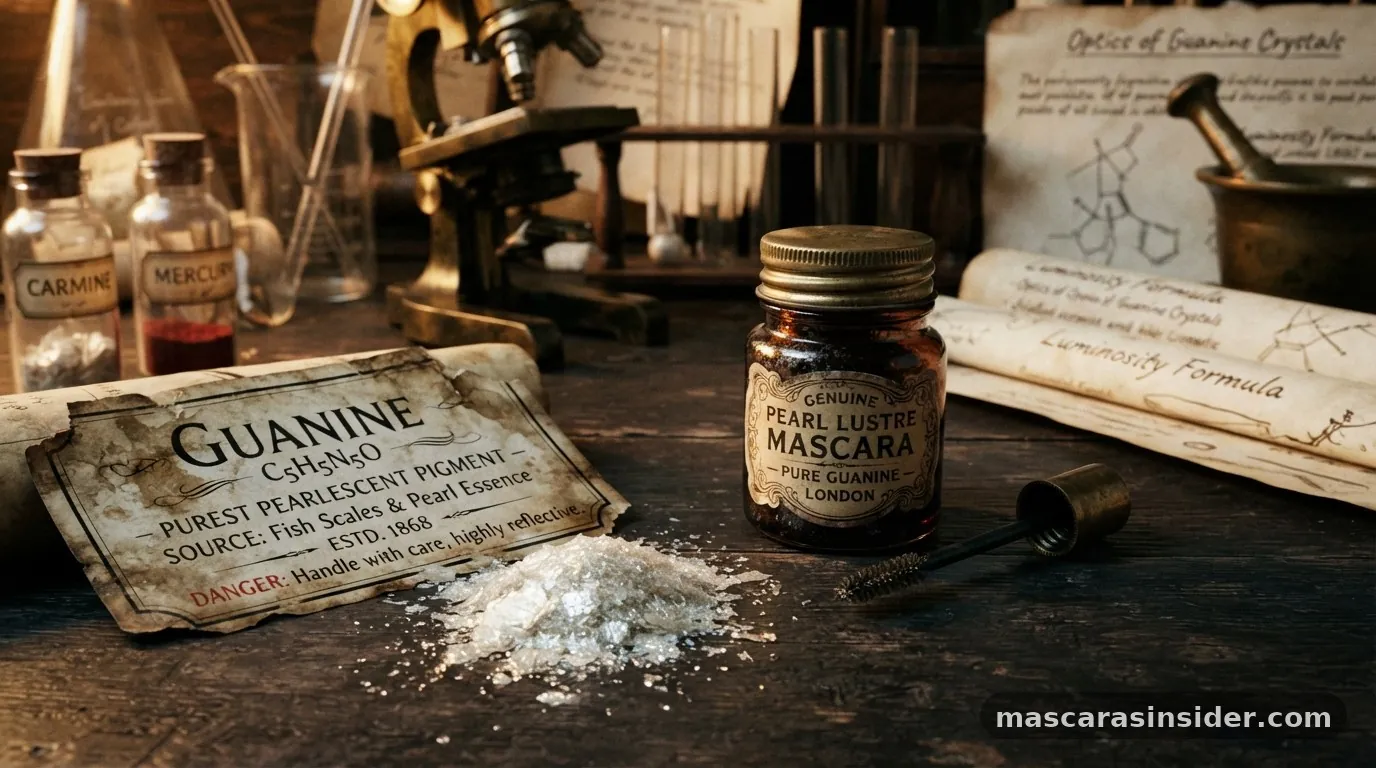
While the myth focuses on bat poop, the real ingredient that sparks the conversation is guanine. This compound is responsible for the “shimmer” or “lustre” found in various beauty items, including nail polish, eye shadow, and occasionally high-end mascara designed to catch the light. Because it is a crystalline material, it reflects light in a way that mimics the iridescent scales of fish, which is why it is often referred to as “pearl essence.”
When a company adds guanine to a formula, they are looking for a specific visual effect. It is not a structural ingredient like wax or a pigment like iron oxide. It is purely aesthetic.
In the past, this was harvested from the scales of herring or other silver-colored fish. Today, however, many cosmetic brands have shifted toward synthetic alternatives to meet the demands of ethical consumers. If you are looking for a vegan option, you can easily verify whether a brand uses synthetic mica or mineral-based pigments instead of animal-derived pearls.
| Ingredient Type | Purpose in Mascara | Typical Source |
|---|---|---|
| Pigment | Provides dark color | Iron oxide or Carbon black |
| Wax | Adds volume/structure | Beeswax or Carnauba |
| Polymer | Forms a protective film | Synthetic resins |
| Lustre Agent | Adds shimmer | Guanine (fish scales) or Mica |
Why the Bat Poop Myth Persists
Urban legends thrive in the space between scientific complexity and public curiosity. Because the average person does not spend their day reading the chemical composition of their makeup, they rely on hearsay.
The idea that a “gross” natural ingredient is hidden in a luxury product is a classic trope in consumer culture. It feels like a “secret” that companies are trying to hide, even when the truth is boringly mundane.
The persistence of the bat poop story can also be attributed to the “natural” beauty movement. As consumers become more interested in what they put on their skin, they often look for reasons to distrust mass-market cosmetics. Linking a common beauty staple to animal waste creates a visceral reaction.
It taps into our inherent disgust response, making the story memorable and easy to share. However, the reality is that the FDA and other international bodies have strict protocols for what can be used in eye-safe products.
If guano were actually a component, it would be impossible to keep such a product sterile, and the resulting eye infections would lead to immediate product recalls and lawsuits. You can find more information on how the FDA regulates cosmetics on their official website, which highlights the rigorous safety standards required for ingredients.
Distinguishing Between Myths and Facts
To separate fact from fiction, it is helpful to look at the history of the cosmetic industry. While ancient cultures did use various natural substances to darken their eyes—including kohl, which was made from galena (lead sulfide) and other minerals—they did not utilize bat poop.
These historical practices were often dangerous, but they were not based on the use of excrement. The evolution of makeup has been a journey toward cleaner, safer, and more consistent ingredients.
The modern mascara that you buy at the store is a triumph of chemical engineering. Every batch is formulated to be stable, water-resistant, and free from the types of biological contaminants that would be present in animal waste. When you hear claims about what is in your makeup, consider the source.
If it sounds like a shock-value headline, it is almost certainly false. The beauty industry is heavily scrutinized, and the risk of using an ingredient as controversial as guano would be a financial and public relations disaster that no major brand would ever risk.
Addressing Topical Gaps and Safety
One common gap in knowledge is the difference between “natural” ingredients and “safe” ingredients. Many people assume that because something is natural, it must be safe, or conversely, that anything synthetic is dangerous. The bat poop rumor plays on this by suggesting a “natural” but revolting ingredient is being used.
In reality, the most important factor for eye products is sterility. Whether an ingredient like a polymer or an oxide pigment is synthetic or natural, the primary concern of the manufacturer is ensuring it does not harbor bacteria.
1. Always check the ingredient list if you have sensitive skin or allergies.
2. Replace your mascara every three months to prevent the buildup of bacteria, regardless of what the ingredients are.
3.
If you see a claim that sounds unbelievable, check the official ingredient list on the brand’s website or the packaging.
4. Remember that the term “natural” is not a protected regulatory term, so it is often used for marketing rather than safety.
By focusing on the actual chemistry of your makeup—such as the role of wax, the use of black iron oxide, and the function of film coats—you can take control of your beauty routine. Understanding that your mascara is a carefully balanced formula designed for safety and performance is the best way to debunk these silly myths. You are not putting animal waste on your eyes; you are using a precision-engineered product that has been vetted for your protection.
Frequently Asked Questions
Is there any historical basis for using guano in mascara?
No, there is no historical evidence suggesting that bat poop was ever used in the production of mascara. The myth is likely a result of linguistic confusion between the word guano and the ingredient guanine, which is a pearlescent compound sometimes used for shimmer.
What provides the dark color in mascara?
The dark color in modern mascara is typically provided by carbon black or black iron oxide. These are safe, stable pigments that have been used in the cosmetic industry for decades to provide the deep, opaque finish that defines the product.
Are there animal products in my mascara?
Some mascara formulas may contain beeswax, which is an animal-derived ingredient. However, many brands now offer vegan alternatives that use plant-based waxes. You can check the ingredient list for specific animal-derived components, but you will never find animal waste or guano in these formulas.
Why do people think mascara contains bat poop?
The rumor persists because of the phonetic similarity between guanine (a shimmery ingredient) and guano (the technical term for bat or bird droppings). This misunderstanding is amplified by social media and urban legend culture, which often favors shocking, sensationalized stories over accurate scientific information regarding makeup ingredients.