
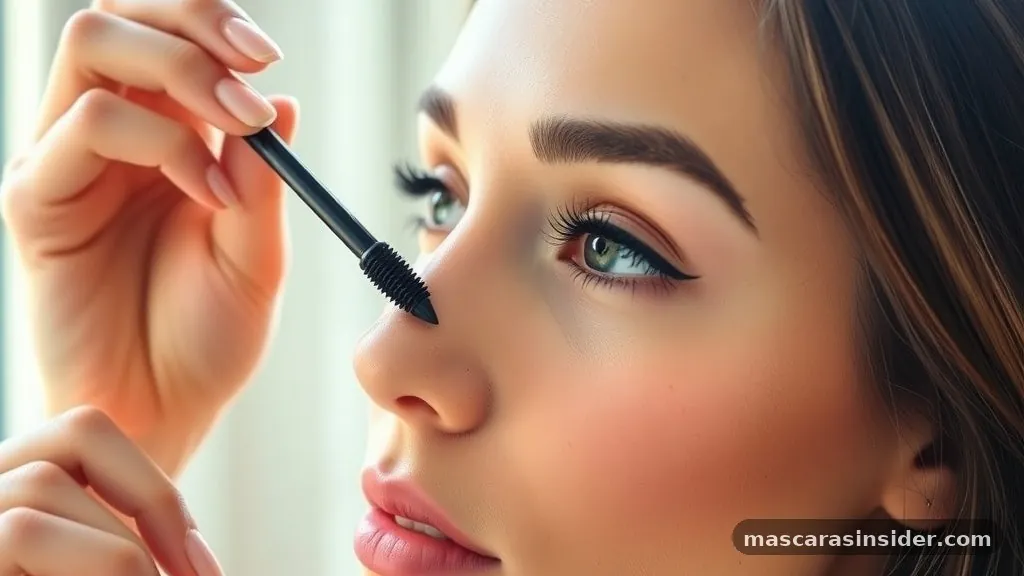
You’ve seen it in every makeup bag, on every drugstore shelf, and probably swiped it across your own lashes a few hundred times. But if someone stopped you and asked, “so whats mascara, really?” you might pause.
It’s one of those everyday cosmetics we take for granted. This little tube does a surprising amount of work, and it carries a longer history and a stranger word origin than most people realize.
Let’s break it all down. What the word means, what mascara is actually made of, the different types you’ll find, and how to use it without ending up with clumpy spider lashes.
Whats Mascara: The Basic Definition
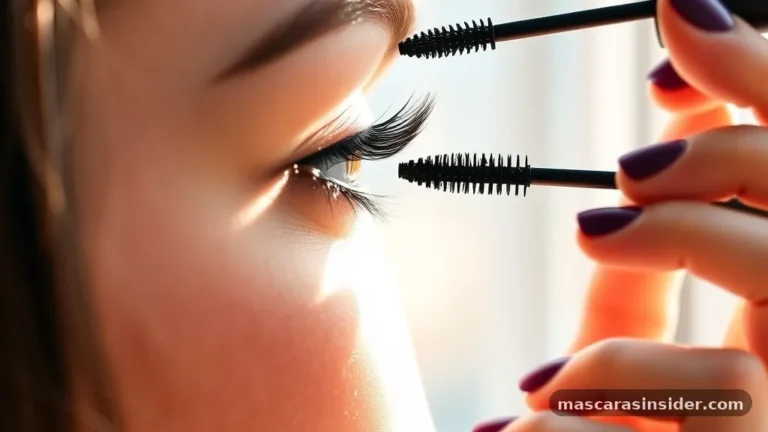
At its simplest, mascara is a cosmetic product used to darken, thicken, lengthen, and define the eyelashes. You apply it with a small wand or brush, coating each lash from root to tip. The goal is to make your eyes look bigger, more awake, and more expressive.
Most dictionaries define it in almost exactly those terms. According to the entry you’ll find in any major English dictionary, mascara is “a cosmetic for darkening and thickening the eyelashes.” Short, accurate, and to the point.
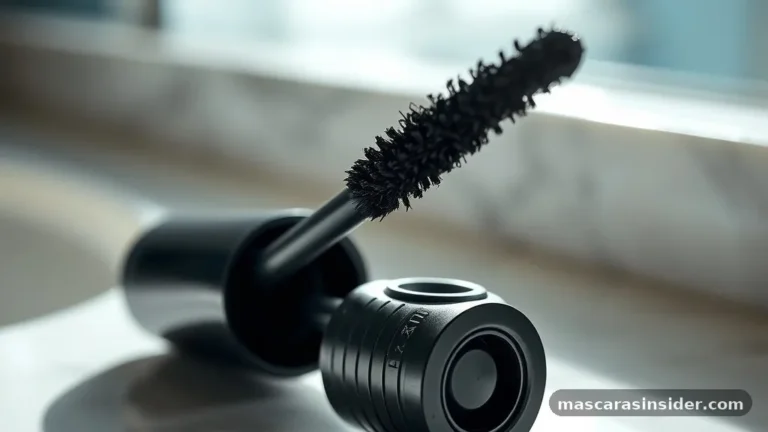
The typical mascara has three parts working together: a pigment (usually black, sometimes brown or a bright colour), a wax or oil base, and a polymer film that helps the whole thing cling to your lashes and hold its shape. The applicator matters too. The brush shape controls whether you get length, volume, or separation.
Here’s a quick look at what the word carries in a few different languages, since mascara travels well:
| Language | Word / Translation | Note |
|---|---|---|
| English | Mascara | Standard cosmetic term |
| Spanish | Máscara / Rímel | “Rímel” is common for the eye product |
| Italian | Maschera | Means “mask” |
| Portuguese | Máscara / Rímel | Similar to Spanish usage |
| French | Mascara | Adopted directly |
Where the Word Comes From
The word itself has a bit of a winding journey. Most etymologists trace “mascara” back to the Italian “maschera” and the Spanish “máscara,” both meaning “mask.” Dig a little deeper and you land at the Arabic “maskharah,” which loosely meant a buffoon or a person in disguise.
That makes sense when you think about it. Mascara is, in a way, a mask for your lashes. It changes and covers what’s naturally there.
The connection to disguise and theater isn’t accidental. Cosmetic darkening of the eyes goes back thousands of years to ancient Egypt, where people used kohl, a soot-and-mineral paste, to line and darken the eye area. That’s arguably the earliest ancestor of what we now call mascara.
The modern product, though, is much newer. In 1913, a chemist named Terence Williams reportedly created an eyelash product for his sister Mabel by mixing coal dust with petroleum jelly.
That mix became the foundation of a company you still know today: Maybelline (Mabel plus Vaseline). If you ever wanted a fun citation for trivia night, that’s a solid one.
What Mascara Is Actually Made Of
Crack open any tube and you’ll find a fairly consistent set of ingredients. Formulas vary between brands, but the building blocks are pretty universal. The list usually includes:
- Pigments – Carbon black is the classic for that deep black colour. Iron oxides create brown and other earthy tones.
- Waxes – Beeswax, carnauba wax, and paraffin give mascara its texture and help it coat and hold onto lashes.
- Oils and emollients – These keep the formula smooth and prevent it from drying too fast in the tube.
- Polymers and film-formers – These are what let mascara set and stay put through the day.
- Preservatives – Because it lives near your eyes, mascara needs preservatives to keep bacteria out.
- Solvents – Water in regular formulas, or oils and specific solvents in waterproof versions.
The wax content is really the heart of it. Carnauba wax, which comes from a Brazilian palm, is one of the hardest natural waxes and helps mascara resist smudging. Beeswax adds flexibility so your lashes don’t go stiff and crumbly.
For those curious about safety and ingredient regulation, the U.S. Food and Drug Administration keeps a public resource on eye cosmetic safety that’s genuinely worth a read before you buy anything new. It covers things like why you shouldn’t share mascara and how long to keep a tube.
Three Types of Mascara You’ll Run Into
Walk down any cosmetics aisle and the choices get overwhelming fast. But most mascaras fall into a few main categories based on what they’re built to do.
Lengthening Mascara
This kind stretches the appearance of your lashes, making them look longer and more defined. Lengthening formulas often contain fibers or polymers that grip the tip of each lash and extend it. If your lashes are short, this is your friend.
Volumizing Mascara
Volumizing mascara is all about thickness. It uses heavier waxes and a fuller brush to coat each lash with more product, giving a bold, dramatic look. Think fuller, plumper lashes rather than longer ones.
Waterproof Mascara
Waterproof mascara swaps water-based ingredients for oil and wax-heavy formulas that resist moisture. Great for weddings, humid days, workouts, or anyone who cries at movies. The tradeoff is that it’s harder to remove and can dry out lashes if you wear it constantly.
Beyond these three, you’ll also see curling mascaras (which use flexible polymers to lift and hold a curl), defining mascaras for separation, and tubing mascaras that form little tubes around each lash and slide off with warm water. Here’s a rough comparison:
| Type | Best For | Removal |
|---|---|---|
| Lengthening | Short lashes | Easy, standard cleanser |
| Volumizing | Thin, sparse lashes | Moderate |
| Waterproof | Humidity, water, tears | Needs oil-based remover |
| Tubing | Sensitive eyes, clean removal | Warm water |
How to Actually Use Mascara
Applying mascara looks simple, and it mostly is. But the small details are what separate a clean, fluttery result from a clumpy mess.
Start by curling your lashes if you want lift, before any product goes on. Then pull the wand out of the tube and wipe off any excess.
Don’t pump the wand in and out repeatedly, by the way. That pushes air into the tube and dries your mascara out faster.
Position the brush at the base of your upper lashes and wiggle it slightly as you sweep upward toward the tips. That wiggle at the root deposits more colour where you want it. Two thin coats beat one thick coat almost every time.
A few tips people learn the hard way:
- Let the first coat dry a little before adding a second, or you’ll get clumps.
- Use a clean spoolie to comb through and separate lashes if they stick together.
- For the lower lashes, hold the wand vertically and use just the tip for control.
- Replace your mascara every three months. Old tubes breed bacteria and can cause eye infections.
Removal matters as much as application. For regular mascara, a gentle cleanser or micellar water usually does it.
For waterproof, you’ll need an oil-based or bi-phase remover. Rubbing too hard can pull out lashes, so be patient and let the remover break the product down first.
Mascara in Slang and Everyday Language
If you searched “whats mascara” expecting a slang meaning, here’s the honest answer: mascara doesn’t have a widely established slang definition the way some other words do. In standard English, dictionaries and a thesaurus will point you straight to the cosmetic product for eyelashes. There’s no hidden second meaning lurking in most grammar guides.
That said, the word does get used loosely in casual speech and lyrics, often as shorthand for makeup, glamour, or putting on a face for the world. Given its literal root in “mask,” that metaphorical stretch feels natural. Someone might mention mascara-streaked cheeks to describe crying, for instance, which has become a common poetic image.
And yes, mascara is worn by people of all genders. “Mascara for men” is a real and growing search, and there’s nothing unusual about it.
Definition and function stay the same regardless of who’s wearing it. The product darkens lashes; that’s it.
One more common mix-up worth clearing: mascara and eyeliner are not the same thing. Eyeliner defines the lash line and the shape of the eye with a pencil, liquid, or gel line.
Mascara coats the lashes themselves. People often use both together, but they do different jobs.
Frequently Asked Questions
What does mascara mean in slang?
There isn’t a common, dictionary-recognized slang meaning for mascara. In casual use it sometimes stands in for makeup or glamour generally, drawing on its root word meaning “mask,” but the standard definition remains the cosmetic used to darken and thicken eyelashes.
Is mascara the same as eyeliner?
No. Mascara is applied to the eyelashes to darken and lengthen them.
Eyeliner is drawn along the lash line to define the shape of the eye. They’re separate products used for different effects, though many people wear both at once.
What is mascara made of?
Most formulas combine pigments (usually carbon black or iron oxides), waxes like beeswax and carnauba, oils, polymers that help it set, preservatives, and solvents such as water. Waterproof versions swap the water for oil and wax-heavy ingredients to resist moisture.
Can men wear mascara?
Absolutely. Mascara works the same on anyone’s lashes, and men wearing it has become increasingly common.
The product doesn’t change based on who applies it. Several brands now market grooming lines aimed specifically at men.
How often should I replace my mascara?
Every three months is the widely recommended rule. Mascara sits close to the eye and the wet, dark tube is a friendly environment for bacteria. Tossing it on schedule lowers the risk of irritation and infection.
Final Thoughts
So, whats mascara at the end of the day? It’s a cosmetic built to darken, lengthen, and thicken your lashes, made mostly from pigment, waxes, and film-forming polymers. The word traces back through Italian, Spanish, and Arabic to a root meaning “mask,” which fits a product designed to transform how your eyes look.
From ancient Egyptian kohl to that 1913 mix of coal dust and petroleum jelly, mascara has a real history behind it. Knowing the types, lengthening, volumizing, waterproof, and the rest, helps you pick the right tube.
And a few simple habits (two thin coats, replacing it every few months, removing it gently) go a long way. Small product, big difference.