
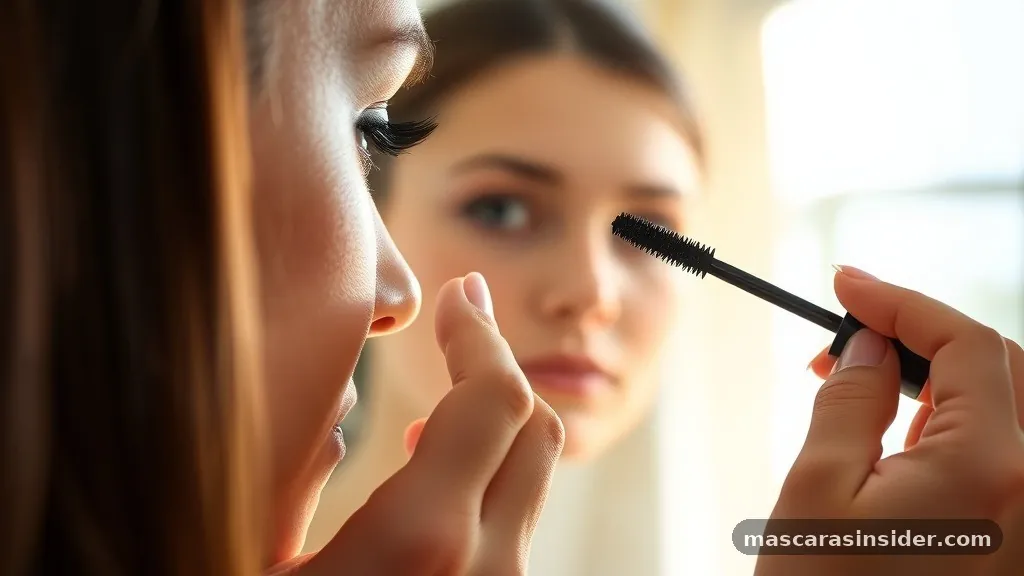
Open almost any makeup bag and you’ll find one. That little tube with the wand tucked inside is probably the most reached-for cosmetic on the planet. But if someone stopped you and asked what mascara actually does, could you explain it beyond “it makes lashes darker”?
Most people couldn’t. So let’s clear it up properly.
Mascara is a cosmetic applied to the eyelashes to make them look darker, longer, thicker, and more defined. That’s the short version.
The longer version involves chemistry, a surprisingly old history, and a few things about your eyes you probably haven’t thought about. This is a product used by an estimated hundreds of millions of people every single day, and it earns that popularity for real reasons.
What Is Mascara For, Exactly?
At its core, mascara exists to draw attention to your eyes. Human eyes are one of the first things another person notices, and lashes frame them.
When your lashes are darker and fuller, your eyes appear bigger, brighter, and more awake. That’s the whole trick.
Think of it this way. Bare lashes, especially blonde or light-brown ones, tend to disappear against the skin.
A coat of mascara adds contrast. Suddenly the eye has a defined edge, the whites look a touch clearer, and the overall face reads as more polished with almost no effort.
The product does a few jobs at once:
- Darkens the lashes so they stand out against the skin and the eye
- Lengthens the appearance of each lash, sometimes with tiny fibers in the formula
- Adds volume by coating the lash so it looks thicker than it is
- Curls or lifts lashes upward to open up the eye
- Separates lashes so they don’t clump into a spidery mess
Not every mascara does all of these. Some formulas chase length. Others chase volume.
A few try to do everything, and honestly, those usually do none of it especially well. The best approach is picking the one that solves your particular lash problem.
A Short History of the Lash Product
Mascara isn’t a modern invention. People have been darkening their lashes for thousands of years. Ancient Egyptians used kohl, a mixture that included soot and other minerals, to darken lashes and lids as far back as 4000 BC.
It wasn’t purely about vanity either. Many believed the dark lining protected the eyes from the harsh desert sun and warded off infection.
The modern version has a more traceable origin. In the 1910s, a chemist named Eugène Rimmel created an early commercial lash cosmetic, and his name became so linked to it that “rimmel” still means mascara in several languages. Around the same time, a man named T.L.
Williams mixed coal dust with petroleum jelly for his sister Mabel. That little home experiment eventually became Maybelline, a name built from “Mabel” and “Vaseline.”
For decades mascara came as a cake you had to wet with a brush. The tube-and-wand format we know today only took over in the 1960s. Once it did, it never looked back.
What Is Mascara Made Of?
The formula sounds more complicated than it is. Most mascaras are built from a handful of ingredient types that each play a role. Understanding what’s inside helps explain why some wands smudge and others survive a good cry.
| Ingredient Type | What It Does | Common Examples |
|---|---|---|
| Pigments | Provide the color, usually black or brown | Iron oxides, carbon black |
| Waxes | Give structure and help coat each lash | Beeswax, carnauba, paraffin |
| Oils and solvents | Keep the formula smooth and spreadable | Mineral oil, water |
| Polymers and film-formers | Help the coat cling and stay put | Acrylate copolymers |
| Preservatives | Prevent bacteria growing in the tube | Parabens, phenoxyethanol |
Waterproof mascaras swap out some water-based ingredients for more waxes and silicones, which is why they resist tears and sweat but need a proper remover to get off. Fiber mascaras add tiny nylon or rayon fibers that cling to the tip of each lash to fake extra length.
If you’ve got sensitive eyes, it’s worth scanning the label. The U.S. Food and Drug Administration offers guidance on eye cosmetic safety that covers ingredients, contamination, and how to use these products without hurting yourself.
How to Use Mascara Properly
Application is where a lot of people go wrong. A great formula in a rushed hand still looks patchy. The technique isn’t hard, but it rewards a bit of care.
Start with clean, dry lashes. If you use an eyelash curler, do it before the mascara, never after, because dried product plus a metal clamp equals broken lashes.
The basic steps
- Wipe the wand once against the tube opening to remove excess. This prevents clumps.
- Look slightly down into a mirror and place the brush at the base of your upper lashes.
- Wiggle the wand side to side as you sweep upward and outward. That wiggle deposits color at the root, which is where volume comes from.
- Add a second coat while the first is still slightly wet if you want more drama.
- For the lower lashes, use just the tip of the brush and a light hand.
A few tips that make a real difference. Don’t pump the wand in and out of the tube, because that pushes air in and dries the formula out faster. Replace your mascara every three months, since the wet, dark tube is a perfect home for bacteria.
And if the formula starts to smell odd or feels gloopy, throw it out. No look is worth an eye infection.
Applying mascara daily is fine for most people. Just make sure you remove it fully every night. Sleeping in it, over time, can dry out and weaken your lashes.
Types of Mascara and What Each One Does
Walk down any beauty aisle and the choice is genuinely overwhelming. Dozens of tubes, all promising something. Here’s how the main categories actually differ, so you can match the product to the look you’re after.
- Lengthening mascara stretches the look of each lash, often using fibers. Great for short, straight lashes.
- Volumizing mascara uses thicker waxes to fatten each lash for a bold, full effect.
- Curling mascara has flexible polymers that hold an upward lift through the day.
- Waterproof mascara resists water, tears, and humidity, ideal for weddings, workouts, and hot weather.
- Lengthening and volumizing hybrids try to do both, with mixed results depending on the brand.
- Tubing mascara forms tiny tubes around each lash that slide off with warm water, no rubbing needed.
The wand matters as much as the formula. A big, fluffy brush grabs more product and builds volume. A thin, spiky brush reaches short lashes and separates them cleanly.
Curved wands help lift. Silicone wands, with their little rubber bristles, tend to give a cleaner, more defined finish than the old bristle type.
Color is another variable. Black is by far the most common and the most flattering for most people, since it gives the strongest contrast.
Brown suits fair skin and lighter hair for a softer daytime look. Bold shades like navy or plum can make certain eye colors pop, though they’re more of a statement.
The Downsides and Eye Safety
Mascara is generally safe, but it isn’t risk-free, and being honest about that helps you use it smarter. The most common problems come from old product or careless removal.
Bacterial contamination is the big one. That dark, damp tube is exactly the environment germs love.
Sharing mascara, or keeping a tube for a year, can lead to styes, conjunctivitis, or irritation. This is why the three-month rule exists.
Rubbing to remove waterproof formulas can tug lashes right out. Do that often enough and lashes thin over time.
A gentle oil-based or micellar remover, pressed on and left to dissolve the product, saves your lashes a lot of stress. Some people also react to specific ingredients, so if your eyes itch or water after applying, switch to a fragrance-free or ophthalmologist-tested formula.
One myth worth killing: mascara doesn’t stunt lash growth or make lashes “fall out permanently.” Lashes shed and regrow on a natural cycle anyway. What damages them is aggressive rubbing and sleeping in makeup, not the product sitting on the lash for a day.
Frequently Asked Questions
What is mascara for men?
The same thing it’s for anyone. Some men use a clear or brown mascara to subtly define their lashes without an obvious made-up look. Men’s grooming products have grown, and a light coat of lash product is a small, natural way to make tired eyes look more awake.
What is mascara for hair?
“Hair mascara” is a separate product from lash mascara. It’s a temporary color applied with a small wand to streaks of hair or to cover gray roots between salon visits.
It washes out with shampoo. Despite the shared name, don’t use eyelash mascara on your hair, or the reverse.
Can I wear mascara with lash extensions?
Usually you shouldn’t. Lash extensions are already designed to look full and dark, and most mascaras, especially waterproof ones, can damage the extension bond and cause them to fall off early. If you feel you need more, use a special extension-safe formula and skip oil-based removers entirely.
How long does one tube of mascara last?
You should replace it every three months once opened, regardless of how much is left. This isn’t a sales gimmick. The moist inside of the tube grows bacteria over time, and applying that so close to your eye is a genuine infection risk.
Does mascara actually make lashes longer permanently?
No. It creates the appearance of length and volume while you’re wearing it, then washes away.
For permanent-looking changes, people turn to lash serums, extensions, or lifts. Mascara is a temporary, wash-off cosmetic, which is exactly why it’s so easy to use every day.
The Bottom Line
So, what is mascara for? It’s a cosmetic built to make your eyelashes darker, longer, fuller, and more defined, which in turn makes your eyes look bigger and brighter. That simple job has kept mascara in makeup bags for over a century, and in some form for thousands of years before that.
The formula is a clever mix of pigments, waxes, oils, and film-formers. The trick to using it well comes down to a clean wand, a gentle wiggle at the root, honest replacement every few months, and thorough removal at night. Pick the type that fits your lashes, whether that’s lengthening, volumizing, or waterproof, and you’ll get far better results than reaching for whatever tube is nearest.
It’s one of the smallest products in your routine, yet it does more visible work than almost anything else. Not bad for a bit of colored wax on a stick.