Standing in the makeup aisle staring at forty near-identical black tubes is a special kind of paralysis. They all promise longer, fuller, more dramatic lashes. They can’t all be right for you though.
The truth is that the mascara that transforms your friend’s eyes might leave yours looking clumpy or barely there. Picking the right one comes down to understanding your own lashes, knowing what each formula actually does, and matching the brush shape to the result you want.
This guide walks through all of it. By the end you’ll know how to read a mascara like a pro instead of gambling twelve bucks on the prettiest packaging.
Start With Your Lashes, Not the Marketing
Every good mascara decision begins with an honest look in the mirror. Are your lashes sparse and thin? Long but limp?
Short and stubborn? Straight as a board no matter what you do? Your natural lash type dictates almost everything about what will work.
People with fine, sparse lashes usually crave volume. Those with plenty of lashes that just fall flat need lift and curl. If your lashes point straight down toward your cheeks, a curling formula paired with a good lash curler becomes your best friend.
Here’s a quick way to self-diagnose before you shop:
- Sparse or thin lashes: reach for a volumizing mascara that coats each hair and fattens it up.
- Short lashes: a lengthening formula with a fiber or comb-style brush stretches them out.
- Straight lashes: curling mascara with a curved wand holds the lift all day.
- Sensitive eyes or contact wearers: tubing mascara or ophthalmologist-tested formulas cause fewer flakes and less irritation.
- Oily lids or watery eyes: waterproof or water-resistant formulas resist smudging.
Once you know which camp you fall into, the wall of tubes suddenly makes a lot more sense. You’re no longer choosing at random. You’re choosing with a target in mind.
Understanding the Main Types of Mascara Formulas
Not all mascaras do the same job, and the formula inside the tube matters as much as the brush on the wand. There are a handful of core categories, and most products lean into one or two of them.
Volumizing mascara uses waxes and polymers to build thickness around each lash, giving that full, dramatic definition. Lengthening formulas contain tiny fibers or nylon that cling to the tip of the lash and extend it.
Curling mascaras are formulated with flexible polymers that hold a lift from root to tip. And then there’s tubing mascara, which is a bit of a different animal.
Tubing mascara forms tiny water-resistant tubes around each lash rather than painting on a layer of pigment. It won’t flake or smudge, and it removes with warm water and gentle pressure instead of harsh makeup remover. That makes it a favorite for people with sensitive eyes, contact lenses, or oily skin.
The table below breaks down the main types and who they suit best:
| Formula Type | What It Does | Best For |
|---|---|---|
| Volumizing | Thickens and adds fullness to each lash | Sparse, thin lashes |
| Lengthening | Extends and stretches the lash tip | Short lashes |
| Curling | Lifts and holds a curl all day | Straight or droopy lashes |
| Tubing | Wraps lashes in flexible water-resistant tubes | Sensitive eyes, contact wearers |
| Waterproof | Resists water, sweat, and tears | Humid climates, workouts, emotional days |
Some formulas are enriched with conditioning ingredients like peptides or panthenol that support lash health over time. Those are worth a look if you wear mascara daily and worry about breakage.
The Brush Matters More Than You Think
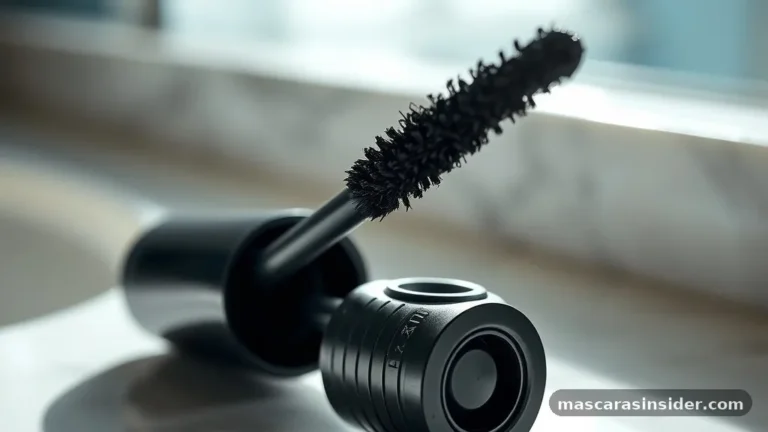
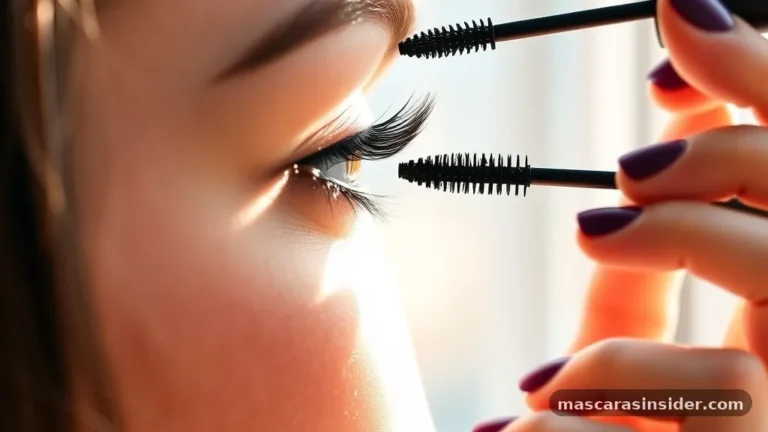
Two mascaras with identical formulas can give completely different results depending on the wand. The brush is what deposits the product, separates the hairs, and shapes the final look. Ignore it at your peril.
Big, fluffy brushes carry a lot of product and are great for volume. They coat the lash generously but can also clump if you’re heavy-handed.
Skinny, tapered wands reach the inner corners and lower lashes with precision, perfect for a natural, defined result. Curved brushes follow the shape of your eye and push lashes up for extra lift.
Silicone or plastic comb-style brushes separate each lash cleanly and prevent the spidery clumping that plagues so many bristle wands. If you hate that gluey, stuck-together look, a plastic bristle wand is usually your answer.
Matching Brush Shape to Your Goal
A few quick pairings to keep in mind. Want maximum drama? A dense hourglass-shaped brush packs product at the root and thins toward the tip.
Chasing length? A slim, spiky wand grabs individual lashes.
Trying to tame a lot of lashes into neat definition? A comb brush does the sorting for you.
Don’t overlook the smaller wands designed specifically for bottom lashes and short corner hairs. They give you control where a big brush would just smear product on your lower lid.
Black or Brown? Choosing the Right Shade
Most people default to black without a second thought, and honestly, black works for the vast majority. It gives the most contrast and makes lashes look their fullest. But brown deserves more credit than it gets.
Brown mascara suits fair-skinned people with light hair, anyone over a certain age who wants a softer daytime look, and redheads whose black lashes can look a touch harsh. It reads more natural in daylight and photographs beautifully for that “no makeup” makeup vibe.
There’s also blackest-black, or “blackened” shades, which lean into intensity for evening looks and darker features. If you have deep skin tones or dark brows, the extra depth balances the face nicely.
A good rule: match the drama of your mascara to the occasion. Brown for the office, black for date night, blackest-black when you want your eyes to do the talking.
Colored mascaras, think navy, plum, or forest green, aren’t just for the bold. A subtle navy coat actually makes the whites of your eyes look brighter, which is a nice trick that flatters almost everyone without screaming “I’m wearing colored mascara.”
Formula Details That Actually Change Your Experience
Beyond the big categories, a few practical factors decide whether you’ll love or ditch a mascara after one use. Waterproof versus washable is the big one. Waterproof holds up through rain, tears, and sweaty gym sessions, but it clings hard and can pull out lashes during removal if you scrub.
The American Academy of Ophthalmology recommends being gentle around the eyes and replacing eye makeup regularly to avoid irritation and infection. You can read their guidance on safe makeup use around the eyes for more detail.
Drying time matters too. Some formulas set fast, which is ideal if you’re prone to smudging or in a hurry.
Others stay flexible longer so you can build layers. Neither is better; it depends on your routine.
Then there’s the age of the product. Mascara doesn’t last forever. Because you’re pumping the wand in and out, bacteria builds up fast, and the formula dries out.
Most dermatologists suggest tossing mascara after three months. If it smells odd or clumps unusually, don’t push your luck. An old tube isn’t just annoying to apply, it’s an eye infection waiting to happen.
A few extra pointers worth keeping in mind:
- Never pump the wand, it forces air in and dries the formula out faster.
- Wipe excess product off the wand before applying to avoid clumps.
- Skip sharing mascara, even with close friends, because it spreads bacteria.
- Curl lashes before mascara, not after, so you don’t snap coated hairs.
Building the Right Look for Your Eye Shape
Your eye shape affects where you should concentrate product for the most flattering effect. It’s a subtle art, but a little strategy goes a long way.
Round eyes look elongated when you focus mascara on the outer lashes, drawing the eye outward. Almond eyes, considered the most versatile shape, can carry an even coat all across.
Hooded eyes benefit from lift at the center of the lash line to open up the lid, and a curling formula works wonders here. Downturned eyes lift beautifully when you emphasize the outer corners.
For deep-set eyes, a lengthening mascara brings the lashes forward and makes them more visible. If your eyes are close-set, again, favor the outer lashes to create the illusion of width.
The point isn’t to overthink every application. It’s to know that a slight shift in where you place the product can make your eyes look bigger, more awake, or more balanced without changing anything else about your makeup.
Frequently Asked Questions
How do you know which mascara is right for you?
Start by identifying your lash type and your main goal. If your lashes are thin, go volumizing. Short lashes need lengthening.
Straight lashes want a curling formula. Match the brush to that goal, pick a shade that suits your coloring, and consider whether you need waterproof or a gentle tubing formula for sensitive eyes. Testing a couple of options is normal before you find your holy grail.
Should I choose brown or black mascara?
Black gives the most contrast and drama and works for most people. Brown is softer and more natural, ideal for fair skin, light hair, redheads, and everyday daytime wear.
If you want a subtle, believable look, brown is your pick. For evening or bold features, black or blackest-black delivers more impact.
Is tubing or fiber mascara better?
Neither is universally better; they serve different needs. Tubing mascara wraps lashes in flexible tubes that resist smudging and remove with just warm water, making it great for sensitive eyes and contact wearers. Fiber mascara adds tiny fibers to dramatically lengthen and volumize, which suits people chasing maximum length.
If you smudge easily, tubing wins. If you want extra length, fiber pulls ahead.
How often should I replace my mascara?
Every three months is the widely recommended rule. Mascara is a moist, dark environment where bacteria thrive, and the formula dries out with repeated use. If it smells strange, changes texture, or starts clumping oddly, replace it sooner regardless of the calendar.
Can mascara damage my lashes?
Poor removal is the real culprit, especially with waterproof formulas that require scrubbing. Be gentle, use a proper remover, and never yank at your lashes. Look for formulas enriched with conditioning ingredients if you wear mascara daily, and give your lashes an occasional break to stay healthy.
The Takeaway
Choosing the right mascara isn’t luck, it’s a match between your natural lashes and the formula, brush, and shade that complement them. Diagnose your lash type first.
Decide whether you’re after volume, length, curl, or smudge-proof staying power. Then pick a wand shape that delivers that result and a color that flatters your features.
Keep it fresh, replace it every few months, and don’t be afraid to try a couple of options before committing. The best mascara for you is the one that makes your eyes look like the better version of themselves, not someone else’s. Armed with a little knowledge, that overwhelming wall of black tubes becomes a whole lot easier to shop.