
The process of creating the tube of color you swipe onto your eyes each morning is a sophisticated feat of chemical engineering. When you consider how is mascara made, you are looking at a precise balance of chemistry, safety testing, and industrial automation.
At its core, this product is an emulsion—a stable mixture of substances that typically do not want to stay blended, like oil and water. By combining these phases with specialized waxes and pigments, manufacturers create a substance that clings to individual lashes, dries quickly, and stays put throughout the day.
The Chemical Foundation of Modern Mascara
Mascara is essentially a complex chemical formula designed to coat, thicken, and darken the hair fibers around the eyes. The primary components are categorized into three distinct groups: the base, the pigment, and the film-formers.
The base is almost always a blend of water and oil, often stabilized by an emulsifier. Without this stabilizer, your favorite beauty product would separate into a greasy, watery mess inside the tube within hours.
Beyond the base, the cosmetic industry relies heavily on waxes to provide structure. Common varieties include beeswax, carnauba wax, or paraffin.
These ingredients give the mixture its body, allowing it to grip the lash without running down your face. Pigments, most commonly iron oxides, provide the deep black or brown color that defines the product. These are finely milled particles that must be dispersed perfectly throughout the solution so that every application provides a consistent, streak-free finish.
Step-by-Step Production Process
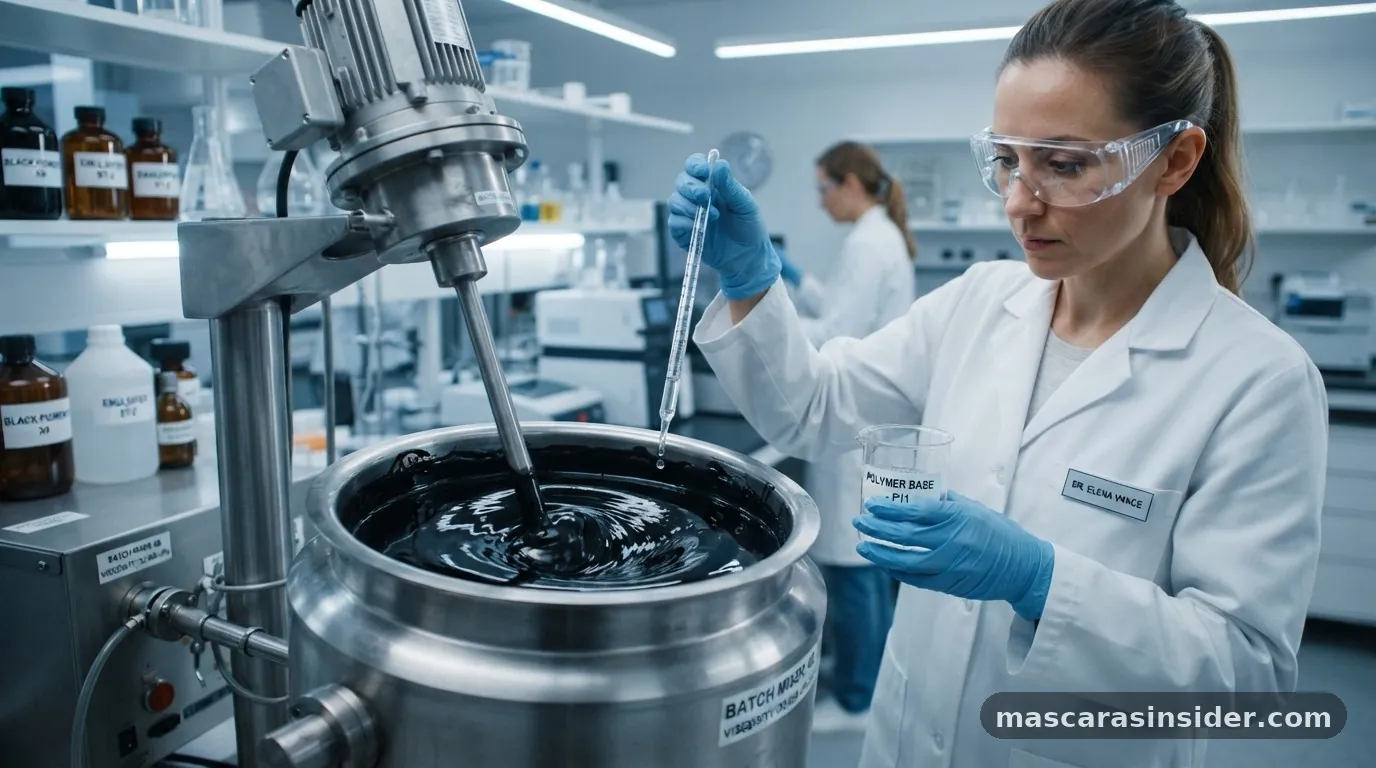
The manufacturing journey begins in a large industrial vessel where the science of cosmetics moves from the lab to the factory floor. The production flow follows a rigorous sequence to ensure that every batch meets safety standards.
1. Heating and Melting: The waxes and oil-based components are placed in a jacketed vessel and heated until they reach a liquid state. This ensures that the waxes can be thoroughly incorporated into the oil phase.
2.
Aqueous Phase Preparation: In a separate container, the water and water-soluble ingredients—such as thickeners, preservatives, and pigments—are mixed together.
3. Combining the Phases: The oil phase and the aqueous phase are slowly brought together. This is where the emulsifier does its heavy lifting, pulling the two opposing substances into a stable, creamy mixture.
4.
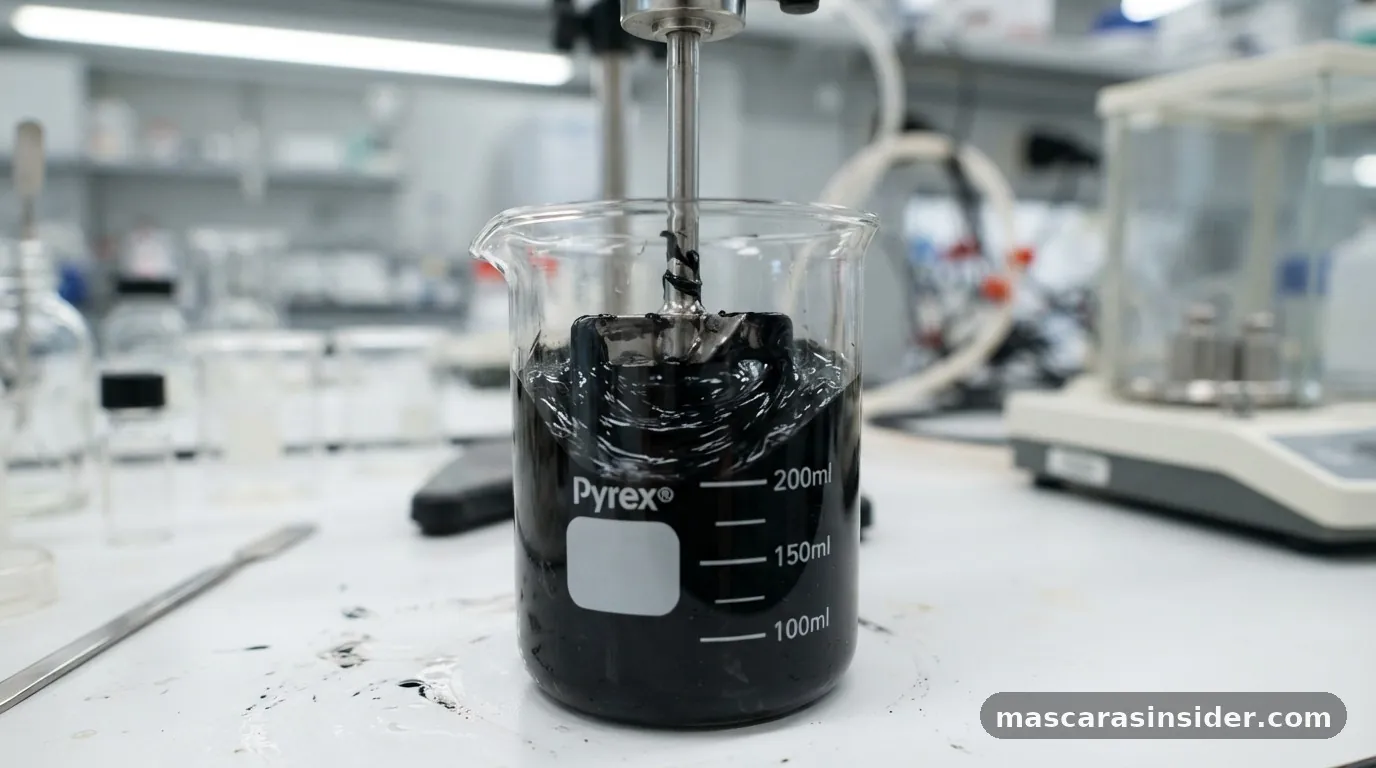
High-Shear Mixing: To ensure the consistency is perfectly smooth, the liquid passes through a machine called a homogenizer. This device uses high pressure to break down any remaining clumps of pigment or wax, creating a uniform, silky texture.
5. Cooling and Stabilization: Once the bulk material is thoroughly mixed, it is cooled under controlled conditions.
This prevents the waxes from crystallizing unevenly, which would result in a gritty or clumpy product.
6. Quality Control Testing: Before any product moves to filling, it undergoes rigorous testing. Lab technicians verify the viscosity, pH levels, and microbial safety of the batch.
7.
Packaging: The final formula is pumped into the packaging—the familiar tubes and wands you recognize. High-speed filling lines ensure that exactly the right amount of product enters each tube.
The Role of Pigments and Film-Formers
The visual impact of your lashes relies entirely on the quality of the pigments used during the manufacturing stage. The most common colorant is iron oxide, which is favored for its stability and safety. Manufacturers must ensure these particles are ground to a microscopic size; if the particles are too large, the mascara will feel heavy, look clumpy, and potentially irritate the sensitive skin around the eyes.
Film-formers are equally vital. These are polymers that create a thin, flexible coating around the lashes as the water content evaporates. They are the reason your product doesn’t flake off the moment you blink.
High-end brands often use specialized synthetic polymers that provide water resistance or extra curling capabilities. By adjusting the concentration of these polymers, chemists can differentiate between a “volumizing” formula, which focuses on thick waxes, and a “lengthening” formula, which leans more heavily on these film-forming agents.
Safety Standards and Regulatory Compliance
Every cosmetic product sold in major markets must adhere to strict regulatory guidelines to ensure consumer safety. Because mascara is used in such close proximity to the mucous membranes of the eye, it is subject to higher scrutiny than many other beauty items.
Manufacturers are required to include preservatives in the formula to prevent the growth of bacteria and mold. Since the wand is constantly being removed from and returned to the tube, it introduces oxygen and potential contaminants, making these preservatives essential.
You can learn more about the strict safety protocols required for eye products by visiting the U.S. Food and Drug Administration’s official page on cosmetics. Regulatory bodies demand that all raw materials are certified for eye-area use.
This eliminates the risk of using harsh dyes or toxic heavy metals. During the production process, factories maintain “clean room” environments to minimize airborne dust and microbial interference. Every batch is tracked by a lot number, allowing companies to trace ingredients back to their source if a safety issue ever arises.
Common Myths About Ingredients
There is a long-standing urban legend that mascara is made from “bat poop” or other bizarre animal byproducts. This is categorically false.
The cosmetic industry relies on safe, industrial-grade ingredients that are strictly regulated. The confusion often stems from the inclusion of guanine, a pearlescent substance that can be derived from fish scales, though most modern products use synthetic mica to achieve a similar shimmering effect.
The base of most formulas is a sophisticated mixture of synthetic and natural waxes. These are chosen for their melting points and their ability to stay solid at room temperature.
If you ever wonder why your mascara feels slightly different depending on the climate, it is because of these waxes reacting to temperature shifts. They are engineered to be stable, but they are not impervious to extreme conditions.
| Component Category | Primary Function | Common Example |
|---|---|---|
| Waxes | Structure and Volume | Beeswax, Carnauba |
| Pigments | Color and Opacity | Iron Oxides |
| Film-Formers | Adhesion and Longevity | Acrylates Copolymer |
| Preservatives | Safety and Stability | Phenoxyethanol |
Advancements in Filling and Packaging Technology
The final stage of the process, filling, is perhaps the most impressive in terms of speed and precision. Modern packaging facilities use automated systems that can fill thousands of tubes per hour. The challenge lies in the viscosity of the mixture.
Because mascara is thick, it cannot be poured like water. Instead, it is moved through pressurized stainless steel pipes and injected into the tubes from the bottom up to avoid trapping air bubbles.
Once the tube is filled, the wand—which is manufactured separately—is inserted. The design of the wand is just as important as the liquid itself. Different brush shapes are engineered to distribute the product evenly across the lashes.
A rubber bristle brush, for example, is often molded using injection-molding technology to ensure that each “tooth” of the brush is perfectly spaced to comb through the lashes and prevent clumping. The synergy between the chemical formula and the mechanical design of the wand is what truly defines the user experience of a high-quality product.
Frequently Asked Questions
8. Is it true that mascara is made from bat guano?
No, that is a persistent urban legend.
Mascara is made from a controlled blend of waxes, oils, pigments, and film-forming polymers. These ingredients are strictly regulated for safety and do not include animal waste or any other harmful substances.
9. Why does my mascara dry out so quickly?
Mascara dries out because the solvent—usually water—evaporates once the tube is opened and exposed to air. To keep it fresh, avoid “pumping” the wand in and out of the tube, as this forces air into the container and speeds up the drying process.
10. What is the main difference between waterproof and regular mascara?
Waterproof formulas contain higher concentrations of volatile solvents and hydrophobic polymers, such as isododecane. These ingredients create a barrier that repels water, whereas regular formulas are water-based and designed to be removed easily with soap and water.
11. How long should I keep a tube of mascara before discarding it?
You should replace your mascara every three months.
Because the wand is repeatedly inserted into the tube, it can introduce bacteria. After three months, the preservatives in the formula lose their effectiveness, increasing the risk of eye infections or irritation.