
You booked the lash appointment. You paid for the full set. And now, a few weeks in, you’re staring in the mirror wondering if a quick swipe of mascara would give those extensions a little extra punch.
It’s a fair question, and one that lash artists hear constantly. The short answer is complicated: sometimes yes, mostly no, and it depends heavily on the type of mascara sitting in your makeup bag.
Let’s break down what actually happens when mascara meets extensions, when it’s genuinely safe, and how to keep your set looking full without wrecking the work.
Can You Put Mascara on Lash Extensions Safely?
Here’s the thing most people don’t realize. Lash extensions are held to your natural lashes with a cyanoacrylate adhesive, the same chemical family as super glue but formulated for the eye area.
That bond is the whole reason your extensions stay put for weeks. Anything that breaks it down shortens the life of your set.
Traditional mascara is the enemy of that bond. Most classic formulas are oil-based or contain waxes and film-forming agents designed to cling to lashes and resist water. Those same ingredients coat your extensions in a sticky residue that’s genuinely difficult to remove, and the oils slowly dissolve the adhesive.
So can you wear mascara on extensions? Technically, yes.
Should you reach for whatever tube is nearest? Absolutely not.
If you do use mascara, it needs to be water-based and oil-free, applied only to the tips, and removed gently. Even then, most lash artists would rather you skip it entirely.
The whole point of extensions is that you wake up looking done. Adding mascara defeats the purpose and creates work you didn’t sign up for.
What Happens If You Use the Wrong Mascara
Picture this. You apply a waterproof, oil-heavy mascara to your beautiful volume set.
For a day, it looks great. Then things go sideways.
The residue builds up. Your lashes start to clump together in little spikes rather than fanning out the way they were designed to.
When you try to clean them, the mascara won’t budge with a normal cleanser, so you rub harder. That rubbing tugs the extensions loose, and suddenly you’re shedding two or three at a time.
Waterproof mascara is the worst offender. It’s built to survive water, which means it survives your gentle lash cleanser too.
Removing it usually requires an oil-based remover, and oil is precisely what dissolves lash glue. You end up in a lose-lose situation.
- Clumping and spiky, uneven lashes instead of a soft, uniform look
- Premature shedding as adhesive weakens and rubbing loosens extensions
- Stubborn residue that traps bacteria near the lash line
- A shortened lifespan, so a set that should last five to six weeks fails in two
- Possible eye irritation from products not meant to sit on extensions
According to guidance from the American Academy of Ophthalmology, keeping the eye area clean and avoiding harsh products around extensions helps reduce the risk of irritation and infection. That advice lines up neatly with what lash techs preach every day.
Water-Based vs Oil-Based Mascara: Why the Formula Matters
The single most important factor is what your mascara is made of. This is where “water-based” and “oil-free” stop being marketing buzzwords and start mattering a lot.
Water-based mascara uses water as its main solvent. It goes on lighter, doesn’t leave heavy waxy buildup, and rinses away with a water-soluble cleanser. Because it lacks the oils that eat through adhesive, it’s the only category most artists will even consider approving for extension wearers.
Oil-based and waterproof formulas are a different beast. They’re designed for longevity and smudge resistance, which sounds great until you remember that longevity means “hard to remove.”
Those oils migrate into the adhesive bond over time. Even careful application can’t fully protect your set.
| Feature | Water-Based Mascara | Oil-Based / Waterproof |
|---|---|---|
| Effect on adhesive | Minimal, if used sparingly | Breaks down the bond |
| Ease of removal | Rinses with lash cleanser | Needs oil-based remover |
| Buildup on extensions | Light | Heavy and sticky |
| Safe for extensions? | Yes, with caution | No |
| Best used on | Tips only | Natural lashes, no extensions |
When you shop, flip the tube over and scan the label. If you see mineral oil, castor oil, lanolin, or any wax high on the ingredient list, put it back. Look for “safe for lash extensions” or “oil-free” claims from brands that specifically make products for this market.
How to Apply Mascara on Extensions the Right Way
Let’s say you’ve got a special event and one section of lashes has grown out unevenly. A tiny bit of water-based mascara can bridge the gap. If you’re going to do it, do it carefully.
First, make sure your extensions are clean and completely dry. Applying mascara over old residue is asking for trouble.
Use a clean spoolie or the mascara’s own wand, but load it lightly. You want the barest amount of product.
Apply only to the outer tips of the lashes, never at the base near the adhesive point. The base is where the glue lives, and that’s the zone you protect at all costs.
- Confirm your lashes are clean and dry before you start.
- Wipe excess mascara off the wand onto a tissue so it’s nearly dry.
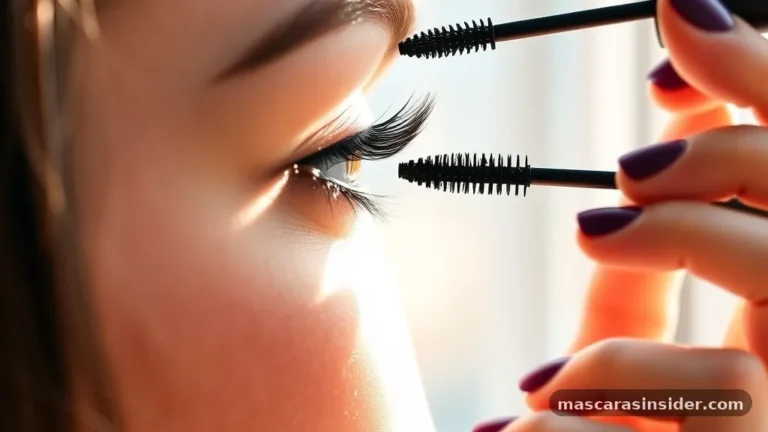
- Sweep only the tips, using one or two light passes.
- Don’t pump the wand or drag it down toward the lash line.
- Skip a second coat. One is plenty on extensions.
Avoid heated lash curlers and any tugging. The goal is a whisper of definition, not a dramatic transformation. If you find yourself wanting a bigger effect, that’s a sign you should talk to your lash artist about a fuller set next time instead of reaching for mascara.
Removing Mascara From Lash Extensions Without Damage
This is where most damage actually happens. Not during application, but during removal.
People panic, grab a cotton pad soaked in makeup remover, and scrub. That’s a fast way to lose half your set.
Use a foaming lash cleanser made for extensions. These are oil-free and gentle. Work up a light foam with a soft cleansing brush, then sweep in the direction the lashes grow.
Don’t rub back and forth. Rinse with lukewarm water and pat, never rub, dry with a lint-free cloth.
If water-based mascara stayed on the tips, this routine lifts it away easily. That’s exactly why water-based formulas earn the cautious green light. Oil-based mascara won’t come off this way, which is the whole problem.
“We always tell clients that if a product needs oil to remove it, it doesn’t belong anywhere near extensions,” is the kind of advice you’ll hear from experienced lash technicians. It’s not gatekeeping. It’s just physics working against you.
Never use cotton pads or Q-tips that shed fibers. Those tiny threads get tangled in the extensions and pull them out when you try to clear them. A dedicated cleansing brush is worth the few dollars it costs.
Better Alternatives to Mascara for Fuller Lashes
If you find yourself constantly wanting mascara on your extensions, the real fix isn’t a better tube. It’s a better conversation with your artist.
Volume lashes are the obvious answer. Where classic extensions apply one extension per natural lash, volume sets fan out multiple ultra-fine extensions per lash, giving you that dense, fluffy look without any product.
Mega volume goes even further. If your goal is drama, that’s the route.
Regular maintenance also matters more than people think. Extensions shed naturally as your own lashes cycle out, roughly one to five lashes a day. Booking fills every two to three weeks keeps the set looking dense so you never feel the urge to fill gaps with mascara.
A few habits stretch the life of a set considerably:
- Cleanse daily with an oil-free lash cleanser to keep the line healthy
- Brush lashes each morning with a clean spoolie
- Avoid oil-based skincare and makeup near the eyes
- Sleep on your back or use a silk pillowcase to reduce friction
- Stay away from steam-heavy environments right after application
Do those things and your set stays full on its own. The whole appeal of extensions is a wake-up-ready look. When you’re constantly reaching for mascara, something in the routine or the set design needs adjusting.
Frequently Asked Questions
What mascaras are safe for lash extensions?
Only water-based, oil-free mascaras marketed specifically as safe for extensions. Skip anything waterproof or oil-based, since those formulas break down the adhesive and require oil removers that dissolve the bond. When in doubt, ask your lash artist for a brand they trust and recommend.
What happens if I put regular mascara on my eyelash extensions?
Regular mascara, especially waterproof types, coats the extensions in sticky, oily residue that weakens the glue. Your lashes clump, shed early, and become hard to clean. A set meant to last five or six weeks can start failing within days of using the wrong formula.
Can you put mascara on individual lash extensions?
You can apply a light water-based mascara to the tips of individual extensions, but it’s rarely worth it. Individual and volume sets are designed to look full on their own. Adding mascara increases the chance of buildup and shedding without much visual payoff.
How do I remove mascara from lash extensions?
Use a foaming, oil-free lash cleanser and a soft brush. Work in the direction the lashes grow, then rinse with lukewarm water and pat dry with a lint-free cloth. Avoid rubbing, cotton pads, and oil-based removers, all of which loosen extensions.
How can I make my lash extensions last longer?
Cleanse daily, brush your lashes each morning, avoid oil-based products around the eyes, and sleep on your back. Book fills every two to three weeks to replace shed lashes. Keeping mascara out of the equation entirely is one of the simplest ways to protect the set.
The Bottom Line
So, can you put mascara on lash extensions? Only if it’s water-based, oil-free, applied lightly to the tips, and removed with a gentle cleanser. Anything oily or waterproof will sabotage your set and cost you money in shortened wear.
Honestly, the best answer for most people is to skip mascara altogether. Extensions exist so you don’t need it.
If your lashes aren’t giving you the volume you crave, talk to your artist about a fuller set rather than fighting the adhesive with the wrong product. Keep them clean, keep oils away, and let the extensions do their job.