When you are preparing for a trip, the logistics of your beauty routine often become a secondary stressor. Many travelers find themselves standing at the security checkpoint wondering if their favorite tube of eye makeup will trigger an inspection or, worse, end up in the trash. The question of whether or not does mascara count as a liquid TSA requirement is one of the most common inquiries at airport security lanes.
Because these regulations are designed to maintain safety in the cabin, understanding how agents classify common cosmetic products is essential. By learning the specific rules regarding viscosity and container size, you can breeze through security without sacrificing your essential beauty products.
Understanding the TSA Liquid Rule
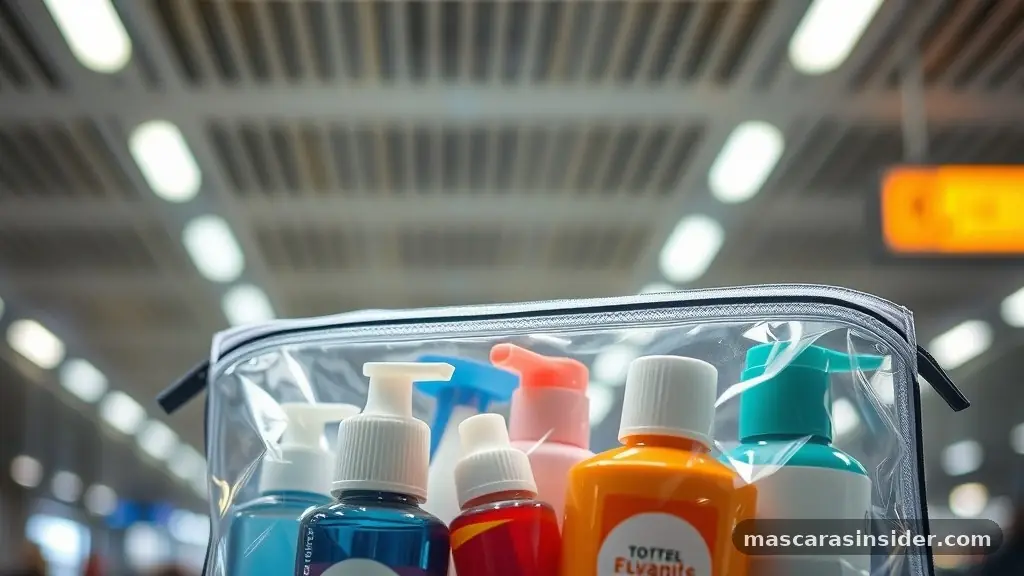
The Transportation Security Administration, or TSA, enforces the 3-1-1 rule for all carry-on baggage. This rule dictates that any liquid, gel, or aerosol must be stored in containers of 3.4 ounces (100 milliliters) or less.
All of these individual containers must fit comfortably inside a single, transparent, quart-sized bag. This policy is the gold standard for air travel security across the United States.
When you look at your toiletry kit, it is important to realize that the agency defines “liquids” quite broadly. It isn’t just water or juice; it includes anything that can be spread, pumped, squeezed, or poured. Because mascara has a viscous, gel-like consistency, it is officially classified as a liquid.
Therefore, it absolutely falls under the 3-1-1 restrictions. You cannot simply throw a full-sized mascara tube into your carry-on bag without considering its place in your quart-sized bag.
Why Consistency Determines Liquid Status
Security agents rely on a simple litmus test when evaluating whether an item is a liquid. If you can change the shape of the substance by applying pressure to its container, or if it flows at room temperature, it is treated as a restricted item. This is why products like cream blush, concealer, and even certain types of thick gels are subject to the same scrutiny as your mascara.
The reason for this strict classification is the inherent difficulty in distinguishing between harmless cosmetic products and hazardous substances that might share a similar chemical consistency. By forcing all liquids into a standardized, small-volume format, security personnel can perform more efficient screenings. Even though your individual tube of mascara is likely far smaller than 3.4 ounces, the rule remains that it must be grouped with other liquids to be considered compliant within your carry-on.
Packaging Your Makeup for Security
Successfully navigating the checkpoint starts with how you organize your luggage. Since mascara counts as a liquid, you should designate a clear, quart-sized plastic bag specifically for your travel-sized beauty items. This makes the screening process much faster, as you can easily remove the bag from your carry-on for the agent to inspect.
If you have a collection of favorite products, check the volume printed on the packaging. Most standard mascara tubes hold about 0.2 to 0.3 ounces, which is well under the 3.4-ounce limit. The issue is rarely the size of the mascara itself, but rather the total volume of all liquids combined.
If you try to pack twenty different tubes of mascara, lip gloss, and concealer, you might struggle to zip that quart-sized bag closed. Always prioritize the essentials to ensure you stay within the allowed space.
Differentiating Between Solids and Liquids
A common point of confusion for many travelers is the distinction between solid makeup and liquid makeup. While mascara is a liquid, products like pressed powder, eyeshadow palettes, and standard lipstick bullets are considered solids. These items do not need to be placed in your quart-sized bag and can remain in your carry-on bag during the screening process.
However, be careful with hybrid products. A cream-based eyeshadow or a liquid highlighter will be treated the same way as your mascara. If the product is a cream, gel, or oil, it is safer to put it in your liquid bag.
If you are ever in doubt, the best strategy is to pack it in your liquids bag anyway. It is always better to have an item in the clear bag than to have it pulled out of your luggage for a secondary manual search.
Applying the 3-1-1 Rule to Cosmetic Collections
The 3-1-1 rule is not just about the individual size of your mascara; it is about the total inventory of your travel kit. You are allowed one quart-sized bag per passenger.
This means you must consolidate your shampoo, moisturizer, toothpaste, and all liquid makeup into this single container. This constraint often forces travelers to be more selective about what they bring on the plane.
If you find that your collection of beauty items exceeds the capacity of one quart-sized bag, you have two options. You can either leave some items behind or move the non-essential liquids into your checked luggage. Checked bags do not have the same volume restrictions for liquids, meaning you can pack full-sized bottles of foundation, setting spray, or extra tubes of mascara without worrying about the 3.4-ounce limit.
Commonly Confused Makeup Items
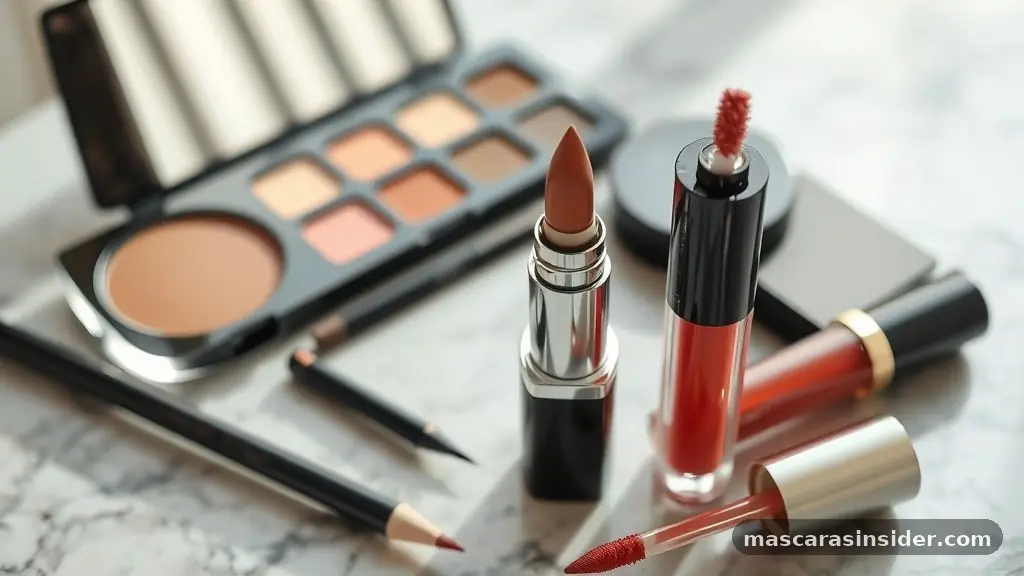
Many travelers ask about other items that blur the line between solid and liquid. For instance, lip gloss is a liquid, while traditional lipstick is a solid.
Eyeliner can be tricky; a pencil is a solid, but a liquid liner or a gel pot falls under the liquid category. Understanding these nuances can prevent delays at the security checkpoint.
Makeup Classification Table
| Product Type | Classification | TSA Status |
|---|---|---|
| Mascara | Liquid/Gel | Must be in 3-1-1 bag |
| Pressed Powder | Solid | Carry-on allowed |
| Lip Gloss | Liquid | Must be in 3-1-1 bag |
| Cream Blush | Gel/Cream | Must be in 3-1-1 bag |
| Lipstick Bullet | Solid | Carry-on allowed |
Knowing these distinctions allows you to pack efficiently. You can keep your solids easily accessible in your makeup bag while keeping your liquids organized in a clear, removable pouch. This separation not only keeps your belongings organized but also helps the security screening process move along much smoother for everyone involved.
How to Pack Makeup for a Flight
Packing your makeup properly is a skill that saves time and reduces stress. Start by auditing your makeup bag before you even begin to pack.
Are you really going to use four different types of mascara on your trip? By bringing only the items you know you will use, you free up space for other necessary liquids like skincare or hair products.
Consider investing in travel-sized versions of your favorite products. Many cosmetic brands offer mini versions of their best-selling mascaras, concealers, and primers specifically for people who travel frequently.
These minis are almost always well under the 3.4-ounce threshold, making them perfect for your quart-sized bag. If a mini version isn’t available, you can purchase reusable travel-sized containers and transfer your favorite products into them.
Navigating Security Checkpoints
When you arrive at the security checkpoint, the most important thing is to have your liquids bag ready. Do not wait until you are at the front of the line to start digging through your backpack for your mascara. Have your clear bag at the top of your carry-on or in an external pocket so you can easily pull it out when you reach the bins.
Some airports now have advanced imaging technology that allows passengers to leave their liquids in their bags. However, you should never assume this is the case unless instructed by a TSA agent. Always be prepared to remove your bag.
If an agent asks about a specific item, be polite and clear. Acknowledging that your mascara is in the bag helps the agent verify that you are following the rules. For the most up-to-date information on security procedures, you can visit the official TSA guidelines on liquids.
Addressing Common Travel Myths
There are many myths floating around about security rules. One common misconception is that if a product is expensive, it is exempt from the rules. This is false.
A hundred-dollar tube of mascara is treated exactly the same as a five-dollar tube. Another myth is that you can bring more liquids if you have a medical reason. While there are exceptions for medically necessary liquids, such as prescription medications or baby formula, standard makeup does not fall into this category.
Don’t try to hide your liquids inside a larger bag or tucked away in a corner of your luggage. Security scanners are highly effective at detecting the density of liquids.
If an agent finds a liquid container that wasn’t in your quart-sized bag, they may have to conduct a manual search of your bag, which takes extra time and causes unnecessary stress. Being transparent with your packing is always the best policy.
Troubleshooting Issues at the Airport
What happens if you accidentally pack too much? If you reach the security checkpoint and realize your quart-sized bag is overflowing, you have a few choices.
You can ask a companion to take an item back to the car, or you can check your carry-on bag if time allows. Unfortunately, if you are already at the screening line, you will likely have to surrender the excess items.
If you are worried about losing a favorite product, check your bag before you leave for the airport. If you have an item that is close to the limit or you aren’t sure about, put it in your checked luggage.
Checking your bag is the only way to avoid the 3-1-1 restrictions entirely. If you are only traveling with a carry-on, you must strictly adhere to the guidelines to ensure your items make it onto the plane with you.
Frequently Asked Questions
Do I have to take my mascara out of my bag at security?
Yes, all liquid, gel, and aerosol items must be placed in a clear, quart-sized bag. This bag must be removed from your carry-on luggage and placed in a bin for separate screening. Keeping your mascara in this bag ensures you comply with the standard procedures.
Can I bring mascara in my checked luggage?
Absolutely. There are no volume restrictions for liquids in your checked bags. You can bring full-sized tubes of mascara, large bottles of foundation, or any other beauty product in your checked luggage without having to worry about the 3-1-1 rule or the 3.4-ounce limit.
What if my mascara tube is larger than 3.4 ounces?
While it is extremely rare for a standard mascara tube to exceed 3.4 ounces, if you possess a specialty item that large, you cannot bring it in your carry-on. You must pack it in your checked luggage, as the TSA strictly enforces the 3.4-ounce container limit for all carry-on liquids.
Does eyeliner count as a liquid if it is a pencil?
No, a standard eyeliner pencil is considered a solid, not a liquid. You do not need to place it in your quart-sized liquid bag. However, liquid eyeliner, gel eyeliner pots, or felt-tip markers that contain liquid ink are classified as liquids and must be in your bag.
Final Thoughts on Traveling with Makeup
Navigating airport security doesn’t have to be a source of anxiety. By acknowledging that mascara is indeed a liquid and planning your packing accordingly, you can ensure your beauty products travel with you safely. The key is to keep your liquids in a single, clear, quart-sized bag and to verify that all containers are under the 3.4-ounce limit.
When you organize your belongings this way, you minimize the chance of delays and ensure a much smoother experience at the airport. Next time you head to the terminal, you’ll know exactly how to pack your favorite items with confidence. If you keep these simple rules in mind, you can focus on the excitement of your trip rather than the contents of your makeup bag.
Meta Description: Does mascara count as a liquid TSA? Learn how to pack your makeup for flights, follow the 3-1-1 rule, and breeze through airport security with ease.