
If you have ever caught your reflection in a mirror halfway through the day only to find dark, raccoon-like shadows lurking beneath your lower lashes, you have likely asked yourself: does waterproof mascara smudge? While the marketing promises of smudge-proof, cry-proof, and sweat-proof formulas are alluring, the reality of cosmetic chemistry is slightly more complex.
Waterproof mascara is designed to resist water, but it is not necessarily immune to the complex environment of your face. Understanding why these products sometimes fail requires looking at the interplay between your skin chemistry, the ingredients in your makeup, and the physical mechanics of your eyelashes.
Why Waterproof Mascara Isn’t Truly Smudge-Proof

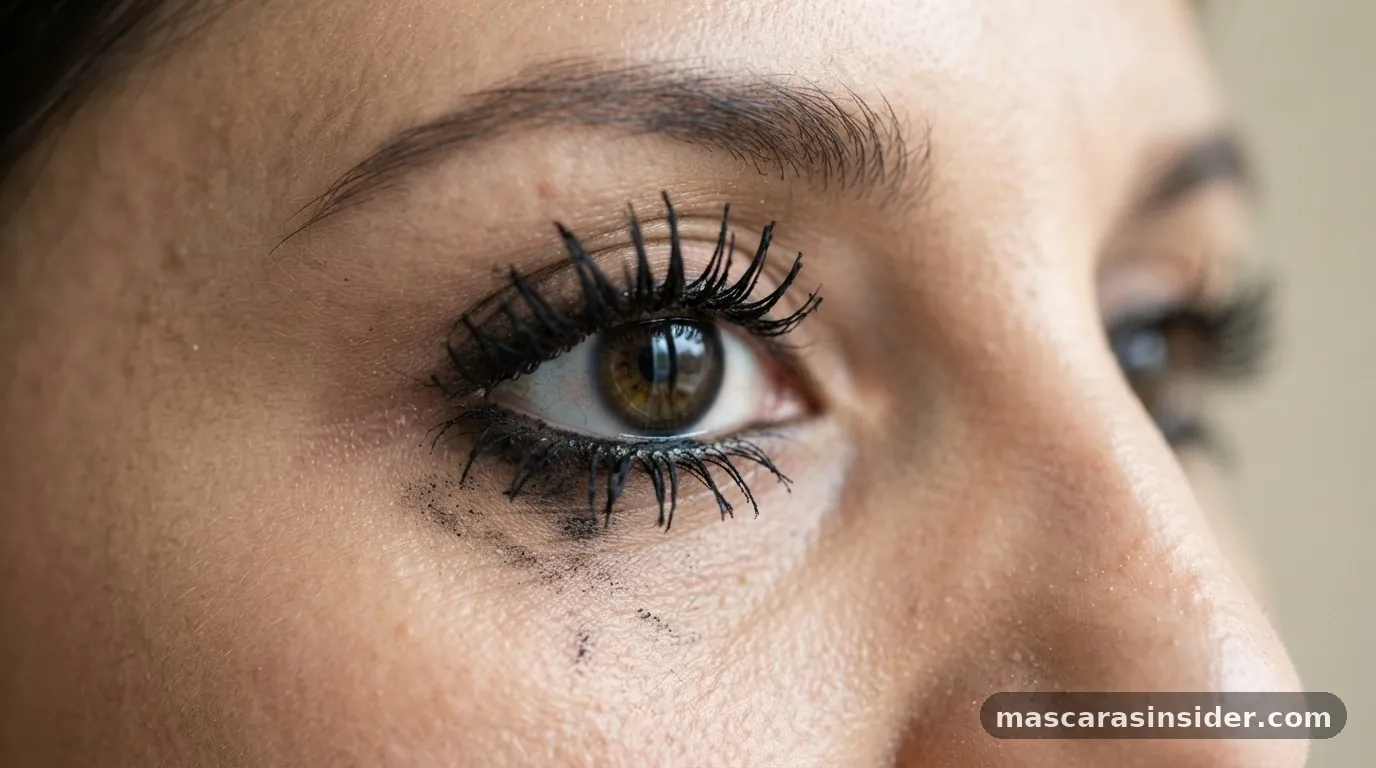
Waterproof mascara does not smudge when exposed to water, but it often fails when exposed to sebum or facial oils. The primary reason many users experience smudging is that the oils produced by your skin can break down the waxes and polymers that make the formula waterproof.
When you apply mascara, you are essentially coating your lashes in a layer of pigment suspended in a waxy, hydrophobic base. This base is designed to repel water molecules. However, many cosmetic ingredients are oil-soluble.
If you have naturally oily skin, or if you use a rich moisturizer or an emollient-heavy concealer around eyes, the oils will migrate upward. As the lashes touch the skin under your eyes throughout the day, the oils act as a solvent, softening the mascara and causing it to transfer onto your lower lash line.
1. Sebum production varies by skin type, with oily skin being the primary culprit for mascara migration.
2.
Emollients in skincare products, such as squalane or heavy creams, can weaken the bond of the mascara.
3. The physical friction of blinking causes the lashes to repeatedly contact the skin, effectively stamping the product onto your undereye area.
Even the most expensive, high-end products are subject to these laws of chemistry. If you have been wondering why your expensive tube seems to let you down, it is rarely a defect in the product. Instead, it is usually a mismatch between your skin’s unique biology and the formula’s chemical composition.
The Role of Oil and Moisture in Makeup Breakdown
The relationship between moisture and makeup is often misunderstood. While waterproof formulas resist water, they are often surprisingly vulnerable to lipids. If you are struggling with mascara smudging, you should examine your entire face routine, not just the mascara itself.
When you apply mascara, you expect it to stay put. However, if you have applied an eye cream that hasn’t fully absorbed, you are creating a slippery surface. Oils from your moisturizer, sunscreen, or foundation will eventually travel to the lash line.
Once these oils meet your lashes, the waterproof barrier becomes compromised. This is why many makeup artists emphasize the importance of “setting” the area. If you want to see how different types of makeup interact with skin, you can check out the American Academy of Dermatology for guidance on proper skin barrier maintenance.
Managing Oil Migration Around the Eyes
To mitigate the impact of oils, many professionals recommend using a translucent powder to set the undereye concealer. By creating a dry, matte barrier, you prevent the oils from sitting on the surface of the skin. If there is no oil to pick up, there is nothing to dissolve the mascara. Furthermore, avoiding heavy eye creams during the day can significantly reduce the amount of product that ends up under your eyes by the evening.
Is Tubing Mascara a Better Alternative?
For those who find that traditional waterproof formulas consistently fail, tubing mascara is often the recommended solution. Unlike standard mascara, which paints your lashes with pigment, tubing mascara forms tiny, water-resistant “tubes” around each individual lash.
These tubes are made of polymers that are specifically engineered to stay in place until they are removed with warm water and gentle pressure. Because they are not wax-based, they are significantly more resistant to the oils that break down waterproof formulas.
When you blink or your lashes touch your skin, the tubes do not soften or smear. They remain solid, which prevents the dreaded “raccoon eye” effect entirely.
- Tubing mascaras are generally easier to remove without harsh rubbing, which protects delicate lash health.
- They are less likely to flake, as the polymer structure is flexible rather than brittle.
- They provide a cleaner look for people with oily eyelids or hooded eyes.
- The removal process requires only warm water, eliminating the need for oil-based makeup removers that can cause further smudging.
If you have tried every waterproof brand on the market and still find yourself dealing with smudges, switching to a tubing formula is often the most effective fix. It changes the mechanism of adhesion, moving away from a waxy coating that is susceptible to lipids and toward a structural polymer that is inherently more stable.
The Impact of Physical Factors and Lash Mechanics
Even if you have the perfect formula, the physical structure of your face can contribute to smudging. If you have deep-set eyes or hooded lids, your lashes are more likely to make contact with your skin or the crease of your eyelid. This constant friction will eventually wear down even the best product.
Every single time you blink, your lashes move. If your lashes are long and straight, they are more likely to hit the skin under your brow bone or the skin beneath your lower lashes.
This is a common issue for those who do not use an eyelash curler. By curling your lashes, you lift them away from the skin, creating a physical gap that prevents the lashes from touching the surface where the smudge typically occurs.
Strategies to Prevent Physical Transfer
4. Use an eyelash curler before applying any product to ensure the lashes are angled upward. 5. Apply a light dusting of setting powder under the eyes to absorb excess moisture or natural oils. 6. Consider the length of your lashes; if they are extremely long, you might need a formula that dries completely stiff to prevent the tips from touching your skin. 7. Avoid applying mascara to the very tips of the lower lashes if you notice they are prone to touching your cheeks.
By combining a curling technique with a setting powder, you address the mechanical aspect of the problem. You are essentially creating a physical environment where the mascara has no opportunity to transfer, regardless of whether the product itself is waterproof or tubing.
Topical Gaps: What Most People Miss
A common gap in the conversation around mascara is the role of lash health and the condition of the lashes themselves. If your lashes are dry or brittle, they may not hold pigment as well, leading to flaking throughout the day. Flaking is often mistaken for smudging, but it is a distinct problem caused by the mascara becoming too dry or failing to adhere to the hair shaft.
Another frequent oversight is the expiration date of the product. Most mascaras should be replaced every three months. As a tube ages, the formula changes.
It becomes thicker, clumpy, and more prone to flaking. If you have been using the same tube for half a year, the smudging you see might just be the result of a degraded formula.
| Factor | Impact on Smudging | Mitigation Strategy |
|---|---|---|
| Skin Oiliness | High | Use mattifying powder under eyes |
| Lash Curvature | Medium | Curl lashes to keep them away from skin |
| Product Age | High | Replace mascara every 3 months |
| Formula Type | High | Switch to tubing mascara |
By addressing these variables, you can gain a much better understanding of why your specific routine might be failing. It is rarely just one thing; it is usually a combination of product choice, application technique, and environmental factors.
How to Choose the Right Product for Your Needs
When you go to buy mascara, the sheer number of options can be overwhelming. To determine which product will actually work for you, you need to be honest about your habits and your skin type.
If you live in a humid climate, waterproof is a necessity. If you have oily skin, tubing is likely your best bet.
You should also look at the wand shape. A curved wand is excellent for catching those hard-to-reach corner lashes, which are often the ones that smudge the most. If you find that your outer corners are always the first to smear, focus your application there, but perhaps use a lighter hand.
Sometimes, less is more. Applying too many coats of a heavy, volumizing formula creates a thick, wet layer that takes longer to dry and is more prone to transferring.
The Importance of Proper Application
8. Start at the very base of the lash, wiggling the wand to deposit the most product where it is strongest. 9. Avoid the “pump” technique when getting product on the wand, as this introduces air and dries out the formula faster. 10. Use a lash comb to separate the lashes; clumpy lashes are heavier and more likely to touch the skin and transfer. 11. Allow the first coat to dry completely before applying a second layer to build volume without unnecessary weight.
By refining your application process, you can maximize the performance of whatever product you choose. Even a budget-friendly mascara can perform like a luxury item if it is applied with care and the surrounding skin is properly prepped.
Frequently Asked Questions
Why does my mascara smudge even if it is waterproof?
Waterproof mascara is designed to resist water, but it is often soluble in oil. If your skin produces natural oils or if you use emollient-rich eye creams, these oils can break down the wax base of the mascara, causing it to transfer onto your skin throughout the day.
How can I stop my lower lashes from smudging?
The best way to prevent lower lash smudging is to apply a translucent setting powder to the area beneath your eyes to absorb oils. Alternatively, you can skip mascara on your lower lashes entirely or switch to a tubing formula, which does not break down when exposed to skin oils.
Is it better to use a primer with waterproof mascara?
Using a lash primer can help create a smoother surface for your mascara to adhere to, which may reduce flaking. However, if the smudging is caused by oil migration, a primer on the lashes won’t solve the issue. Focus on setting the skin around your eyes with powder instead.
Does curling my lashes really help with smudging?
Yes, curling your lashes is highly effective. By lifting the lashes, you create a greater distance between the tips of your lashes and the skin around your eyes. This physical separation prevents your lashes from touching the skin, which is the primary cause of smudging for many people.