


Dealing with raccoon eyes by midday is a common frustration for many makeup wearers. You spend time perfecting your look, only to find dark streaks developing around eyes just a few hours later.
If you find yourself constantly asking, “why does my mascara run,” the answer usually lies in a combination of product chemistry, skin type, and application habits. Understanding these factors is the first step toward achieving a clean, long-lasting aesthetic that stays put from morning until evening.
Understanding the Chemistry of Smudging
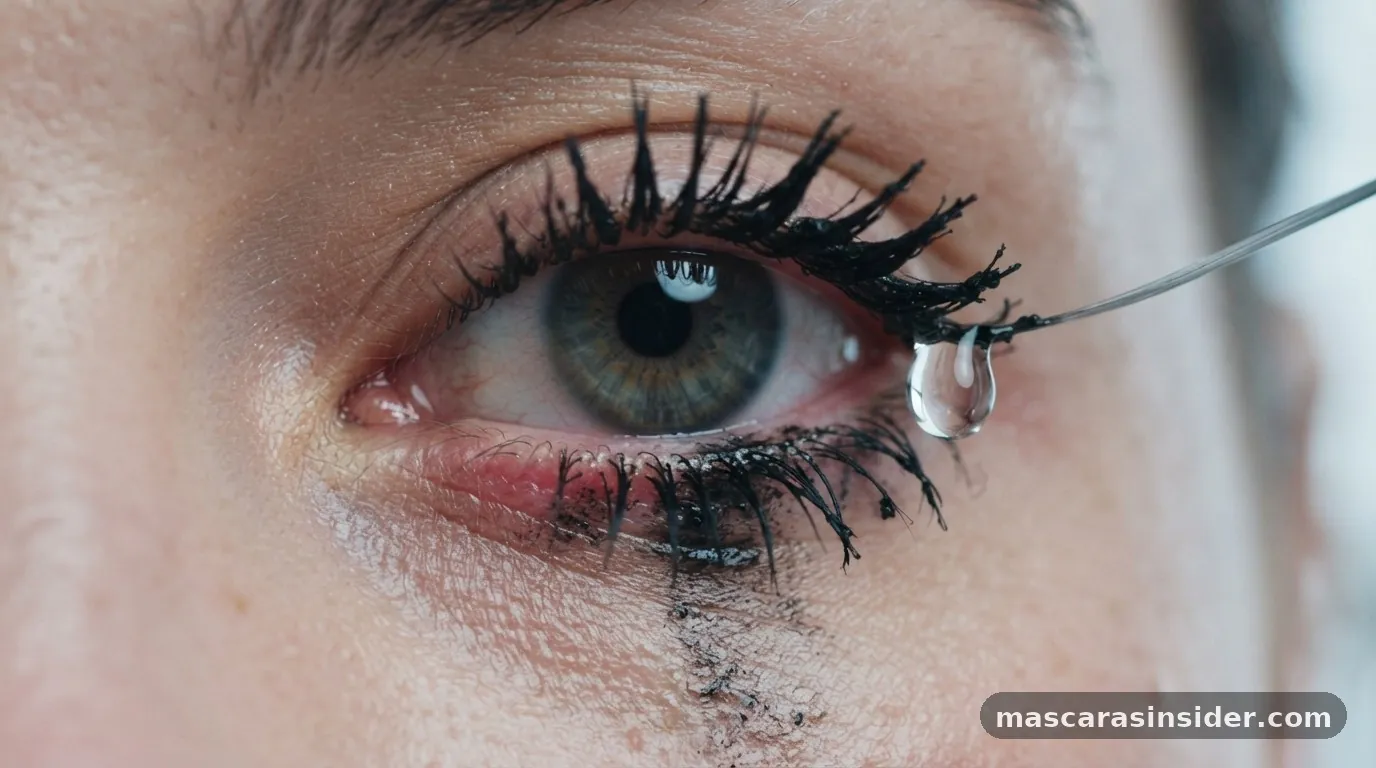
The primary reason your lash makeup migrates is that the formula is interacting with the natural environment of your face. Most standard formulas are designed to be removed with water or gentle cleansers, which means they are inherently susceptible to moisture and lipids.
When you apply mascara, you are essentially coating your lashes in a pigmented wax or polymer. If that base layer is oil-soluble, it will inevitably break down when it comes into contact with the natural oils produced by your skin.
Your eyelids and the area directly beneath them are prone to oil secretion throughout the day. Even if you have relatively dry skin, your body produces sebum to keep the skin barrier healthy. When this oil touches the lashes, it acts as a solvent, thinning the mascara and causing it to smear onto the skin.
Furthermore, if you have hooded eyelids, the physical friction of your lashes hitting the skin above or below the eye can transfer pigment. This is why many people notice smudging specifically on the brow bone or the upper cheekbone area.
The Role of Skin Type and Hydration
Your unique skin physiology plays a significant role in how well your makeup holds up. If you have oily skin, you are significantly more likely to experience issues with product migration. The excess sebum creates a slick surface that prevents the mascara from gripping the lash hair properly.
To combat this, you need to keep skin properly balanced. Using a lightweight, oil-free moisturizer helps prevent your skin from overproducing oil in an attempt to compensate for dehydration.
1. Assess your skin type: Oily, combination, or dry.
2. Use an oil-free moisturizer to prep the area.
3.
Allow your skincare to fully absorb before starting your makeup routine.
4. Consider a mattifying primer specifically for the eye area.
If you have naturally watery eyes, the moisture content is the culprit rather than oil. Tears contain salt and proteins that can break down even some of the most resilient formulas.
In this case, you need a product that is specifically designed to resist both water and friction. It is also helpful to check if your eye irritation is caused by the product itself; sometimes, a sensitivity to a specific ingredient can trigger excess tearing, which in turn causes the mascara to run.
Choosing the Right Formula for Your Needs
Not all mascaras are created equal. When shopping for a new tube, it is essential to look at the ingredient list and the intended function of the product. While many people gravitate toward waterproof options, these are not always the magic fix.
Waterproof formulas are excellent at resisting tears and humidity, but they are often still susceptible to oil-based breakdown. If your issue is oily eyelids, a waterproof mascara might still smudge.
In contrast, tubing mascaras are a popular alternative. These formulas use polymers that wrap around each individual lash like a tube. Unlike traditional wax-based versions, they do not dissolve when exposed to oil.
They only release their grip when soaked in warm water. This makes them significantly more smudge-proof for those with oily lids.
| Feature | Traditional Mascara | Tubing Mascara | Waterproof Mascara |
|---|---|---|---|
| Primary Solvent | Oil/Water | Warm Water | Oil |
| Smudge Resistance | Low | High | Medium |
| Removal | Cleanser | Warm Water | Oil Cleanser |
| Texture | Creamy | Elastic/Polymer | Waxy |
Application Techniques to Prevent Transfer
How you put the product on your lashes matters just as much as the product itself. Many people make the mistake of applying too much product at the root, which increases the likelihood of transfer.
When you apply mascara onto lashes, focus the bulk of the pigment on the base, but use a light hand as you move toward the tips. This prevents the lashes from becoming heavy and drooping, which is a common cause of smudging on the upper lid.
Another critical step is to blot your lashes after application. Using a clean spoolie brush, gently comb through your lashes to remove any excess product that hasn’t dried yet. This removes the “wet” weight that often leads to transfer during the first hour of wear.
If you prefer to wear makeup on your bottom lashes, be extra cautious. The area under the eye is the most prone to smudging because of the proximity to the lower lash line and the natural movement of the eye. Consider skipping the bottom lashes or using a clear setting gel instead of pigmented mascara.
Setting the Under-Eye Area
One of the most effective ways to stop mascara from running is to create a barrier between your lashes and your skin. Many professional makeup artists use a technique called “baking” or simply setting the area with a translucent powder. By applying a bit of finely milled setting powder around eyes, you create a dry, matte surface that absorbs any oils that might migrate downward.
When you powder eyes, ensure you use a soft, fluffy brush to avoid tugging at the delicate skin. A light dusting is sufficient.
This step is particularly important if you use a creamy concealer, as the emollients in the concealer can act as a lubricant for the mascara. By locking in your concealer with powder, you ensure that the mascara has a stable, dry base to rest against, even if your lashes brush against the skin during the day.
Troubleshooting and Maintenance
If you have tried everything and your mascara still runs, it might be time to evaluate your overall routine. Sometimes, the problem isn’t the mascara, but the eye cream you are using.
Heavy, oil-rich eye creams can leave a residue that makes it impossible for even the best formulas to stay put. If you use a rich cream at night, ensure you gently cleanse the eye area in the morning to remove any lingering greasiness before apply your makeup.
Another factor is the age of your product. Mascara should generally be replaced every three months. As the formula ages, it can become clumpy or separate, which changes its adherence properties.
A formula that has begun to dry out in the tube will often flake or smudge more easily. If you notice a change in the consistency or smell of your mascara, it is time to toss it.
You can find more information on product safety and hygiene at the U.S. Food and Drug Administration website regarding cosmetic safety.
Finally, consider the weather. High humidity can cause even the most reliable products to fail.
On particularly hot or humid days, you might need to adjust your expectations or switch to a specialized setting spray designed for eye makeup. Remember that your eyes are constantly moving, blinking, and reacting to the environment, so a small amount of touch-up throughout the day is sometimes normal, even with the best techniques.
Addressing Topical Gaps: Why Mascara Fails
Often, the reason for smudging is a lack of synergy between products. If you are using a heavy, oil-based eyeliner alongside a water-based mascara, the eyeliner might be the true culprit.
The oils in your liner can transfer to your lashes, causing the mascara to break down. To fix this, try using a waterproof liquid liner or a long-wear gel pencil that sets completely.
Another common gap is the failure to prime the eyelids. Most people prime their face but skip the eyelids.
Using a dedicated eyeshadow primer can provide a tacky, oil-absorbing base that keeps the entire eye area clean. This is especially helpful if you have hooded lids where the skin folds over itself, creating a warm, damp environment that is perfect for breaking down makeup.
If you find that your mascara is smudging specifically on the brow bone, check your lash length. If your lashes are very long, they may be physically touching your skin whenever you look up.
In this case, using an eyelash curler is a must. Curling your lashes lifts them away from the skin, significantly reducing the amount of contact and transfer.
Lastly, check your application method. Do you blink immediately after application?
Try looking down into a mirror while you apply your mascara and keep your eyes focused downward for 30 seconds until the formula is completely set. This simple change prevents the wet tips of your lashes from stamping onto your skin while you are looking at your reflection.
Frequently Asked Questions
1. Why does my mascara smudge even if it is waterproof?
Waterproof mascara is designed to resist water, but not necessarily oil. If you have oily eyelids, the natural sebum produced by your skin can still break down the wax-based formula, causing it to smudge or transfer throughout the day.
2. Is there a specific type of mascara that never smudges?
Tubing mascaras are generally the most smudge-proof option.
They create “tubes” around your lashes that do not dissolve in oil or sweat, meaning they stay in place until you remove them with warm water. They are ideal for those with oily skin.
3. How can I stop mascara from smudging on my brow bone?
The best way to prevent this is to use an eyelash curler to lift your lashes away from your skin. Additionally, ensure you apply a light layer of translucent setting powder to your brow bone to keep the area dry and matte.
4. Should I avoid eye cream if my mascara keeps running?
You don’t need to avoid eye cream, but you should choose a lightweight, fast-absorbing formula. Ensure it is completely dry before applying your makeup, and consider using a mattifying primer over your concealer to prevent oil migration.