

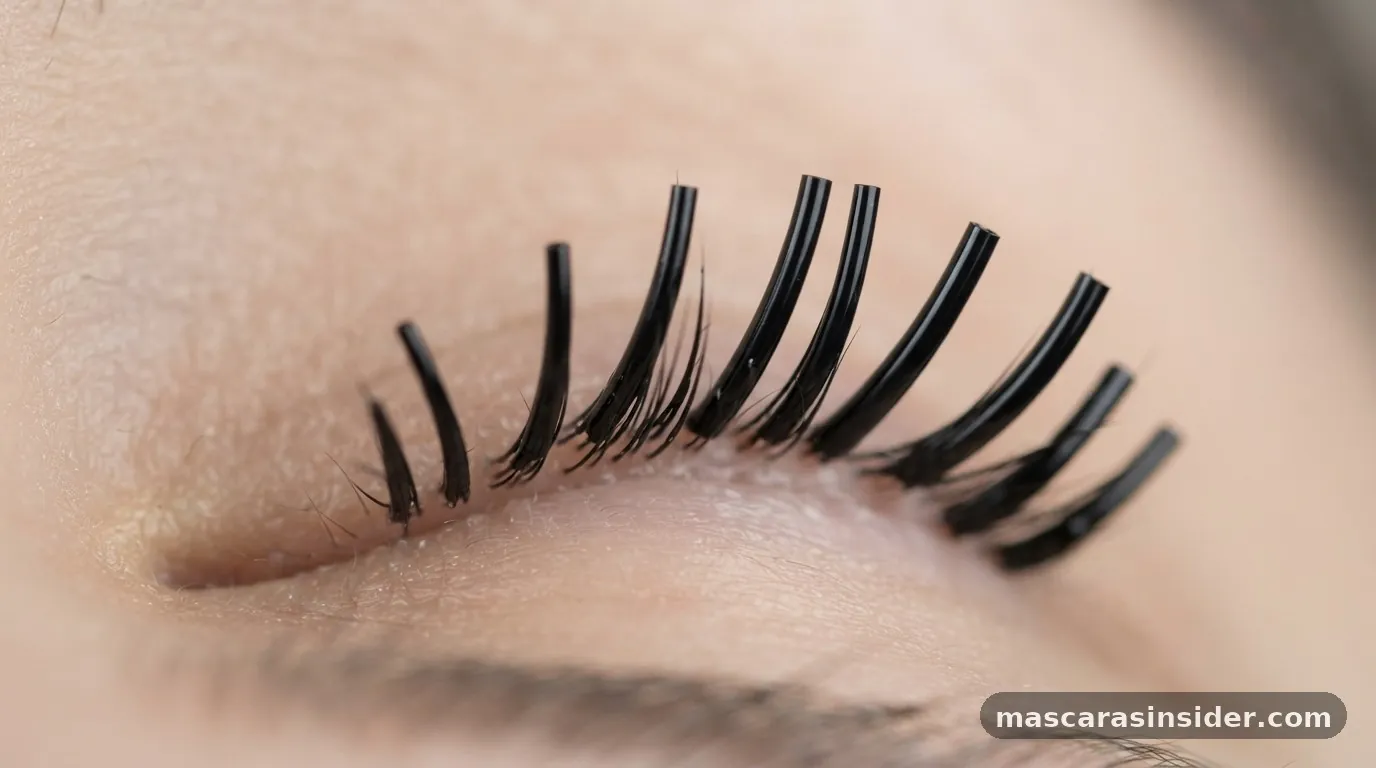
If you have ever found yourself staring at dark, raccoon-like smudges under your eyes by midday, you have likely dealt with the primary frustration of traditional makeup. Many people assume all lash products function the same way, but once you discover the mechanics behind tubing mascara, you realize it occupies an entirely different category of beauty technology. Unlike standard options that rely on pigments suspended in oils or waxes to coat the hair, this unique product creates microscopic, water-resistant structures that wrap around each individual lash.
Understanding tubing mascara, what is it exactly, requires looking at the chemistry of polymers. These polymers form tiny, cylindrical sheaths that physically cling to your lashes rather than simply painting them with a stain.
This distinction is the reason why your makeup stays put during a humid afternoon or a light rain shower, yet slips off with ease when you reach for a specific type of cleanser. For those with oily eyelids or those who struggle with constant flaking, this technology represents a significant shift in daily application.
The Mechanism Behind Tubing Mascara
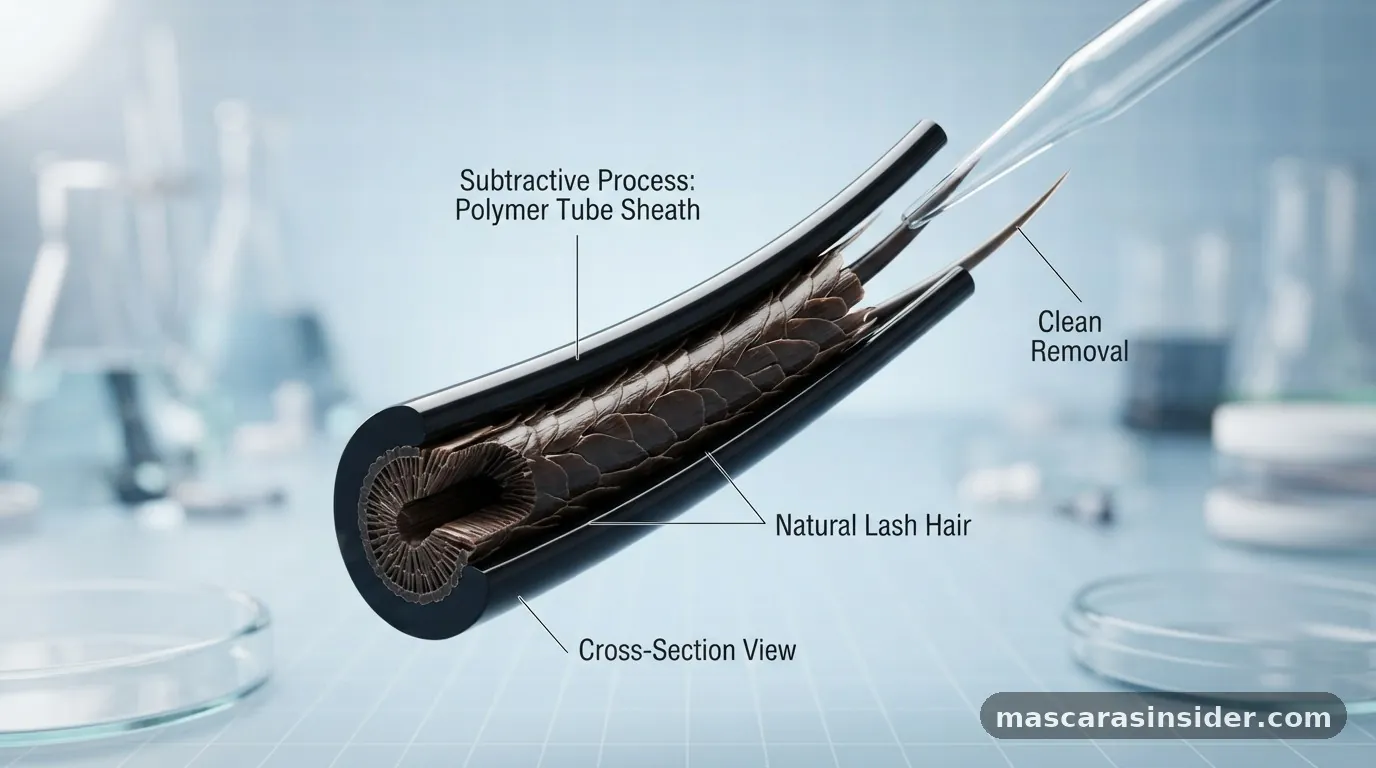
Tubing mascara is a type of eye makeup that uses polymers to form water-resistant, tube-like structures around each individual lash, which stay intact until they are specifically dissolved by warm water.
At its core, the science involves synthetic polymers—often acrylates—that dry down into a flexible, rubbery sleeve. When you apply the product, these polymers don’t just sit on the surface of the lash; they wrap around it completely.
Think of it like a coat of paint versus a sleeve of plastic. Because the formula is designed to be cohesive, it resists the breakdown that usually occurs when natural oils from your skin interact with wax-based formulas.
This is why you don’t experience the typical “smudging” associated with regular mascara. Traditional formulas are oil-soluble, meaning the natural sebum your skin produces throughout the day acts as a solvent, eventually breaking the product down and causing it to migrate. Tubing formulas are specifically engineered to ignore those oils.
They remain rigid and fixed until they encounter a specific trigger: warm water. This unique interaction ensures that your look remains sharp from your morning coffee until you decide to take it off at night.
Key Differences Between Tubing and Traditional Formulas
The primary difference between tubing mascara and traditional mascara lies in the composition of the product; traditional formulas use waxes and oils that can smudge, while tubing formulas use polymers that form a water-resistant bond.
1. Traditional mascaras rely on pigments suspended in a wax base, which can become pliable when exposed to heat or skin oils.
2. Tubing mascara, on the other hand, creates a physical, smudge-proof sleeve that does not migrate when it comes into contact with facial oils.
3.
Another major differentiator is the removal process, which requires only warm water and gentle pressure rather than an oil-based makeup remover.
4. Because the tubes are physically removed from the lash, you avoid the “panda eye” effect often seen when scrubbing away waxy, oil-based pigments.
When you switch from a standard product to a tubing one, you might notice the application feels slightly different. The brush picks up the polymer-rich liquid, and as you sweep it through your lashes, you are essentially building these tiny sleeves. Because the product is so stable, it is often a favorite for people who wear contact lenses or have sensitive eyes, as the formula is less likely to flake off and fall into the delicate ocular area.
Why Removal Is a Game-Changer
Removal of tubing mascara is distinct because it does not dissolve; instead, the polymer sleeves slide off the lashes in one piece when exposed to warm water and gentle mechanical friction.
Most people are accustomed to using cotton pads soaked in micellar water or dual-phase makeup removers to scrub away their eye makeup. This process can be harsh on the delicate skin around the orbital bone and can lead to lash breakage if you pull too hard.
Tubing mascara completely changes this routine. Because the tubes are designed to release their grip only when saturated with warm water, you simply wet your fingers or a washcloth and apply light pressure to your lashes.
You will see the tiny, black, tube-like structures slide off cleanly. It can be startling the first time you see them, as they look like tiny lash fragments, but rest assured, your actual lashes remain perfectly intact.
This method of cleaning is significantly gentler, which preserves the health of your lash line over time. By reducing the amount of friction and chemical solvents needed to clean your face, you help prevent the thinning and shedding that often comes with aggressive nighttime cleansing.
Who Should Use This Type of Product?
Tubing mascara is an ideal choice for people who have oily eyelids, those who live in humid climates, or individuals who frequently experience smudging or flaking with their current makeup.
If you have ever caught your reflection in a mirror at 3:00 PM and found dark halos under your eyes, you are the perfect candidate for this technology. Because the polymers are impervious to the natural oils your skin produces, the product won’t break down even if you have hooded lids that cause your lashes to touch your skin. It is also a fantastic option for athletes or people who want a look that stays put during a gym session or a long workday without needing constant touch-ups.
Furthermore, those who struggle with “flakes” falling onto their cheeks throughout the day will find relief. Since the product is structured as a flexible sleeve, it doesn’t dry out and crumble like wax-based formulas.
It stays flexible and holds its shape, meaning your look remains as crisp at the end of the day as it was when you first applied it. If you have been searching for a solution to “raccoon eyes,” this is the most effective remedy available in the current beauty market.
Pros and Cons: A Detailed Comparison
Evaluating whether to switch to a tubing formula requires weighing the significant benefits of longevity and easy removal against the specific limitations in volume and dramatic effect.
| Feature | Tubing Mascara | Traditional Mascara |
|---|---|---|
| Smudge Resistance | Excellent (Oil-proof) | Moderate (Can smudge) |
| Removal Method | Warm water only | Oil-based makeup remover |
| Volume Building | Subtle, defined | High, dramatic |
| Flaking Potential | Very Low | Moderate to High |
As the table above highlights, the trade-off usually comes down to the aesthetic result. Because tubing formulas are designed to form smooth, uniform sleeves, they often provide a more defined, natural look rather than the heavy, clumpy volume associated with traditional waxes.
If you love a “false lash” effect, you may find that you need to be more strategic with your application, perhaps using a lash primer first, to achieve the level of drama you desire. However, for most, the trade-off of having pristine, smudge-free eyes all day is well worth the slightly more understated finish.
Addressing Topical Gaps and Common Misconceptions
A common misconception is that tubing mascara is damaging to the lash, but in reality, it is often gentler than traditional options because it eliminates the need for harsh rubbing and chemical solvents during makeup removal.
Many users wonder if the “tube” is actually their own hair. Let us clarify: no, the product creates a synthetic sleeve. When you remove it, you are only washing away the polymer, not your natural hair.
There is also a concern about whether these products are waterproof. Technically, they are water-resistant but not waterproof in the way a traditional “waterproof” mascara is.
A waterproof mascara is designed to stay on through swimming and intense humidity by using intense waxes. A tubing mascara will slide off if you soak it in warm water, which is a feature for health, not a bug.
If you are looking for more information on the history of cosmetic safety and ingredient standards, you can check the Food and Drug Administration’s guide on cosmetics for a broader understanding of how these formulations are regulated. It is important to remember that because these formulas are unique, they do not behave like the products you have used for years.
You must commit to the warm-water removal process; if you try to use a standard oil-based remover, you might find it takes longer to break down the polymer than it would with simple water. It is a change in habit, but one that rewards you with better lash health and a cleaner look.
Tips for Achieving the Best Results
To get the most out of your tubing mascara, apply it to clean, dry lashes, allow the first coat to dry slightly before applying a second, and always use plenty of warm water during the removal process.
1. Start by curling your lashes before application to ensure they have the desired shape, as the polymers will set that shape in place.
2. Apply the product from the root to the tip, using a zig-zag motion to ensure every lash is fully coated by the polymer liquid.
3.
Avoid over-layering too quickly; give the first coat about 30 seconds to set so the tubes can form properly.
4. If you accidentally get some on your eyelid, let it dry completely before gently flicking it away with a dry cotton swab.
5. When removing at night, soak your lashes with warm water for at least 30 seconds to soften the tubes before gently pulling them off.
Mastering the application is not difficult, but it does require a different touch. Because the formula builds on itself, you can layer it to achieve more length and separation.
Some people prefer to use it as a top coat over a volumizing mascara, but be aware that if you do this, you lose the primary benefit of the tubing formula—the easy, water-only removal—because the waxy base of the other mascara will still require an oil-based cleanser. For the best experience, wear it on its own to enjoy the full benefits of the smudge-proof, easy-clean technology.
Frequently Asked Questions
Is tubing mascara better for sensitive eyes?
Yes, it is often recommended for sensitive eyes. Because it does not flake throughout the day, there is a lower risk of particles falling into the eye, and the removal process avoids the harsh scrubbing that can cause irritation.
Does tubing mascara hold a curl well?
It holds a curl exceptionally well. The polymer formula dries into a rigid, structured sleeve that effectively “locks” the lash in the position it was in when the product was applied, providing long-lasting lift.
Can I use tubing mascara if I have oily skin?
Absolutely. In fact, it is the best solution for oily skin. Since the formula is resistant to oil, it will not break down, smudge, or create dark shadows under your eyes, which is a common issue with wax-based products.
How do I know if my mascara is a tubing formula?
Check the packaging for terms like “tubing,” “polymer-based,” or instructions that specify removal with “warm water.” If the instructions say to use an oil-based makeup remover, it is likely a traditional wax-based formula rather than a tubing one.