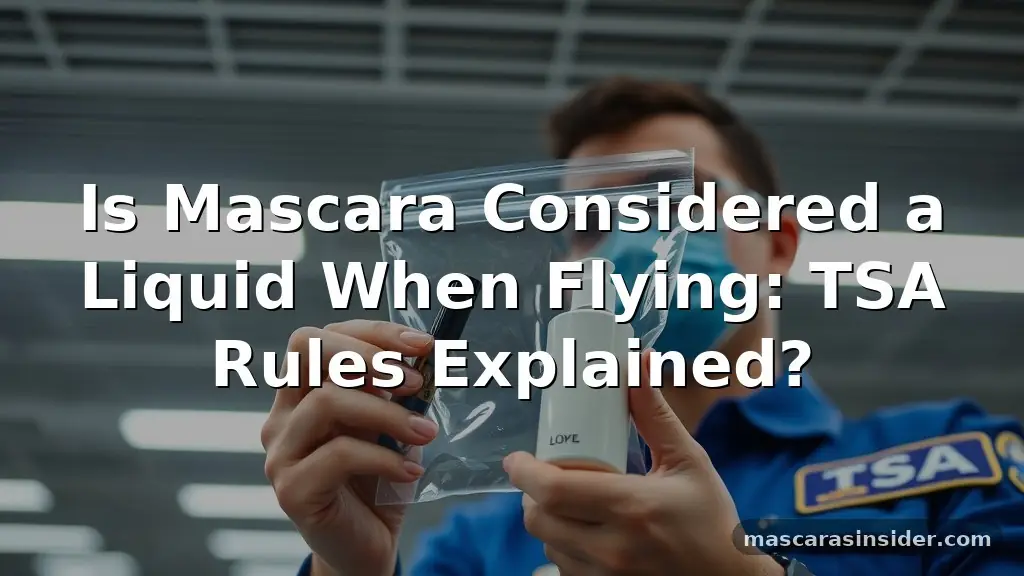
Figuring out exactly how to pack your cosmetics for air travel often leads to confusion at the security checkpoint. Many travelers find themselves wondering if mascara is considered a liquid when flying, leading to last-minute anxiety about whether their favorite beauty products will be confiscated.
Because the Transportation Security Administration maintains strict guidelines regarding what you can bring in your carry-on, knowing the specific classification of your makeup is essential. By understanding how these rules apply to common vanity items, you can breeze through security without worrying about losing your expensive products to a bin during the screening process.
Understanding the TSA Liquid Classification
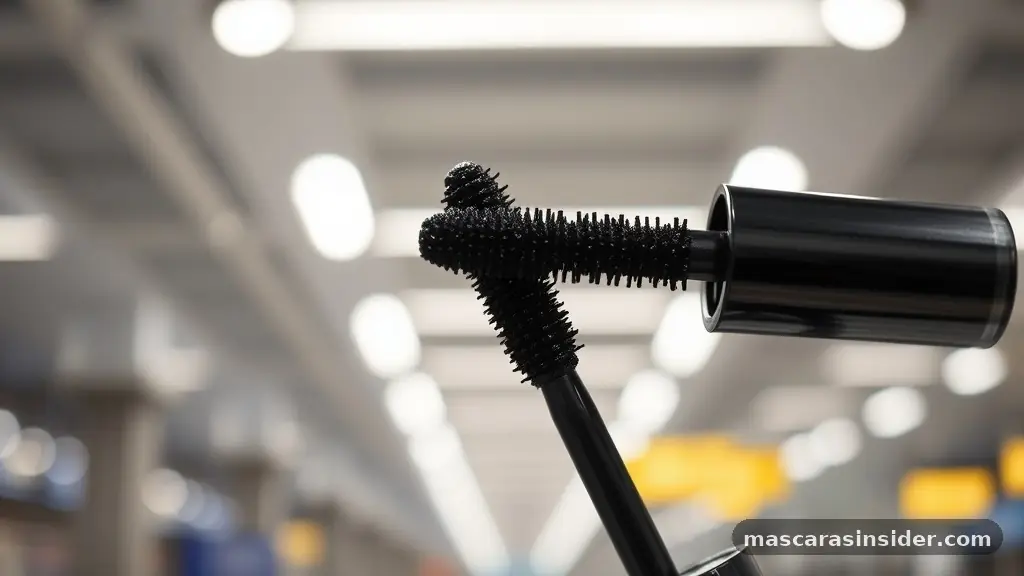
The core of the issue lies in the TSA’s definition of what constitutes a liquid, gel, or aerosol. According to their official guidelines, any substance that can be poured, pumped, squeezed, spread, smeared, or sprayed falls under the 3-1-1 rule.
Because mascara has a viscous, gel-like consistency, it is strictly categorized as a liquid. This means that every tube you carry in your hand luggage must adhere to the volume restrictions that apply to all other bottled substances in your kit.
When you pack your makeup, you have to treat that tube of mascara exactly like you treat your shampoo or face wash. The restriction states that all liquids, gels, and aerosols must be in containers of 3.4 ounces (100 milliliters) or less.
While most mascara tubes are significantly smaller than this limit, the catch is that they must fit inside your single, transparent quart-sized bag alongside all your other liquids. If you have an oversized tube or an unusual liquid-based cosmetic, it will likely be flagged during the X-ray inspection.
The 3-1-1 Rule for Carry-On Bags
The 3-1-1 rule is the industry standard for air travel security. It dictates that every traveler is allowed one quart-sized bag for liquids, gels, and aerosols, with each individual container limited to 3.4 ounces or less.
Because mascara is considered a liquid when flying, it must reside within this specific pouch to comply with federal regulations. Failing to place your mascara in this bag can result in a longer screening process or, in some cases, the disposal of the item if the security officer deems it non-compliant.
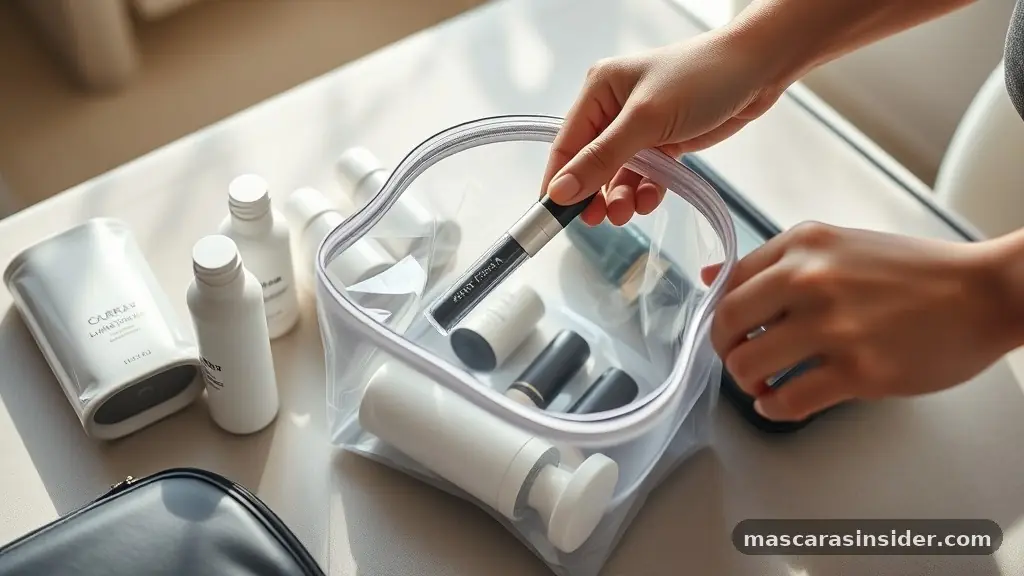
Many frequent travelers keep a dedicated, clear pouch specifically for their liquids to make the transition through security seamless. By consolidating your liquid makeup, toothpaste, and skincare into one bag, you remove the guesswork from the inspection process.
If you are ever unsure about a specific item, the safest bet is to treat it as a liquid and include it in your quart-sized bag. This proactive approach ensures you are never caught off guard when you reach the conveyor belt.
Distinguishing Between Liquids and Solids
A common point of confusion for travelers is the distinction between liquid-based products and true solids. While mascara is clearly a liquid, other items like pressed powder, traditional lipstick, or solid blush sticks do not fall under the same strict categorization.
These solid items can generally be packed outside of your quart-sized bag without issue. Understanding this difference allows you to maximize the space in your restricted bag for the items that actually need to be there.
If you are using a cream-based eyeshadow or a liquid foundation, these also fall under the liquid rule. However, if you stick to powder-based eyeshadows or solid lip balms, you have more flexibility. The rule of thumb is simple: if you can squeeze it out of a tube or scoop it out of a pot, it is a liquid.
If it is a dry, pressed powder or a solid stick that doesn’t melt at room temperature, it is usually exempt from the liquid bag requirement. You can find more details on these official TSA security screening guidelines to ensure your travel kit is fully compliant before you head to the airport.
Packing Strategies for Your Makeup
Efficiency is the name of the game when you are trying to pack makeup for a flight. Since you are limited to a single quart-sized bag, you should prioritize the products that truly need to be in your carry-on.
If you only have a short trip, consider bringing travel-sized versions of your favorite liquid foundations or concealers. This saves precious space in your bag, allowing your mascara and other essentials to fit comfortably without bursting the seams of the pouch.
Another strategy is to transition to solid alternatives where possible. Many beauty brands now offer solid versions of cleansers, perfumes, and even foundations that are not considered liquids.
By swapping out a heavy bottle of liquid foundation for a stick foundation or a powder compact, you reduce the number of items that count against your liquid allowance. This not only makes packing easier but also significantly reduces the risk of leaks inside your luggage.
How Security Officers Screen Cosmetics
When you place your items on the conveyor belt, the security officer monitors the X-ray screen to identify potential threats. Because liquids can be used to hide prohibited substances, they are scrutinized more closely than other items.
If your mascara is tucked away inside a dense, opaque cosmetic bag, the X-ray might not be able to see through it clearly. This often leads to a manual bag search, which adds time to your security experience.
By using a clear, transparent bag, you allow the security team to see exactly what you are carrying without needing to open your luggage. This transparency is key to a faster, less stressful trip through the checkpoint.
If the officer sees a standard-sized tube of mascara inside a clear bag, they are far less likely to pull your bag aside for a secondary inspection. Being organized is the best way to ensure your beauty routine doesn’t slow down your travel plans.
Managing Leaks and Spills in Transit
Even if you follow the rules and keep your mascara in your quart-sized bag, altitude changes can sometimes cause pressure issues inside your luggage. While mascara tubes are generally well-sealed, it is always a good practice to ensure they are tightly capped before you fly. A small amount of pressure can occasionally force air into the tube, causing a minor mess if the seal isn’t perfect.
If you are worried about leaks, you can place your liquid items inside an additional smaller, resealable plastic bag within your quart-sized pouch. This provides an extra layer of protection for your other belongings.
If a tube does happen to leak, the secondary containment will keep your brushes, palettes, and other makeup clean and usable. This simple step provides peace of mind, especially when you are traveling with expensive or high-end beauty products.
Comparing Liquid vs. Solid Makeup Regulations
To better visualize how your beauty products are categorized, it helps to look at the differences between common items. The following table illustrates how different types of makeup are typically treated by security staff during the screening process at the airport.
| Makeup Item | Category | Needs to be in 1-Quart Bag? |
|---|---|---|
| Mascara | Liquid/Gel | Yes |
| Pressed Powder | Solid | No |
| Liquid Foundation | Liquid | Yes |
| Lipstick | Solid | No |
| Cream Eyeshadow | Gel/Cream | Yes |
| Eyeliner Pencil | Solid | No |
Common Mistakes When Packing Makeup
One of the most frequent mistakes travelers make is assuming that because a product is small, it doesn’t count as a liquid. Even if your concealer or lip gloss is tiny, if it is a liquid, it must be in the bag.
Another common error is using a bag that is larger than a quart. While it might seem like a minor detail, security officers are trained to spot non-compliant containers, and using an oversized bag can lead to your items being discarded.
Additionally, many people forget that items like aerosol hairspray or setting sprays are also considered liquids. If you are packing a full beauty kit, these larger items can quickly fill up your quart-sized bag, leaving no room for your mascara or other essentials.
It is always better to evaluate your kit before you leave home. If you don’t strictly need a specific liquid item for your trip, leave it at home or pack it in your checked luggage to avoid the hassle at the checkpoint.
The Benefits of Checking Your Makeup
If you find that your collection of liquids is simply too large for a quart-sized bag, checking your luggage is the most effective solution. When you check a bag, the liquid restrictions of the carry-on rules do not apply.
You can bring full-sized bottles of foundation, setting sprays, and multiple tubes of mascara without worrying about the 3.4-ounce limit. This is often the best approach for long-term travel or professional makeup artists who need to carry a significant volume of product.
However, keep in mind that checked bags are subject to rough handling. If you choose to check your makeup, ensure that everything is packed securely to prevent breakage.
Wrapping glass bottles in bubble wrap or placing them inside a hard-shell case can protect your items from the bumps and drops that occur during the baggage sorting process. While checking your items removes the stress of security screening, it does require a bit more preparation to ensure your products arrive intact.
Travel-Friendly Alternatives to Liquids
For those who prefer to travel with only a carry-on, exploring solid alternatives is a fantastic way to bypass the liquid rule. Many brands now offer high-performance makeup in solid formats that are perfect for air travel.
For instance, instead of carrying a liquid concealer, you might look for a stick formula that provides similar coverage. These products are not only easier to pack but are also less prone to leaking during flight.
- Switch to powder-based foundations to avoid liquid volume limits.
- Use solid perfume sticks instead of glass spray bottles.
- Opt for lip and cheek tints in stick form rather than liquid tubes.
- Choose travel-sized mascara tubes if you are worried about space.
- Consider multi-use sticks that serve as both blush and lipstick to save weight.
- Invest in a high-quality, leak-proof toiletry bag for your liquids.
By diversifying your makeup bag with these alternatives, you reduce your reliance on liquid products. This makes your packing process more efficient and ensures that your carry-on remains compliant with all aviation security rules, regardless of how strict the local screening might be.
FAQ
Does lipstick and chapstick count as a liquid when flying?
Traditional lipstick and solid lip balm (chapstick) are considered solids and do not need to be placed in your quart-sized liquids bag. However, liquid lip gloss or lip oil is categorized as a liquid and must be packed inside your bag of liquids to comply with security rules.
What makeup is not considered a liquid when flying?
Any dry or solid makeup, such as pressed powder, eyeshadow palettes, blush compacts, traditional lipstick, and eyeliner pencils, is not considered a liquid. These items can be packed freely in your carry-on or personal item without being limited by the 3.4-ounce container rule or the quart-sized bag requirement.
Does mascara need to go in the liquids bag on a plane?
Yes, mascara is categorized as a gel-like substance and must be kept in your quart-sized bag when flying. Because it is a liquid, it is subject to the same volume and packaging restrictions as other gels and liquids, such as toothpaste, shampoo, and liquid foundation, to ensure compliance during security screening.
Does toothpaste count as a liquid?
Yes, toothpaste is treated as a liquid or gel by security personnel. It must be in a container of 3.4 ounces or less and placed inside your quart-sized bag. Many travelers opt for toothpaste tablets to avoid this restriction entirely, as they are a solid alternative that does not count toward your liquid limit.
Final Thoughts on Traveling with Makeup
Navigating the rules of air travel doesn’t have to be a source of stress. Once you recognize that mascara is considered a liquid when flying, you can easily integrate it into your packing routine by keeping it in your quart-sized bag. By staying organized, utilizing solid alternatives when possible, and understanding the clear distinction between liquids and solids, you can maintain your beauty regimen on the road without unnecessary complications.
Remember that these rules are in place to keep everyone safe, and a little bit of preparation goes a long way in making your airport experience smoother. If you have questions about specific products, checking the official guidelines before your trip is always a smart move. Safe travels, and enjoy your next trip with the confidence that your makeup is packed perfectly and ready for your destination.
Meta Description: Is mascara considered a liquid when flying? Learn the TSA rules for packing makeup in your carry-on and how to avoid issues at security.