
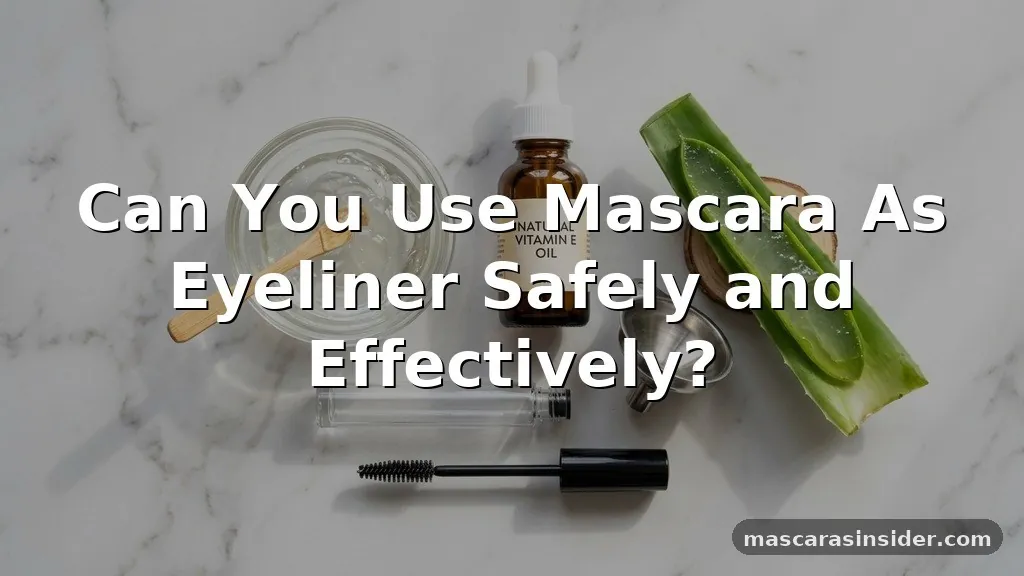
Finding yourself out of liquid liner while rushing to finish your look is a frustrating moment that leaves many wondering whether you can use mascara as eyeliner. When you are in a pinch, repurposing existing makeup items feels like a clever hack to save the day and your budget. However, cosmetics formulated for specific facial zones possess distinct chemical compositions and viscosities that impact both performance and safety.
Understanding how cosmetic products interact with delicate skin tissues helps prevent irritation while achieving the desired aesthetic. This exploration examines the practicalities, risks, and techniques involved in substituting standard eye cosmetics, ensuring your beauty routine remains both creative and safe for daily wear.
Evaluating the Safety of Eye Makeup Substitutions

Can you use mascara as eyeliner? Yes, you can technically use mascara as a substitute in an emergency, but you must evaluate the potential safety risks before applying it near your eye.
Eye makeup products are formulated for specific areas, and crossing those boundaries requires careful consideration of ingredients and bacterial growth. Standard tube formulas contain waxes, pigments, and preservatives designed specifically to coat individual hairs rather than bond with the delicate skin of the eyelid.
The primary safety concern involves the applicator wand and the formula’s composition. Mascara wands are thick and rigid, making precise application along the lash line difficult and potentially hazardous if poked into the eyeball.
Furthermore, formulas meant for lashes contain higher concentrations of binding agents that can dry too tightly on the skin, leading to flaking, cracking, and subsequent irritation. People with sensitive eyes or contact lens wearers should exercise extreme caution, as stray flakes can easily migrate beneath the lens and cause painful abrasions.
If you choose to proceed with this makeup hack, hygiene remains paramount. Double-dipping a contaminated brush or wand introduces bacteria directly back into the tube, which can foster microbial growth over time. Dermatologists and ophthalmologists generally advise against using products off-label for extended periods, especially around mucous membranes where infections like conjunctivitis can develop easily.
Formulation Differences Between Mascara and Liquid Eyeliner
The chemical makeup of mascara differs significantly from traditional liquid eyeliner, impacting how each product behaves on the skin. Mascara formulas are engineered to be thicker, more elastic, and voluminous to coat and lift individual lashes without weighing them down. In contrast, liquid liners are manufactured with volatile solvents or water-based polymer blends that dry down into a thin, flexible, smudge-proof film specifically intended for skin adherence.
When you apply a lash formula to the eyelid, the differences in viscosity become immediately apparent. Because the product is thicker, it tends to feel heavier on the skin and takes longer to set completely.
This can lead to transfer onto the upper lid, commonly known as stamping, especially for individuals with hooded eyelids. The following table highlights the core structural and functional differences between these two common cosmetic staples.
| Feature | Mascara | Liquid Eyeliner |
|---|---|---|
| Primary Purpose | Lengthen and volumize eyelashes | Create precise lines along the lash line |
| Viscosity | Thick, heavy, and wax-heavy | Thin, fluid, and fast-drying |
| Applicator | Spoolie brush with dense bristles | Fine-tip brush, felt tip, or pen |
| Skin Adhesion | Poor; designed to grip hair fibers | High; formulated to adhere to skin cells |
Understanding these variances explains why repurposing lash products rarely yields the same long-lasting finish as a dedicated liner. While you can certainly create a dark, smoky effect, the staying power will inevitably fall short of what a polymer-based liner provides throughout a long day.
Techniques for Applying Lash Products to the Lash Line
Achieving a clean line requires a proper technique and the right tools, as attempting to use the standard fluffy spoolie directly on your eyelid is practically impossible. Instead of applying the product straight from the tube, you need to harvest a small amount of the formula using a specialized tool to gain control over the application process.
An angled brush serves as the ideal instrument for this task. By gently scraping or pressing a fine-tipped angled brush against the mascara wand, you can pick up just the right amount of pigment.
This method allows you to mimic the precision of a professional gel pot liner without needing extra purchases. When working with the product, consider these essential application steps:
- Scrape excess product off your applicator onto a palette or the back of your hand to avoid clumping.
- Lightly tap the angled brush into the harvested pigment to coat only the very tips of the bristles.
- Press the brush gently along the base of your upper lashes rather than dragging it, which can pull delicate skin.
- Build intensity gradually by adding thin layers rather than laying down a thick, heavy stroke all at once.
Mastering this technique takes a little patience, but it transforms a clunky product into a workable substitute. Always ensure your tools are impeccably clean before starting to minimize any risk of introducing bacteria to your lash line.
Addressing Common Risks and Eye Health Considerations
Prioritizing eye health is essential when experimenting with cosmetics, particularly when using products outside their intended scope. The skin surrounding the orbital bone is exceptionally thin and sensitive, making it vulnerable to contact dermatitis, allergic reactions, and chemical irritations caused by migrating ingredients.
One major risk involves waterproof formulas. Waterproof lash products contain resilient sealants and solvents that are notoriously difficult to remove from the skin.
Scrubbing aggressively at the eyelid to eliminate dried waterproof residue can lead to premature skin aging, micro-tears, and lash fallout. For deeper insights into maintaining optimal ocular health while using cosmetics, refer to guidelines from the American Academy of Ophthalmology on safe beauty practices.
Furthermore, sharing makeup or using expired products compounds these risks. Mascara tubes have a notoriously short lifespan—typically three months after opening—because the wet environment inside the tube breeds bacteria rapidly. Applying expired formula near the delicate inner rim of the eye invites styes, blepharitis, and other uncomfortable infections that require medical attention.
Creative Alternatives When You Run Out of Eyeliner
When you discover you are out of liquid liner, relying on lash products is not your only option. Several household beauty items can serve as excellent, safer substitutes that require minimal effort to adapt for your daily routine.
Gel eyeshadows, for instance, mixed with a drop of setting spray can create a rich, customizable pigment that glides on smoothly with an angled brush. Similarly, a sharpened dark pencil shadow applied with a smudge brush offers a soft, smoky definition that looks deliberate and chic. Exploring these versatile options keeps your makeup routine flexible and spares your delicate skin from heavy, pore-clogging formulas.
For individuals who frequently find themselves without standard products, building a multi-use emergency kit can save time and reduce stress. Keeping a small cake eyeliner or a multi-purpose cream pigment in your travel bag ensures you always have a reliable backup ready to go.
Answering Your Questions About Makeup Substitutions
Is it safe to put mascara on your waterline?
No, applying standard lash formulas directly to your inner waterline is strongly discouraged. The product can easily clog your tear ducts, migrate into the eye, and cause severe irritation, redness, or blurry vision.
How do I make the look last longer without smudging?
To prevent smudging, set your makeshift line by gently pressing a matching black or dark brown eyeshadow over the top using a small detail brush. This sets the cream product and locks it into place.
Can I use waterproof mascara for this hack?
While waterproof formulas resist running throughout the day, they are much harder to remove and can severely dry out the delicate skin of your eyelids, making them a less desirable choice.
What should I do if the product gets into my eye?
If product enters your eye, flush it immediately with sterile saline solution or clean lukewarm water. Avoid rubbing your eye, as this can cause corneal abrasions from any hardened flakes.
Final Thoughts on Alternative Cosmetic Uses
Repurposing your beauty stash can be a fun and resourceful trick when you find yourself in a pinch. While you can successfully use mascara as eyeliner with the right tools and a gentle touch, it should remain an occasional backup plan rather than a daily habit. Prioritizing your eye health and practicing proper hygiene ensures your makeup routine remains both creative and safe.