
Waterproof mascara is a bit of a double agent. It survives your tears at weddings, holds up through a sweaty spin class, and refuses to smudge in a downpour. That’s the whole point.
But the same formula that laughs off water becomes a nightmare when you’re standing at the bathroom sink at 11pm, rubbing at your eyes and getting nowhere. If you’ve ever gone to bed with racoon eyes because you gave up, you’re not alone.
The trick isn’t scrubbing harder. It’s understanding why the stuff clings so stubbornly, and then using the right method to break it down gently. Below I’ll walk you through what actually works, what to keep away from your eyes, and how to protect your lashes while you do it.
Why Waterproof Mascara Is So Hard to Remove
Regular mascara is water-soluble, which means a splash of warm water and a bit of cleanser usually lifts it right off. Waterproof formulas are a different animal entirely.
Most waterproof mascaras rely on waxes and film-forming polymers, plus water-repelling ingredients like dimethicone or silicones. When you apply it, the water in the formula evaporates and leaves behind a flexible, water-resistant coating that wraps around each lash.
That coating is designed to repel moisture. So splashing water at it does basically nothing, because oil and wax don’t mix with water.
This is why you need something that speaks the same chemical language. Oil dissolves oil.
That’s the core principle behind nearly every effective removal method here. Whether it’s a dedicated oil-based makeup remover, micellar water with mild surfactants, or a bit of coconut oil from your kitchen, the goal is the same: loosen the waxy film so it slides off instead of being scrubbed off.
Dermatologists warn that aggressive rubbing is one of the biggest causes of lash loss and irritation around the eyes. The skin on your eyelids is the thinnest on your whole body, roughly 0.5mm, so it’s especially prone to tugging and inflammation. Patience beats pressure every single time.
The Gentlest Way to Remove Waterproof Mascara
The reliable method is oil-based removal, and it takes about sixty seconds of patience. Here’s how I do it.
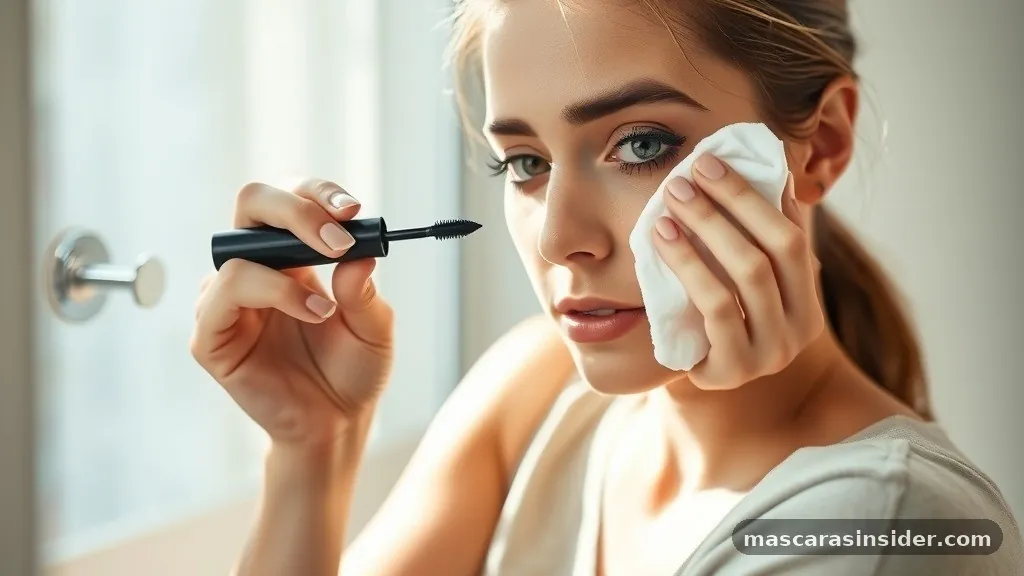
- Saturate a cotton pad with an oil-based makeup remover or micellar water made for waterproof makeup. Don’t be stingy with the product.
- Press the pad flat against your closed eye and hold it there for 15 to 20 seconds. This is the step everyone skips, and it’s the most important one. You’re letting the solvent dissolve the film before you move a muscle.
- Gently sweep downward, following the direction your lashes grow. Never scrub side to side.
- Flip the pad to a clean side and repeat until no more mascara transfers.
- For clumps stuck at the root, use a fresh cotton swab dipped in remover to work them loose.
The whole thing should feel gentle. If you’re fighting your lashes, the product hasn’t had enough time to work, so give it another few seconds. Removing waterproof mascara well is about letting the formula do the heavy lifting.
Afterward, follow up with your regular cleanser to sweep away any oily residue. Skipping this can leave a film that clogs pores along the lash line and leads to little bumps or styes.
Does Micellar Water Actually Work on Waterproof Mascara?
Micellar water is a favourite for a reason, and it deserves its own section. The technology is genuinely clever. Micellar cleansing water contains tiny molecular clusters called micelles that hang suspended in soft water.
One end of each micelle is attracted to oil and dirt, the other end loves water. When you press a soaked cotton pad to your skin, those micelles grab onto makeup and lift it away without a heavy rinse.
Here’s the catch. Not all micellar water is equal. Standard cleansing water is fantastic for everyday makeup and light dirt, but plain versions can struggle with truly waterproof mascara.
You want a formula labelled for waterproof makeup, which usually contains a small amount of oil to boost its power. Products like Garnier SkinActive Micellar are widely sold specifically for this reason, with a version formulated for stubborn eye makeup.
As the American Academy of Dermatology notes in its face-washing guidance, being gentle with your skin matters more than any single product, so let the micellar cleansing work rather than forcing it.
A tip that makes a real difference: warm the cotton pad slightly in your hands first. The gentle heat helps soften the waxy coating, so the micellar water works faster on your lashes and eye makeup.
Natural and At-Home Methods That Actually Work
Ran out of remover? Your kitchen and bathroom shelves have several honest alternatives. These are especially handy if you have sensitive skin and want to avoid fragranced products.
- Coconut oil: A pea-sized amount melted between your fingers, massaged over closed eyes, then wiped away with a warm cloth. It dissolves waterproof formulas beautifully and conditions the lashes as a bonus.
- Olive oil: Works on the same principle. It’s a touch heavier, so a little goes a long way.
- Petroleum jelly (Vaseline): Yes, it does remove waterproof mascara. Dab a thin layer over lashes, wait a moment, then wipe gently. It smears the mascara loose. The downside is the greasy residue, so cleanse thoroughly afterward.
- Baby oil: Cheap, gentle, and effective, though it can sting if it gets in your eyes, so keep it on the lashes.
- A warm compress: Not a full remover on its own, but pressing a warm damp cloth over your eyes for thirty seconds softens the coating and makes everything else easier.
What about plain water? Honestly, it barely dents true waterproof mascara.
You might loosen a flake or two, but water alone can’t break the oil-repellent film. You’ll end up rubbing, which is exactly what you don’t want to do to that delicate skin.
One caution with oils near the eyes. If you wear contact lenses, take them out first, and avoid getting oil directly on the eyeball, since it can blur vision for a while.
Comparing Your Removal Options
Different methods suit different situations. Here’s a quick side-by-side to help you pick based on what you’ve got and how sensitive your eyes are.
| Method | Effectiveness on Waterproof | Best For | Watch Out For |
|---|---|---|---|
| Oil-based makeup remover | Excellent | Daily use, heavy mascara | Needs a rinse afterward |
| Micellar water (waterproof formula) | Very good | Sensitive skin, no-rinse routine | Plain versions underperform |
| Coconut or olive oil | Very good | Natural, budget removal | Greasy residue |
| Petroleum jelly | Good | Emergencies, no remover on hand | Heavy, needs cleansing after |
| Plain water | Poor | Not recommended alone | Leads to rubbing and lash damage |
For most people, a dedicated eye makeup remover or a proper waterproof-rated micellar water is the sweet spot. It’s fast, gentle, and doesn’t leave you cleansing twice.
How to Get Waterproof Mascara Out of Clothes and Fabric
Mascara doesn’t just cling to lashes. It ends up on white collars, pillowcases, and towels, usually at the worst possible moment. Because the same waxy, water-resistant chemistry is at play, water and a quick dab won’t cut it.
Start by scraping off any dried excess with a dull edge, like the back of a spoon. Don’t rub it in.
Then dab, don’t scrub, a small amount of dish soap or a stain remover directly onto the mark. Dish soap is designed to cut grease, which is exactly what you need here.
Let it sit for five to ten minutes so the surfactants can break down the oils. Rinse from the back of the fabric under cool water to push the stain out rather than driving it deeper. For stubborn marks, a little rubbing alcohol on a cotton pad can help lift the pigment, though you should test a hidden spot first to make sure it won’t affect the colour.
Wash as normal, but check the stain before you put the item in the dryer. Heat sets mascara permanently. If a shadow remains, treat and rinse again before drying.
Protecting Your Lashes and Skin Long-Term
Removing waterproof mascara isn’t a one-off event. You do it most nights, and how you do it adds up over months and years.
Sleeping in mascara is a genuinely bad habit. It can dry out and weaken the lashes, making them brittle and prone to breaking. Trapped mascara can also flake into your eyes overnight and irritate them, or clog the tiny glands along your lash line.
A few habits keep your eyes and skin healthy:
- Remove makeup every night, no exceptions, even when you’re exhausted. Keep pre-soaked micellar pads by the bed for lazy nights.
- Let the product dissolve before you wipe. Pressing and holding is gentler than rubbing.
- Condition your lashes occasionally with a dab of castor or coconut oil to keep them flexible.
- Give your lashes a break by rotating in a regular, non-waterproof mascara on days you don’t need the extra staying power. Waterproof makeup daily is harder on lashes over time.
- Replace your mascara every three months to avoid bacteria buildup, which is standard ophthalmologist advice.
If your eyes feel gritty, red, or irritated after removal, switch to a fragrance-free, oil-based remover formulated for sensitive eyes. Fragrance is a common culprit behind eyelid irritation.
Frequently Asked Questions
Will Vaseline remove waterproof mascara?
Yes. Petroleum jelly dissolves the waxy film in waterproof mascara, so a thin layer dabbed onto the lashes and wiped away will lift it.
It’s a solid emergency option. Just cleanse afterward, because it leaves a greasy residue that can clog the delicate skin around your eyes.
Does waterproof mascara eventually come off on its own?
It fades and flakes over many hours, but it won’t fully disappear the way regular mascara might. The water-resistant coating is built to last through sweat and tears, so you’ll always need an oil-based or micellar remover to get it completely off. Leaving it on overnight is not a good idea.
What can I use instead of waterproof mascara remover?
Coconut oil, olive oil, baby oil, and petroleum jelly all break down the formula effectively. Micellar water rated for waterproof makeup works well too. Plain water and regular face wash on their own tend to fall short, since they can’t dissolve the oil-repellent layer.
How do I remove waterproof mascara without makeup remover?
Reach for a natural oil. Warm a small amount between your fingers, massage it gently over closed eyes, wait a few seconds, then wipe away with a warm damp cloth or cotton pad. Follow with your normal cleanser to clear the oily residue.
Can I use micellar water on my lashes every day?
Absolutely, as long as you choose a gentle formula and avoid excessive rubbing. Micellar cleansing water is mild enough for daily use and popular with people who have sensitive skin. Press and hold the cotton pad rather than scrubbing to protect your lashes.
The Bottom Line
Getting rid of waterproof mascara comes down to one simple idea: dissolve, don’t scrub. Because the formula repels water, you need oil or a micellar cleanser to break its grip, plus a little patience to let the product do its job before you wipe. Press and hold, sweep downward, and always follow up with a proper cleanse.
Whether you reach for a dedicated eye makeup remover, a waterproof-rated micellar water, or a spoonful of coconut oil from the pantry, the gentle approach protects both your lashes and the fragile skin around your eyes. Treat that delicate area kindly night after night, and you’ll keep your lashes strong while still enjoying mascara that survives whatever the day throws at it.