
That tube of mascara sitting in your makeup bag has a shelf life, and it’s shorter than you probably think. Most people hang onto mascara until it dries out or runs low, which can take the better part of a year.
That’s a mistake. Mascara sits closest to one of the most sensitive parts of your body, and every swipe of the wand carries a little something back into the tube.
So how often should you actually swap it out? The short answer is every three months. The longer answer, and why that number matters so much, is worth understanding before your next eye infection convinces you the hard way.
The Three-Month Rule and Why It Exists
Dermatologists and ophthalmologists broadly agree on the same window: toss your mascara roughly every two to three months after opening. Not six months.
Not a year. Three months, tops.
The reason comes down to how mascara is designed and how you use it. Every time you pull the wand out, coat your lashes, and push it back in, you’re pumping air into the tube. You’re also dragging bacteria from your lashes and skin straight into a warm, dark, moist environment.
That’s basically a petri dish. Bacterial growth doesn’t need much encouragement in those conditions.
Mascara is what’s known as a wet product, and wet products spoil faster than powders. There’s water and organic material in the formula, which means preservatives are doing constant work to keep microbes in check.
Those preservatives don’t last forever. As they break down over time, the protection weakens, and the risk of contamination climbs.
The American Academy of Ophthalmology has long warned about eye cosmetics as a source of infection, and their guidance echoes what most eye doctors tell patients: replace mascara every three months and never share it. You can read more about safe eye makeup habits from the American Academy of Ophthalmology, which treats this as a genuine health matter rather than a beauty tip.
What Happens When You Keep It Too Long
Old mascara isn’t just less pretty. It can genuinely make you sick.
The bacteria that build up inside an aging tube include the usual suspects that live on skin, plus occasionally more troublesome organisms. When you apply contaminated mascara and it touches your lash line or gets into your eye, you’re setting yourself up for problems like conjunctivitis, styes, and in rarer cases, corneal infections that need real medical treatment.
Here’s a scenario eye doctors see more than you’d expect. Someone uses the same mascara for months, gets a mild eye infection, treats it, then reaches right back for the same contaminated tube and reinfects themselves. The cycle keeps going until they finally throw the product away.
There’s also the practical stuff. Old mascara:
- Dries out and gets clumpy, so application looks messy
- Flakes off during the day and can land in your eye
- Develops a strange or sour smell as the formula degrades
- Loses its pigment and definition, giving you a weaker result
- Can cause irritation, redness, and watering even without a full-blown infection
If your mascara smells off, that’s a clear sign the formula has turned. Don’t try to save it by adding water or saline. That only introduces more contamination and thins out whatever preservatives are still working.
Reading the PAO Symbol on Your Mascara
Flip your mascara over and look for a small icon shaped like an open jar with a number and the letter M. That’s the Period After Opening symbol, or PAO. It tells you how many months the product stays good once you’ve broken the seal.
For most mascaras, that number reads 3M or 6M. The 3M is the more cautious and honestly more sensible guide for eye products. Even if yours says 6M, plenty of experts recommend erring on the shorter side for anything that goes near your eyes.
Keep in mind the PAO clock starts when you open the tube, not when you buy it. An unopened mascara can sit sealed for its full shelf life, usually around two years, before the expiration date on the packaging matters. Once opened, though, the months-year math changes completely and the shorter PAO window takes over.
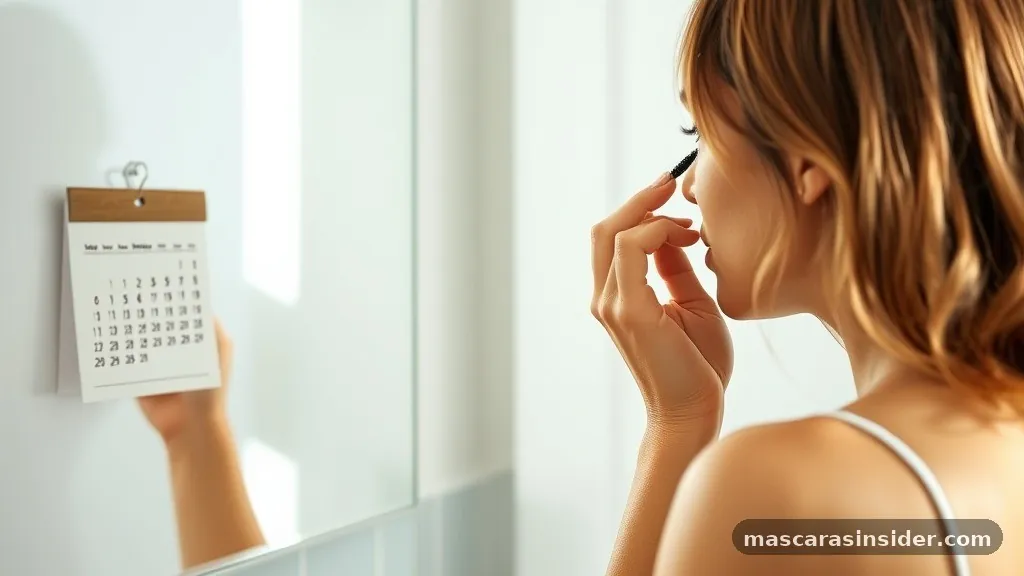
A good trick: write the date you opened it on the tube with a fine marker, or stick a tiny label on the bottom. Three months fly by, and it’s genuinely hard to remember when you cracked open a new one otherwise.
Daily Use Versus Occasional Use
Does how often you wear mascara change the timeline? A little, but not as much as you’d hope.
If you apply mascara daily, you’re pumping the wand in and out more often, introducing more air and more bacteria with each use. Daily wearers should stick firmly to that three-month replacement schedule and not push it.
People who only wear mascara occasionally sometimes assume a rarely-used tube stays fresh longer. It doesn’t work that way. A tube that sits mostly untouched still degrades, because the preservatives break down on their own timeline regardless of use.
And ironically, an occasional-use mascara may dry out and clump even faster once air has gotten in. Three months is still the smart cutoff either way.
Waterproof formulas deserve a special mention. They tend to dry out quicker because of how they’re built, so you might find yourself replacing waterproof mascara even sooner than the regular kind.
How Mascara Compares to Other Makeup Products
Mascara has one of the shortest lifespans in your entire makeup bag, and it’s helpful to see it next to everything else. Products that are dry, like powders, generally last much longer because bacteria struggle without moisture. Cream and liquid products, especially ones used near the eyes, need swapping out more often.
Here’s a rough guide to how long common makeup products last after opening:
| Product | Replace After Opening | Why |
|---|---|---|
| Mascara | 3 months | Wet, near the eye, high bacterial risk |
| Liquid eyeliner | 3 months | Similar eye contact and moisture |
| Pencil eyeliner | 1 to 2 years | Can be sharpened to a fresh surface |
| Liquid foundation | 6 to 12 months | Wet formula, but not near the eye |
| Concealer | 6 to 12 months | Similar to foundation |
| Cream blush | 6 to 12 months | Moist formula, skin contact |
| Powder blush and eyeshadow | 1 to 2 years | Dry, low bacterial growth |
| Lipstick | 1 to 2 years | Wax-based, some preservatives |
| Brow gel | 3 to 6 months | Wet formula, wand application |
Notice the pattern. Anything with a wand that goes near your eyes, mascara, liquid liner, brow gel, sits at the short end.
Dry powders you can hold onto for a year or two without much worry. That difference is all about bacteria and moisture, not the price of the product.
Healthier Habits for Your Lashes
Beyond swapping tubes on schedule, a few small habits go a long way toward keeping your eyes and lashes happy.
Never share mascara. Ever. It’s the single fastest way to pass an infection from one person to another, which is also why those tester mascaras at makeup counters are a genuinely bad idea.
Stop the pumping motion. Jabbing the wand in and out to load it with product just forces more air into the tube and speeds up drying. Instead, gently swirl the wand inside without over-pumping.
Remove your mascara every night before bed. Sleeping in it can make lashes brittle and prone to breakage, and it leaves product sitting against your lash line where irritation starts. A gentle cleanser or micellar water does the job without harsh rubbing.
As for the healthiest choice for your lashes, look for formulas that are ophthalmologist-tested and fragrance-free if you have sensitive eyes. Tubing mascaras, which wrap each lash in a polymer that slides off with warm water, tend to be gentle because you skip the aggressive scrubbing at removal. And a quick note on the aging question people ask a lot: heavy mascara on the lower lashes can draw shadows under the eyes and emphasize fine lines, so a lighter hand there often looks fresher than a fully loaded lower lash line.
Frequently Asked Questions
Can I use 5 year old mascara?
No. Five-year-old mascara is far past any safe window, whether it’s been opened or not. Even a sealed tube typically expires within two years, and once opened the safe period is only three months.
Old mascara harbors bacteria and degraded preservatives that can cause eye infections. Throw it out.
Can I use mascara for 2 years?
Not once it’s opened. An unopened, sealed mascara may last close to two years on the shelf, but as soon as you break the seal you should use it up within three months. Stretching a single opened tube across two years is asking for irritation or infection.
What mascara is healthiest for your eyelashes?
Ophthalmologist-tested, fragrance-free formulas are the gentlest option, and tubing mascaras are worth trying because they remove with warm water instead of scrubbing. Whatever you choose, replacing it every three months and taking it off nightly matters more for lash health than the specific brand.
How long should mascara last with daily use?
With daily use, plan on replacing mascara every three months. Frequent application means more air and bacteria enter the tube, so daily wearers shouldn’t push past that window even if the mascara still seems fine.
Does mascara dry out faster if I don’t use it often?
It can, oddly enough. Once air gets into the tube, the formula starts drying regardless of how often you use it. An occasionally used mascara still degrades on its own timeline, so the three-month rule applies whether you wear it every day or once a week.
The Bottom Line
Mascara is the one product in your makeup bag that deserves a hard expiration policy. Three months after opening is the number to remember, and the reason is simple: it sits right by your eyes, it’s a wet formula, and bacteria love those conditions. Waiting until it dries out or runs empty means you’re likely applying a contaminated product for weeks.
Mark the date you open a new tube. Never share it, never add water to revive it, and swap it the moment it smells off or starts flaking.
Compared to the risk of a nasty eye infection, replacing a tube every quarter is a small, easy habit. Your eyes will thank you for it.