
You spend a solid few minutes coating your lashes, step back, admire the flutter — and two hours later you catch your reflection and there’s a dark grey shadow parked right under your eyes. Sound familiar?
If you’ve ever asked yourself why does my mascara always smudge, you’re in good company. It’s one of the most common complaints in beauty forums, and the frustrating part is that it usually isn’t your mascara’s fault alone.
Smudging is a chemistry problem meeting a physics problem. Your skin produces oil. Your lashes touch your lids when you blink.
Add some heat, a little humidity, maybe an eye cream that never fully dried, and you’ve got the perfect recipe for raccoon eyes. The good news is that once you understand the real causes, most of them are fixable with small changes rather than a whole new makeup bag.
The Real Reasons Mascara Smudges Under Your Eyes
Let’s clear up the biggest myth first. A smudging mascara is rarely a “bad” mascara. It’s usually a mismatch between the product and your skin, your eye shape, or your routine.
Here are the usual suspects behind the smudge:
- Oily skin around the eyes. Your face produces sebum, and that oil breaks down mascara over the course of the day. Oily lids are the number one cause of transfer onto the under-eye area.
- Eye creams and moisturizers. A rich cream that hasn’t absorbed leaves a slick film. Mascara meets that film and slides.
- Eye shape and lash length. Deep-set eyes and long lower or upper lashes brush against the skin every time you blink. That contact deposits pigment.
- Humidity and heat. Warm, damp weather softens formulas. A gym session or a humid summer day will test even good mascara.
- Watery eyes. Allergies, wind, or naturally teary eyes dilute the formula and carry it downward.
- Applying too much product. Excess mascara never dries evenly. Those heavy clumps stay tacky and transfer easily.
Notice how most of these have nothing to do with the tube itself. Your lashes are the actor, but the stage — your skin, your climate, your prep — decides how the scene plays out.
Why Mascara Smudges on Your Upper Eyelid
Under-eye smudging gets all the attention, but plenty of people find grey streaks on their upper lid or brow bone instead. This is its own animal.
Upper lid smudging almost always comes down to two things: a hooded or monolid eye shape, and oily lids. When you have a hood, the skin of your upper lid folds down and rests against your upper lashes.
Blink a few times and the wet or semi-dry mascara stamps itself onto that crease. It’s basically a rubber stamp situation, and no amount of skill changes your anatomy.
Oil makes it worse. If your lids get shiny by midday, any pigment sitting near the lash line gets picked up and dragged around. That’s how you end up with smudges creeping toward your brow bone.
The fix here is prep more than product. A thin layer of matte eyeshadow primer or a translucent setting powder on the lid creates a dry, grippy surface that mascara can’t glide across. Curling your lashes so they point up and away from the hood also buys you space, so the lashes clear the fold instead of pressing into it.
The Waterproof Mascara Paradox
Here’s a twist that confuses a lot of people. You switch to a waterproof formula expecting it to be smudge-proof, and it still ends up under your eyes. What gives?
Waterproof and smudge-proof are not the same promise. Waterproof mascaras resist water — tears, rain, sweat.
But most of them do not resist oil. Sebum is the enemy of waterproof formulas, and if your under-eye area runs oily, that oil dissolves the wax and pigment just fine.
“Waterproof formulas are designed to repel water, not the natural oils your skin produces. That’s why an oil-based makeup remover takes them off so easily — and why oily skin can still cause them to migrate.”
So if you’ve been asking why does my waterproof mascara smudge under my eyes, the answer is oil, nine times out of ten. The formula is holding up against tears but losing the fight against your own skin.
There’s a category worth knowing about here: tubing mascaras. Instead of coating the lash in wax and pigment, these wrap each lash in a tiny polymer tube that only comes off with warm water and gentle pressure. They resist both oil and water, and for chronic smudgers they’re often the single most effective switch you can make.
How to Stop Mascara From Smudging: What Actually Works
Enough about causes. Here’s the practical part. These are the steps that genuinely keep mascara where you put it, roughly in order of impact.
- Set your under-eye and lids with powder. A light dusting of translucent setting powder absorbs oil before it ever reaches your lashes. This one step fixes smudging for a huge number of people.
- Let eye cream fully absorb. Apply it several minutes before makeup, or skip it directly under the eye on days you know you’ll smudge. Damp skin is slippery skin.
- Wipe the wand. Drag the brush against the tube opening to remove excess mascara. Less product means faster drying and less transfer.
- Curl before, not after. Curling lifts lashes away from your skin. Curling after application can flake the mascara.
- Focus on the upper lashes. Lower lashes are the main culprits for under-eye smudge. Skip them or use the tiniest amount, and you cut the problem dramatically.
- Let each coat dry. Wait 20 to 30 seconds between coats. Blinking into wet mascara is how it lands on your lid.
- Try a tubing formula. If nothing else works, this is your best bet.
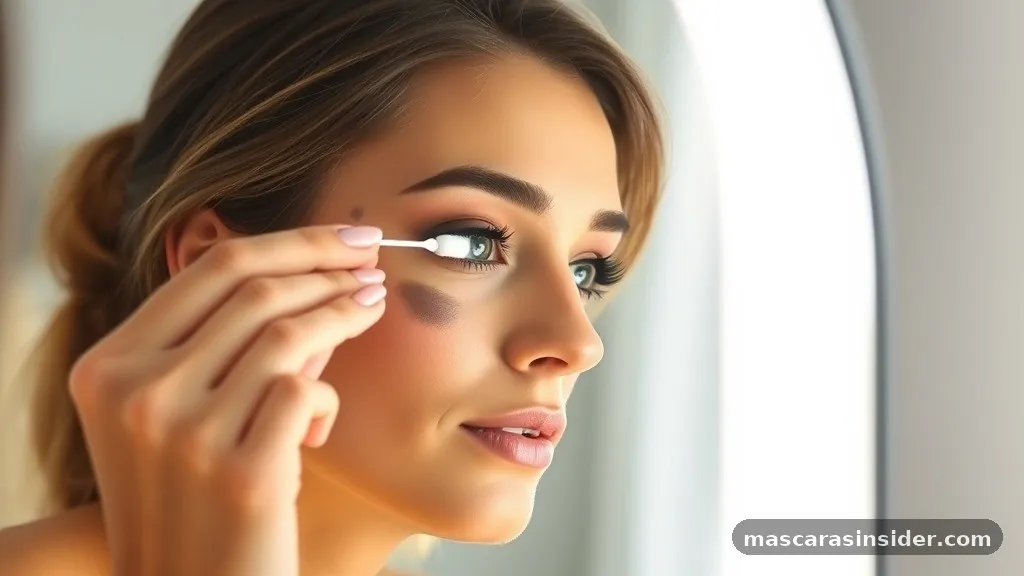
One trick from professional makeup artists: after your mascara dries, press a clean, dry cotton swab lightly along your lower lash line and lid crease. It picks up any residual oil-loosened pigment before it has a chance to spread.
Does Vaseline Before Mascara Actually Help?
You’ll see this tip everywhere — swipe a little petroleum jelly on your lashes before mascara. People swear it conditions the lashes and makes them look longer and darker.
Here’s the honest take. Vaseline is an occlusive, meaning it seals moisture in and can make lashes appear glossier and fuller. Some folks do like the effect.
But if smudging is your issue, this is one of the worst things you can do. Petroleum jelly is pure oil. Putting an oily base under your mascara gives the pigment a slick surface to slide right off of, straight onto your skin.
If you love the Vaseline look, save it for a no-mascara day or the tips of your lashes only. For smudge prevention, you want the opposite of oil — you want dry, matte, and grippy. According to the American Academy of Dermatology, keeping the eye area clean and avoiding heavy products near the lash line also lowers your risk of irritation and infection, which is a nice bonus.
Choosing a Mascara and Routine for Your Skin Type
Not every formula suits every face. Matching the product to your skin makes the biggest long-term difference. This quick comparison covers the main options and who they suit best.
| Mascara type | Best for | Smudge resistance | How to remove |
|---|---|---|---|
| Tubing | Oily skin, chronic smudgers | Very high | Warm water and light pressure |
| Waterproof | Tears, sweat, humidity, swimming | High against water, low against oil | Oil-based remover |
| Regular washable | Dry to normal skin, everyday wear | Moderate | Regular cleanser |
| Smudge-proof / long-wear | Normal skin, long days | Moderate to high | Micellar water or cleanser |
If you have oily lids, lean toward tubing or a dedicated long-wear formula, and always set your skin with powder first. If your eyes water a lot, waterproof or tubing will serve you better than a washable formula. And if your skin runs dry, you have the most freedom — most of your smudging is probably down to eye cream or excess product rather than oil.
Whatever you pick, remove it gently at night. Rubbing at stubborn mascara tugs the delicate skin around your eyes and can break lashes.
Let a remover sit for a few seconds, then wipe with a soft downward motion. Your future lashes will thank you.
Frequently Asked Questions
How do you stop mascara from smudging under your eyes?
Set the under-eye area and lids with a light translucent powder before applying, let any eye cream fully absorb, wipe excess product off the wand, and go easy on your lower lashes. If smudging continues, switch to a tubing mascara, which resists both oil and water far better than standard formulas.
Which mascara is best for not smudging under eyes?
Tubing mascaras are generally the most smudge-resistant because they wrap each lash in a polymer film rather than coating it in oil-soluble wax. Long-wear and smudge-proof formulas are a solid step up from regular washable mascara too. For oily skin specifically, a tubing formula plus setting powder is the most reliable combination.
Why does my mascara smudge even though it’s waterproof?
Because waterproof and oilproof are different things. Waterproof mascaras repel tears, sweat, and rain, but most don’t stand up to the natural oils your skin produces. If your under-eye area is oily, that sebum breaks the formula down and moves it around, no matter how waterproof it is on paper.
What does putting Vaseline on your eyelashes before mascara do?
It can make lashes look glossier and slightly fuller because petroleum jelly is an occlusive that coats and conditions the hair. However, it’s oil-based, so it creates a slippery surface that makes mascara much more likely to slide and smudge. If smudging is your concern, skip the Vaseline under your mascara.
Why does my mascara always smudge on my upper eyelid?
Usually because of a hooded or monolid eye shape combined with oily lids. When the lid folds down over your lashes, blinking stamps wet pigment onto the crease. Curl your lashes upward, prime and powder the lid to create a dry surface, and use only enough mascara to coat without leaving excess.
The Bottom Line
Smudging feels like a personal betrayal from your makeup, but it’s almost always solvable once you know the trigger. For most people, the culprit is oil — from your skin or from an eye cream that didn’t have time to sink in. For others it’s eye shape, watery eyes, or simply applying too much product and blinking before it dried.
Start with the free fixes: powder to set the area, patience to let creams absorb, and a wipe of the wand to shed excess. Curl your lashes and focus on the uppers.
If you’ve tried all that and still see grey shadows by lunchtime, a tubing mascara is your strongest move. Match the formula to your skin, remove it gently at night, and those raccoon eyes should finally stay out of the picture.