
Learning how to properly remove mascara is a fundamental skill for anyone who wears eye makeup regularly. While applying pigment to your lashes is a quick morning ritual, taking it off requires a more deliberate approach to protect the delicate skin around your eyes. Many people fall into the trap of scrubbing their lids with a dry towel or using harsh soaps that strip moisture from the lashes.
This friction is often what causes premature lash loss and unnecessary irritation. To maintain the health of your eyes, you must adopt a technique that prioritizes hydration and gentle dissolution rather than aggressive physical removal.
The Importance of Gentle Removal Techniques
The primary reason you must learn how to properly remove mascara is to preserve the integrity of your eyelashes and the thin, sensitive skin surrounding your orbital bone. Your eyelashes serve as a protective barrier for your eyes, and when you pull on them—whether through rubbing or using poor-quality products—you risk breakage. If you frequently tug at your lashes, you might cause them to fall out before they have finished their natural growth cycle.
Furthermore, the skin around the eyes is significantly thinner than the rest of your face, making it highly susceptible to fine lines and inflammation caused by excessive friction. By treating this area with extreme care, you prevent long-term damage and keep your eye area looking refreshed rather than puffy or tired.
When you use the right method, you allow the product to break down before you ever touch your skin. This is the secret to a damage-free routine. Instead of trying to wipe the product away immediately, you should encourage it to soften.
Think of it as a pre-soak for your lashes. This process minimizes the need for heavy pressure.
If you find yourself having to scrub, it is a clear sign that your current product or your chosen solvent isn’t working effectively. Switching to a more efficient formula or a better technique will immediately reduce the stress placed on your lash follicles.
Selecting the Right Makeup Remover
To effectively remove mascara, you need to match your solvent to the formula of the product you are wearing. Not all makeup removers are created equal, and choosing the wrong one can lead to frustration. For instance, if you are wearing a long-wear or waterproof formula, a water-based micellar water might not be strong enough to dissolve the waxes and polymers in the mascara.
In these cases, an oil-based cleanser or a dedicated dual-phase remover is essential. Oil-based products work by dissolving the oil-based ingredients in waterproof mascara, allowing them to slide off the lashes without the need for intense rubbing.
Types of Cleansers to Consider
- Micellar water: Best for daily, non-waterproof mascara; it uses tiny oil molecules to lift impurities.
- Oil-based cleansers: Ideal for stubborn, waterproof formulas; they break down waxes effectively.
- Cleansing balms: A solid version of an oil cleanser that melts upon contact with skin heat.
- Dual-phase removers: A mix of oil and water that requires shaking; perfect for high-performance makeup.
When choosing your cleanser, look for ingredients that prioritize skin health. Avoid products laden with harsh alcohols or synthetic fragrances, which can cause significant eye irritation. Instead, look for soothing agents like glycerin, aloe, or botanical oils.
If you have particularly sensitive eyes, choosing an ophthalmologist-tested product is a wise safety measure. Remember that your goal is to clean the area while maintaining the natural oil barrier of your skin.
Executing the Double Cleansing Method
The double cleansing method is a professional-grade technique that ensures every trace of pigment is removed without damaging the delicate eye area. This process involves using an oil-based cleanser first to break down the makeup, followed by a gentle water-based cleanser to remove any residue. This is particularly effective for those who wear heavy makeup or live in environments with high pollution.
By using an oil cleanser to start, you effectively “melt” the mascara away. You should apply the oil to your dry lashes and gently massage them with your fingertips. This allows the product to penetrate the layers of mascara, loosening the bond between the pigment and your natural lashes.
After the mascara has softened, you should rinse it away with warm water. Once the initial layer of makeup is gone, you follow up with your standard facial cleanser. This second step is crucial because it ensures that no oily residue is left behind, which could otherwise clog your pores or lead to milia—those tiny, stubborn white bumps that often appear around the eyes.
This two-step process is incredibly efficient because it removes the need for repetitive wiping. By the time you reach the second step, your lashes should be clean and ready for your nightly skincare routine.
Step-by-Step Guide to Damage-Free Removal
1. Begin by washing your hands to ensure you aren’t introducing bacteria to your eye area.
2. Saturate a soft cotton pad with your chosen makeup remover.
3.
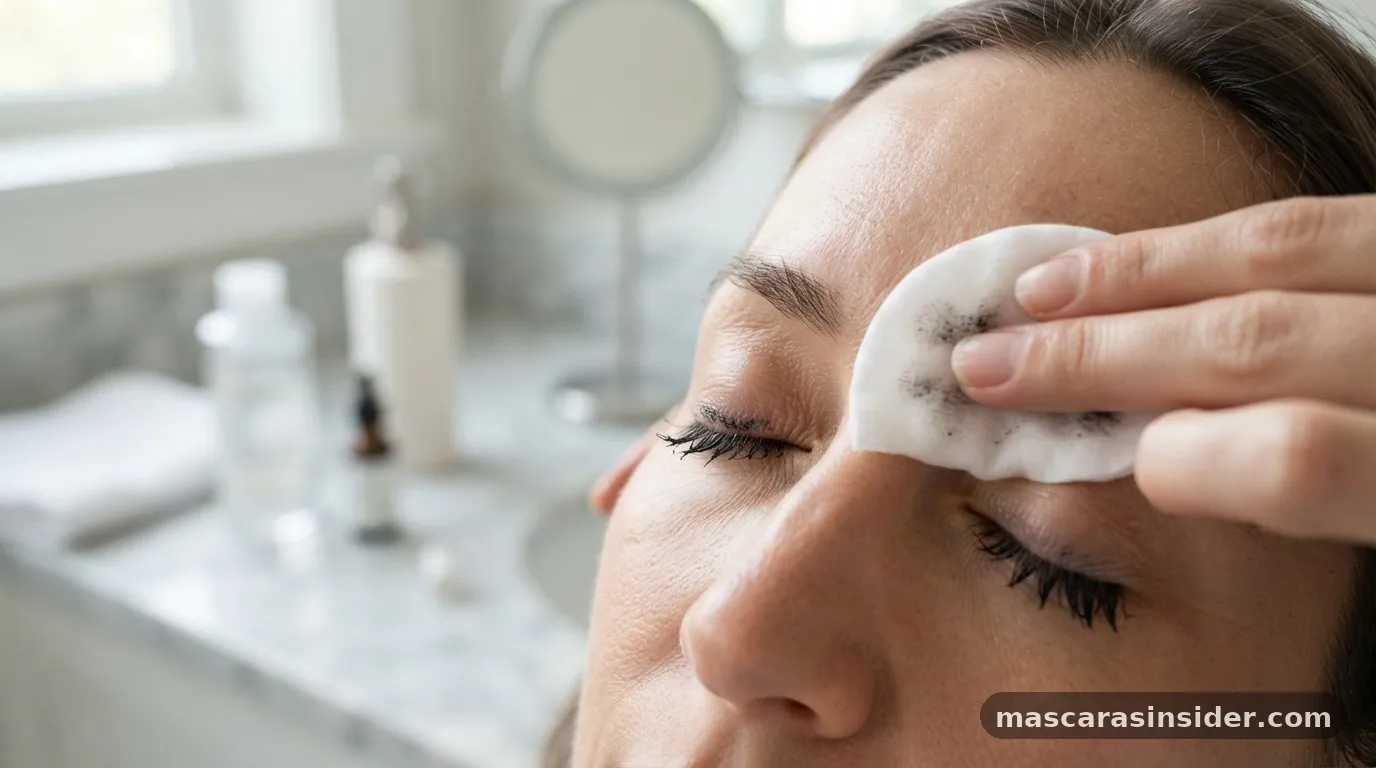
Place the damp pad over your closed eyelid and hold it there for 15 to 30 seconds.
4. Allow the ingredients in the remover to dissolve the mascara completely.
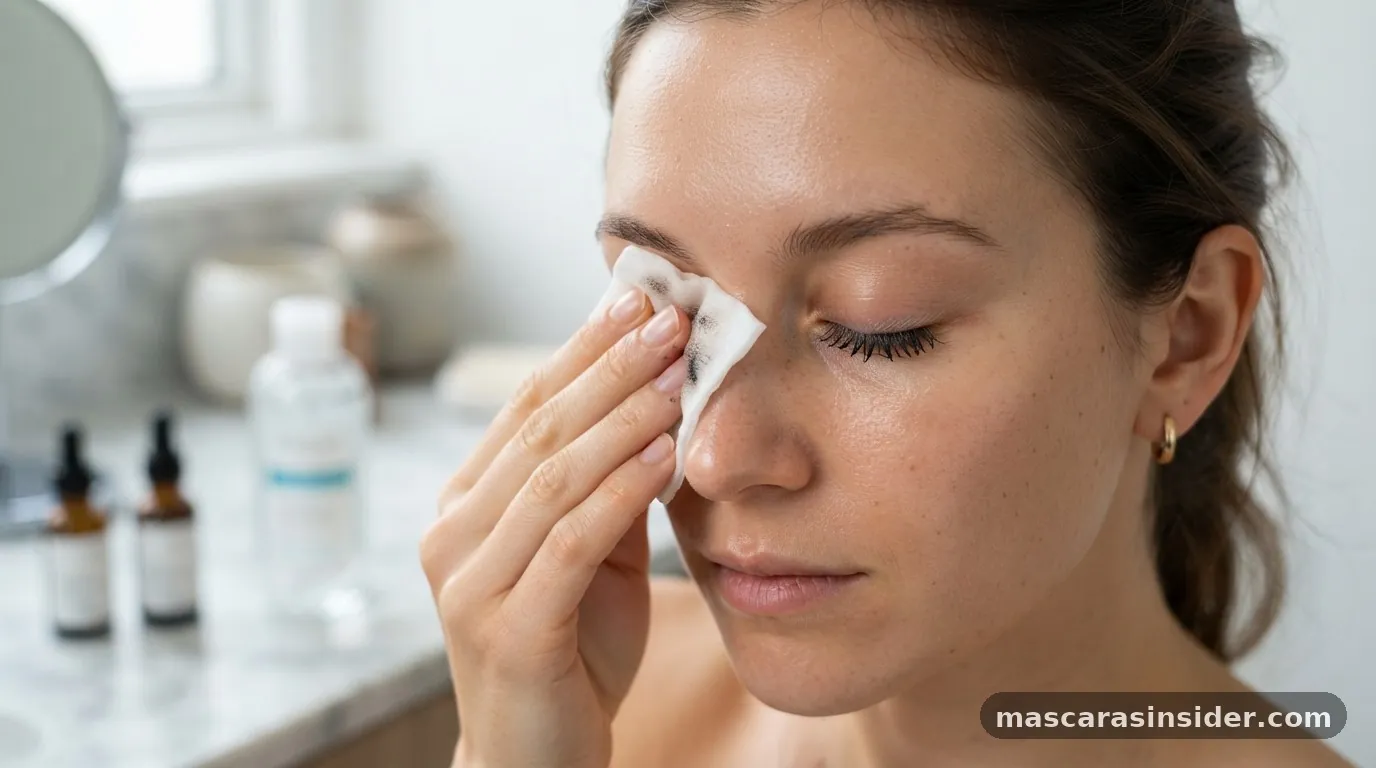
5. Gently wipe downward, following the natural direction of your lashes, rather than side-to-side.
6.
If mascara remains, repeat the process with a fresh area of the cotton pad.
7. Use a clean cotton swab dipped in remover to clean the tight spaces between the lashes.
8.
Rinse your face with lukewarm water to remove any leftover product.
9. Pat your skin dry with a clean, soft towel rather than rubbing.
Following these steps ensures that you are working with the anatomy of your eye rather than against it. Holding the pad in place is the most important part of this process; it does the heavy lifting so your hands don’t have to. If you are struggling with stubborn waterproof mascara, do not be tempted to pull at the lashes.
Simply re-saturate the pad and give it more time to work. Patience here is the difference between healthy, full lashes and thin, brittle ones.
Comparing Removal Methods
Different techniques offer varying levels of efficacy depending on your lifestyle and the products you choose. The following table compares common ways to remove eye makeup based on their impact on lash health and time efficiency.
| Method | Efficiency | Gentleness | Best For |
|---|---|---|---|
| Oil-based Cleanser | High | High | Waterproof Mascara |
| Micellar Water | Moderate | High | Daily Wear |
| Makeup Wipes | Low | Low | Emergency Use |
| Soap and Water | Low | Very Low | Not Recommended |
As shown in the table, makeup wipes and soap are generally the least effective and most damaging options. While wipes are convenient, they often require significant physical force to remove mascara, which leads to breakage.
If you must use a wipe, ensure it is specifically labeled for sensitive skin and be extremely careful not to pull the skin. Whenever possible, opt for a liquid cleanser or balm that allows for a lighter touch.
Addressing Common Topical Gaps
A common issue many people face is the presence of residual mascara at the base of the lashes, even after a thorough cleanse. This buildup can lead to clogged meibomian glands, which are responsible for keeping your eyes lubricated. If these glands become blocked, you may experience dry eyes or even styes.
To address this, many experts recommend using a clean, soft-bristled brush or a cotton swab to gently clean the lash line after the initial wipe-down. This extra step ensures that no debris remains trapped at the root of the lashes, promoting better eye health.
Another gap in typical advice is how to handle bottom lashes. People often neglect their lower lashes because they are harder to reach, but mascara left here can flake off and irritate the eye throughout the night. When removing mascara from the bottom lashes, look upward and place a folded cotton pad or a tissue just under your lower lash line.
This catches any falling pigment and prevents it from smudging onto your under-eye skin. By paying attention to these smaller areas, you ensure a complete clean that protects both your lashes and your vision.
Frequently Asked Questions
Is it okay to leave mascara on overnight?
No, you should never leave mascara on overnight. Mascara can cause your lashes to become brittle and break off while you sleep. Additionally, the product can flake into your eyes, causing irritation, redness, and potentially leading to infections or clogged glands along the lash line.
Can I use coconut oil to remove mascara?
While coconut oil is effective at dissolving waterproof mascara, it is comedogenic for many people. This means it can clog pores and lead to breakouts around the eye area. If you use it, ensure you follow up with a thorough water-based cleanser to remove all oily residue.
How do I stop my lashes from falling out when removing makeup?
The key is to avoid rubbing. Use a high-quality oil-based cleanser or micellar water to break down the mascara first. Hold a soaked cotton pad against your lashes for 30 seconds to dissolve the product, then gently wipe downward. Never pull or tug on your lashes.
Should I use cotton pads or a reusable cloth?
Both are acceptable, but reusable microfiber cloths are often more gentle and better for the environment. Regardless of the material, ensure it is soft and clean. If you use a reusable cloth, wash it frequently to prevent bacteria buildup that could lead to eye infections.