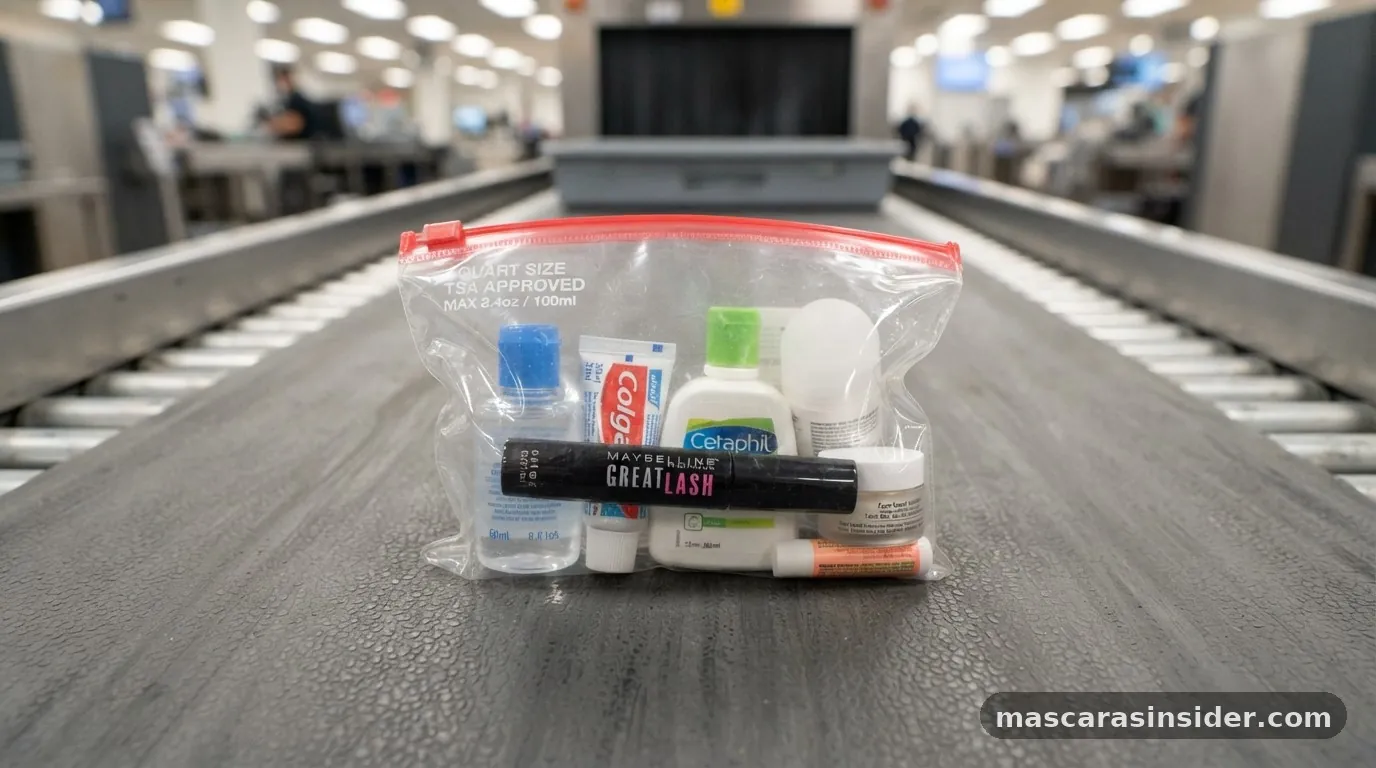
Navigating airport security can feel like a high-stakes game of trial and error, especially when you are staring down a bin and wondering if your makeup kit is going to trigger a secondary screening. One of the most common questions travelers ask is, tsa is mascara a liquid, and the answer is surprisingly straightforward once you understand the logic behind the regulations.
Because mascara has a viscous, gel-like consistency, the Transportation Security Administration classifies it as a liquid under their strict 3-1-1 guidelines. This means that if you are carrying it in your carry-on luggage, it must adhere to the standard volume restrictions that apply to other toiletries like shampoo or contact lens solution.
The TSA Classification of Cosmetics
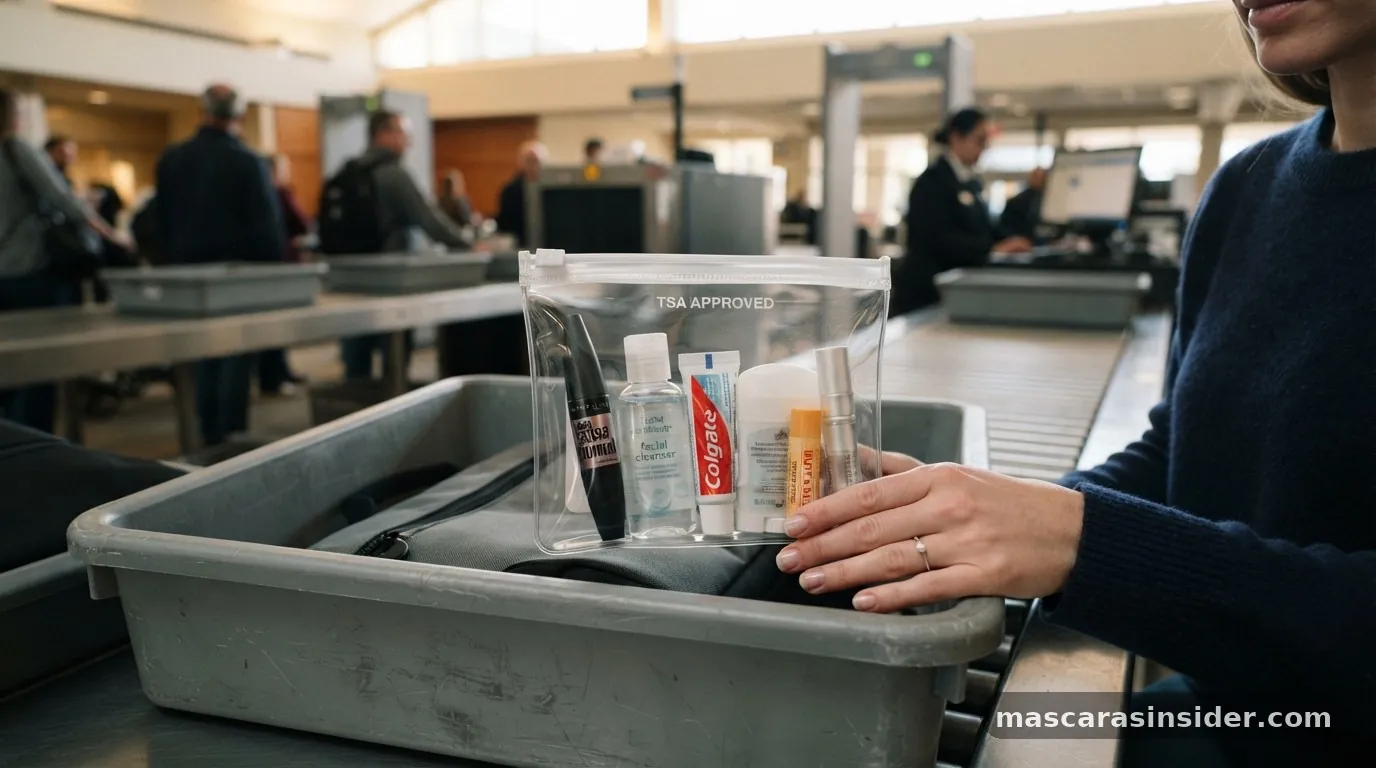
The TSA considers mascara a liquid because its chemical composition allows it to flow, smear, or be poured, even if it is housed in a small tube. When you pass through airport security, the officers are trained to look for items that could potentially be used to conceal restricted substances. Since mascara, along with lip gloss, liquid eyeliner, and foundation, falls into the category of “liquids, gels, and aerosols,” it is subject to the same rule as your larger travel items.
You cannot simply toss a full-size tube into your bag and assume it will pass through the scanner without scrutiny. If the tube exceeds the allowed capacity for individual containers, it might be flagged, leading to a delay or, in the worst-case scenario, the confiscation of your favorite beauty product.
Understanding this classification is vital for maintaining a stress-free routine while you move through terminals. Many travelers mistakenly believe that because mascara is a solid-looking wand, it is exempt from the liquid policy. However, the agency defines liquids by their ability to change shape under pressure or temperature shifts.
Because your mascara is a suspension of pigments in a waxy or oily base, it fits perfectly into the definition of a substance that must be regulated. When you are packing for your next trip, treat your tube of mascara exactly as you would a small bottle of lotion or perfume. By grouping these items together, you ensure that your experience at the checkpoint remains efficient and predictable.
The 3-1-1 Rule and Your Makeup Bag
The core of the tsa liquid policy is the 3-1-1 rule, which simplifies what you can take through the checkpoint. This rule states that all liquids, gels, and aerosols must be in containers of 3.4 ounces (100 milliliters) or less, and all of these containers must fit into one single, quart-sized, clear plastic pouch. Since most mascara tubes are significantly smaller than 3.4 ounces, they easily satisfy the volume requirement.
The challenge for many frequent flyers is not the size of the mascara itself, but the sheer volume of other products stuffed into their makeup bags. If you have an assortment of liquid concealers, serums, and highlighters, you might find that your clear bag is overflowing, making it difficult to zip shut.
To comply with this, you should consolidate your essentials into a transparent bag that allows officers to see exactly what you are carrying without needing to open every individual item. If you keep your mascara loose in your purse or hidden deep inside a fabric bag, you increase the likelihood of needing a manual search. By placing your liquid makeup inside a dedicated, transparent sleeve, you signal to the security officers that you have followed the guidelines.
This proactive approach saves time and keeps your gear organized. Remember, the one quart-sized bag limit is per passenger, so if you are traveling with a partner, you cannot simply merge your liquid collections into a single bag unless you have plenty of room to spare.
Why Consistency Matters at Security
One of the most frustrating parts of air travel is the inconsistency of security screenings, but understanding the underlying logic helps clarify why some items are questioned while others sail through. The primary goal of the security staff is to ensure that no prohibited materials are brought onto the aircraft. When an officer sees a tube of mascara on the X-ray monitor, they are identifying its density and composition.
If your tube is standard, it blends in with other common items. However, if your makeup collection is dense or cluttered, it can make it harder for the imaging software to distinguish between your mascara and something more suspicious. This is why keeping your liquids together in a transparent pouch is so effective—it creates a clear, distinct area for the agents to analyze.
It is also worth noting that the physical state of your makeup can change depending on the climate of your destination. If you are traveling to a hot location, a mascara that is usually thick might become more fluid, or a cream-based product might soften. While the TSA does not expect you to be a chemist, they do expect you to be prepared for the inspection process.
If you are ever in doubt about a specific product, check the official TSA What Can I Bring page, which provides the most current information regarding various cosmetic items. Staying informed about these regulations helps you avoid the common pitfalls that lead to discarded items at the checkpoint.
Distinguishing Between Liquids and Powders
A common point of confusion for travelers involves distinguishing between liquid-based makeup and powders. While mascara is clearly a liquid, other items like pressed powders, blush, or bronzer are not subject to the 3.4-ounce limit. Powders are generally allowed in your carry-on without being placed in your clear bag, although the TSA recommends keeping them accessible in case an officer needs to examine them further.
This is where many people get tripped up; they try to shove their entire vanity set into one tiny plastic bag. By separating your powders from your liquids, you can maximize your available space and avoid the stress of trying to fit non-regulated items into your one quart-sized container.
1. Categorize your items by texture: liquids, gels, and creams go in the clear bag.
2. Keep powders, brushes, and solid lipsticks separate to save space.
3.
Use a transparent case for your liquids to ensure quick inspection.
4. Ensure all liquid containers are labeled with their volume if they are near the 3.4-ounce limit.
5. Place your liquid bag at the top of your carry-on for easy access.
6.
Remove your liquid bag from the bag before entering the X-ray line.
7. Check for any “leaky” products that might trigger a mess inside your luggage.
By following these steps, you create a system that makes the screening process nearly invisible. You won’t have to scramble to find your mascara at the last second, and you won’t risk having to throw away an expensive product because it was improperly packed.
Packing Strategies for Beauty Enthusiasts
If you are someone who carries a full professional kit, you likely have more products than the average traveler. Managing a large collection of items requires a strategic approach to packing. Instead of bringing full-sized bottles of foundation or moisturizer, consider investing in travel-sized containers.
You can transfer your favorite products into these smaller, compliant vessels, which helps you stay within the 3.4-ounce limit while still having enough product for your trip. For mascara, you are generally stuck with the size it comes in, but since most tubes are well under the limit, this is rarely an issue. The real focus should be on how you group your items to keep your bag tidy.
When you are secure in your packing routine, you minimize the risk of damage. Makeup can be fragile; tubes can crack, and caps can pop off under pressure changes in the cabin. Using a hard-shell case or a reinforced pouch can prevent your mascara from being crushed by heavier items in your carry-on.
Furthermore, keeping your brushes separate from your liquids prevents cross-contamination. You don’t want your foundation leaking onto your expensive eyeshadow brushes. By using a modular system, where each type of tool has its own dedicated space, you ensure that everything arrives at your destination in perfect condition, ready for your next event or business meeting.
Addressing Topical Gaps and Common Misconceptions
Many travelers are worried about whether other makeup items like eyeliner or concealer are treated differently than mascara. The reality is that if it is a liquid, gel, or paste, it is treated the same. Concealer, regardless of whether it is in a wand or a pot, is considered a liquid.
Liquid eyeliner is also in the same boat. However, solid items like lipstick or balm are usually exempt from the liquid rule. This is a common topical gap—people often wonder if a “stick” product is a liquid.
If it is a solid at room temperature and doesn’t liquefy easily, it is generally treated as a solid. This can save you a lot of space in your quart-sized bag if you switch to stick-based concealers or blushers for your travels.
Another misconception is that you can bring as much as you want if you put it in your checked luggage. While this is true for most cosmetics, it is important to remember that the cargo hold is not temperature-controlled in the same way the cabin is. If you are traveling to a very cold climate, some liquid products might freeze and separate, ruining them.
If you are traveling to a very hot climate, they might expand and leak. Always seal your liquid items in a leak-proof bag regardless of whether they are in your carry-on or checked luggage. This simple precaution saves your clothing from potential stains and keeps your routine intact even when travel conditions are less than ideal.
FAQ: Frequently Asked Questions
Is mascara considered a liquid by TSA standards?
Yes, the TSA classifies mascara as a liquid because of its viscous, gel-like consistency. Consequently, it must be placed in your quart-sized bag along with your other liquids, gels, and aerosols to comply with the standard 3-1-1 travel regulations when carrying it in your hand luggage.
Do I have to take my mascara out of my bag at security?
Yes, you should remove the quart-sized bag containing your mascara and other liquids from your carry-on luggage before placing it into the bin for X-ray screening. This allows security officers to inspect your liquids clearly and helps you move through the checkpoint more efficiently.
Can I bring full-sized mascara on a plane?
Yes, you can bring full-sized mascara on a plane, provided it is in your carry-on and the container is 3.4 ounces (100 milliliters) or less. Since almost all standard mascara tubes are well under this volume, they are perfectly acceptable for travel in your carry-on bag.
What happens if my mascara isn’t in a clear bag?
If your mascara is not in a clear, quart-sized bag, an officer may flag your carry-on for a manual search. This can cause delays at the checkpoint. To ensure a smooth experience, always group your mascara with your other liquid items inside a transparent, sealable pouch.
| Item Category | TSA Status | Packing Requirement |
|---|---|---|
| Mascara | Liquid/Gel | Must fit in 1-quart clear bag |
| Pressed Powder | Solid | No specific limit |
| Lipstick (Solid) | Solid | No specific limit |
| Liquid Eyeliner | Liquid | Must fit in 1-quart clear bag |
| Concealer (Tube) | Liquid/Cream | Must fit in 1-quart clear bag |
By keeping these guidelines in mind, you can approach airport security with confidence. The rules are designed to be consistent and predictable, and once you master the art of packing your liquids, you will find that the process becomes second nature. Whether you are a minimalist with one tube of mascara or a pro with a full kit, the key is preparation and organization.
Keeping your items visible and within the allowed volume limits ensures that you spend less time at the security checkpoint and more time enjoying your trip. Always double-check your bag before leaving for the airport to ensure your liquids are organized and ready for inspection. Safe travels and enjoy your journey.